PVCAD
Pros
- Significantly reduces drafting time, allowing teams to complete complex photovoltaic layouts and bills of materials in hours rather than days.
- Runs directly from the AutoCAD ribbon, providing a familiar working environment for engineering teams.
- Produces detailed electrical schematics and drawing packages aligned with international IEC standards.
- Includes an extensive, user-expandable database of inverters, modules, and racking equipment.
- Reduces file-transfer problems and alignment errors associated with disconnected software platforms.
Cons
- Depends on local computer hardware and desktop installation, making real-time cloud collaboration more difficult.
- Some advanced capabilities require separate subscriptions to products such as PVCAD Mega or PVSketch.
- Effective use requires technical solar engineering knowledge and experience with Autodesk software.
- New components may not appear in the equipment database immediately, requiring manual entry or assistance from technical support.
Designing commercial, industrial, and utility-scale solar projects by hand is tedious and takes far too much time. Engineers frequently spend days drafting, creating geometric layouts, and calculating string sizes manually, increasing the risk of human error. PVCAD addresses these issues by bringing automation and built-in engineering intelligence directly into a standard CAD workspace.
The software is designed for solar engineers, designers, and developers who need highly precise, code-compliant drawings. By automating complex layouts and electrical configurations, it helps design teams shorten project turnaround times while producing technical documentation suitable for client review and permitting.
What Is PVCAD?
PVCAD is a dedicated engineering plugin and standalone software bundle for solar design and engineering. Created by PVComplete, it is designed for photovoltaic professionals who need to produce accurate, permit-ready engineering plans. Because it runs natively inside AutoCAD, teams do not have to switch constantly between design applications or manage repeated file conversions.
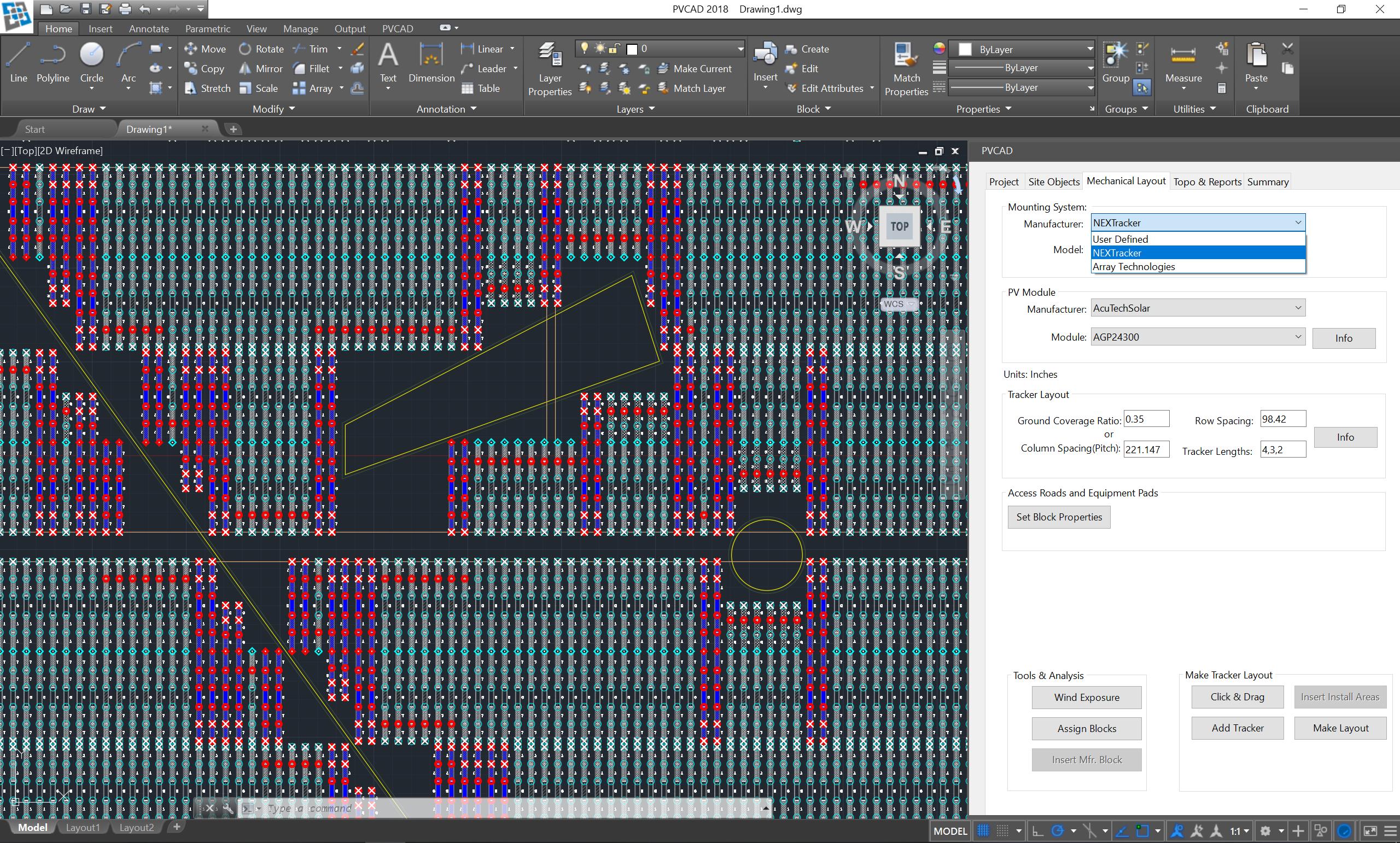
PVCAD adds a database containing thousands of real-world modules, inverters, and racking systems to the familiar CAD interface. Users can define site boundaries, automatically position panels, and generate detailed single-line diagrams (SLDs). The platform supports more than 5,000 users across dozens of countries and can be used for projects ranging from distributed generation to utility-scale installations.
Features
- Automated solar layouts: Places solar modules across rooftops or defined site boundaries while accounting for geometric efficiency, setbacks, and spacing requirements.
- Electrical string sizing: Calculates maximum and minimum string lengths using electrical specifications from the component database to support safe system operation.
- Single-line diagram generation: Creates detailed DC and AC electrical schematics with standard industry symbols, reducing the need for manual wiring diagrams.
- Integrated equipment database: Includes a regularly updated library containing physical and electrical specifications for thousands of modules, inverters, and racking systems.
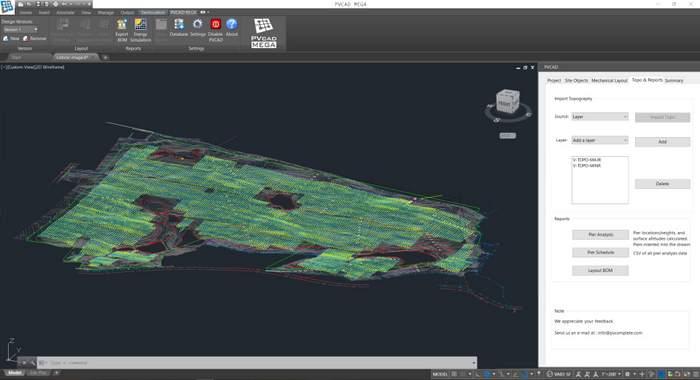
- Shading and topography analysis: Uses global weather data and NREL PVWatts algorithms to perform hour-by-hour production simulations and evaluate terrain constraints for ground-mounted systems.
- Native AutoCAD workflow: Makes its solar design features available directly from the AutoCAD ribbon, reducing the need for file conversions and disconnected workflows.
Screenshots
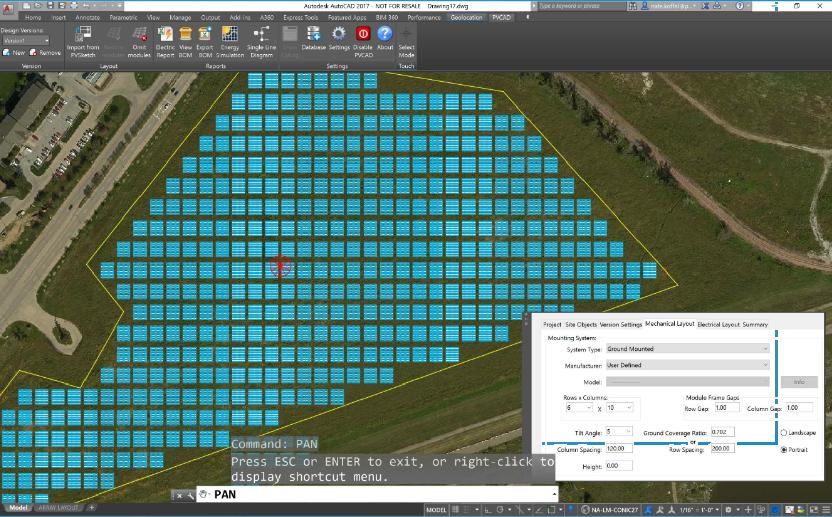
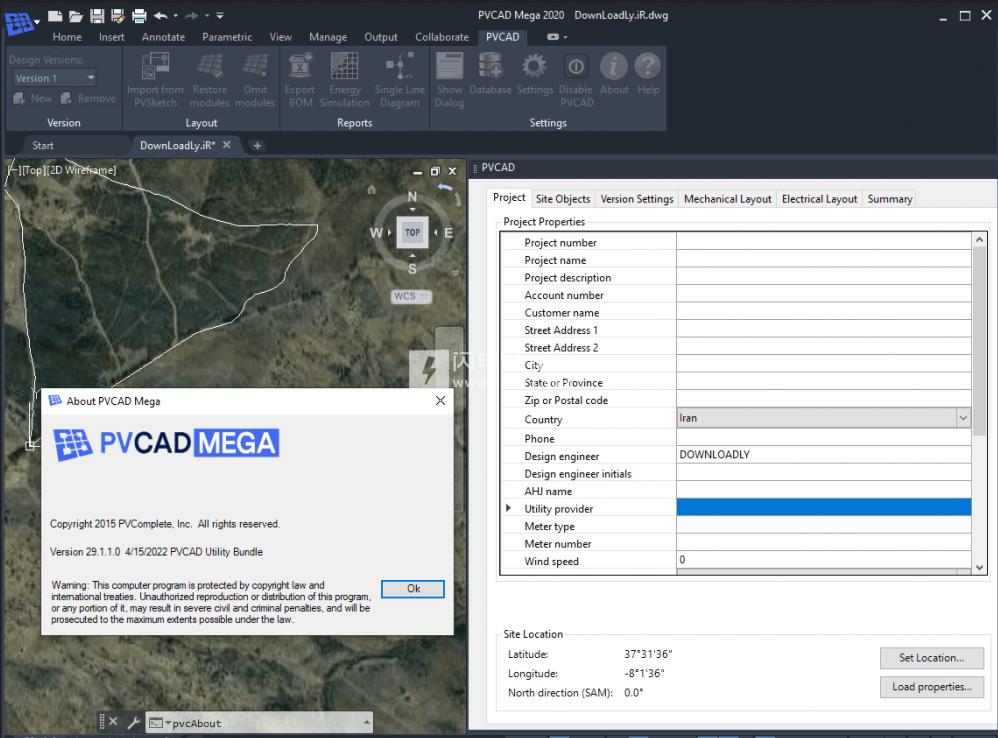
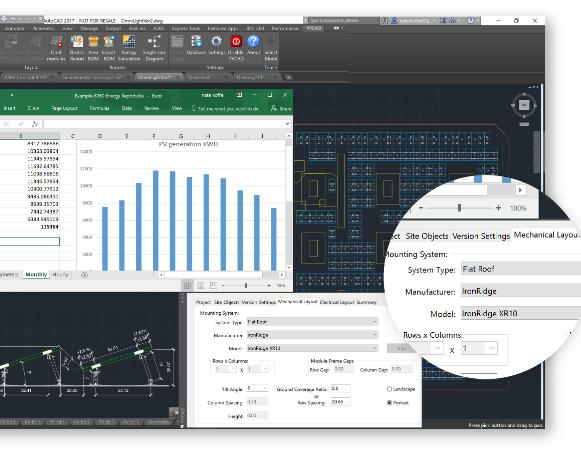
PVCAD Pricing
PVCAD is available as a standalone plugin or as a complete bundle, depending on whether the organization already has an active AutoCAD license.
- Standalone plugin: Intended for users who already have AutoCAD and costs approximately $180 per month per license.
- PVCAD with AutoCAD bundle: Combines the solar design tools with an integrated AutoCAD OEM license for approximately $230 per month per license.
- PVCAD Mega plugin: A specialized utility-scale version that runs inside AutoCAD and costs approximately $295 per month per license.
- PVCAD Mega bundle: Includes the complete utility-scale toolkit and an AutoCAD license for approximately $395 per month per license.
- Free trial: A seven-day trial allows engineers and developers to test the layout and terrain tools before purchasing a subscription.
Integrations
Engineering and Design Integrations
- AutoCAD: Operates natively as a dedicated plugin or specialized OEM software bundle.
- Autodesk technologies: Supports standard DWG files and familiar CAD drafting environments.
Data and Mapping Integrations
- PVWatts by NREL: Provides access to annual 8760 hour-by-hour system production data.
- Google Earth: Imports KML and KMZ files containing geographic coordinates, boundaries, and site layouts.
- Meteonorm: Connects with global meteorological databases for detailed weather-based simulations.
How to Set Up PVCAD
- Download the software package from the official portal or register for the seven-day free trial.
- Select the appropriate installation package based on whether you need the plugin or the complete AutoCAD bundle.
- Launch the application and confirm that the PVCAD ribbon appears in the CAD workspace.
- Open the component database and configure the preferred modules, trackers, racking systems, and inverters.
- Set the project preferences, structural design standards, measurement units, and default drawing parameters.
How to Use PVCAD
A typical workflow begins by importing a site boundary or layout through a Google Earth KML file or a local DWG drawing. The designer then selects the required hardware from the component library and defines setbacks, spacing requirements, and exclusion areas.
Using the automated layout commands, PVCAD fills the available area with optimized panel arrangements or tracker rows. The engineer can then use the electrical tools to calculate string sizes and establish cable routes. The application maps color-coded DC cabling along the structural paths and uses the selected equipment specifications to verify the configuration.
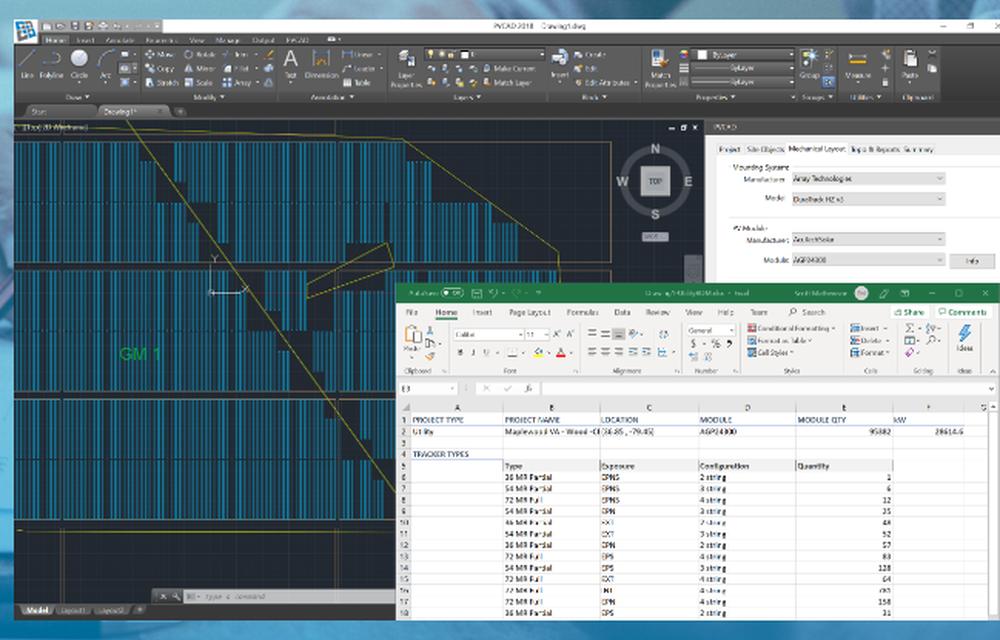
Once the physical and electrical layouts are complete, PVCAD consolidates the project data to produce single-line diagrams, detailed engineering drawings, and a complete bill of materials for customer proposals or permit applications.
What You Can Manage with PVCAD
- Engineering layouts: Create complete arrays, define panel dimensions, and configure spacing for commercial, industrial, and ground-mounted systems.
- Electrical schematics: Generate detailed AC and DC wiring plans and IEC-compliant single-line diagrams.
- Component databases: Maintain manufacturer and custom specifications for modules, racking hardware, trackers, and inverters.
- Production models: Produce 8760 generation reports and hour-by-hour performance analyses using NREL weather data.
- Project materials: Generate bills of materials containing precise quantities for structural hardware and electrical components.
FAQs
What does PVCAD do?
PVCAD is a solar engineering application that works directly inside AutoCAD to automate physical layouts, electrical designs, and documentation workflows. It provides tools for panel placement, string sizing, component selection, single-line diagrams, and bill of materials generation.
Who is PVCAD best for?
PVCAD is designed for solar engineers, CAD technicians, EPC contractors, and project developers working on commercial, industrial, and utility-scale photovoltaic systems that require accurate, permit-ready drawings.
Is PVCAD free?
No, PVCAD uses a paid subscription model. However, a seven-day free trial is available so prospective users can test the design and engineering features before purchasing a license.
What are the main limitations of PVCAD?
Because PVCAD is a desktop-based plugin, it does not provide the same real-time collaboration capabilities as a fully cloud-based platform. It also has a noticeable learning curve and may require a separate AutoCAD license, depending on the selected package.
What are the best alternatives to PVCAD?
Popular alternatives include Aurora Solar and HelioScope for commercial solar design and proposals, along with PVcase and RatedPower for utility-scale engineering workflows.