Valentin Software

Pros
- High accuracy in energy yield simulation due to dynamic, minute-by-minute calculation methods.
- One of the most comprehensive and frequently updated component databases in the solar industry.
- Exceptional 3D modeling capabilities that allow for realistic shading analysis of complex roofscapes.
- Lifetime-license options are often noted in certain regions, though the model has shifted toward annual subscriptions.
- Produces professional, client-ready reports that simplify the sales process for installers.
- Robust support for emerging technologies like heat pumps, electric vehicles, and complex battery storage.
- Well-established reputation with decades of development and optimization.
Cons
- The initial learning curve can be steep for users new to technical energy simulation.
- 3D modeling can be hardware-intensive, requiring a relatively powerful computer for smooth performance.
- Does not automatically generate Single Line Diagrams (SLDs) for commercial EPCs, often requiring external CAD software.
- The transition to a subscription-only model may increase long-term costs for some users.
- Limited native CRM or project management functionality compared to all-in-one sales platforms.
Valentin Software addresses the technical challenges of planning and simulating renewable energy systems, specifically focusing on photovoltaics, solar thermal, and heat pumps. For over three decades, the company has provided engineers, installers, and system designers with tools to predict energy yields, perform economic feasibility studies, and visualize system layouts in both 2D and 3D environments.
Professionals consider Valentin Software because its products, such as PV*SOL and T*SOL, combine high-precision climate data with extensive component databases. These tools help reduce the uncertainty in solar projects by providing accurate performance simulations that account for complex shading, self-consumption patterns, and battery storage integration.
What Is Valentin Software?
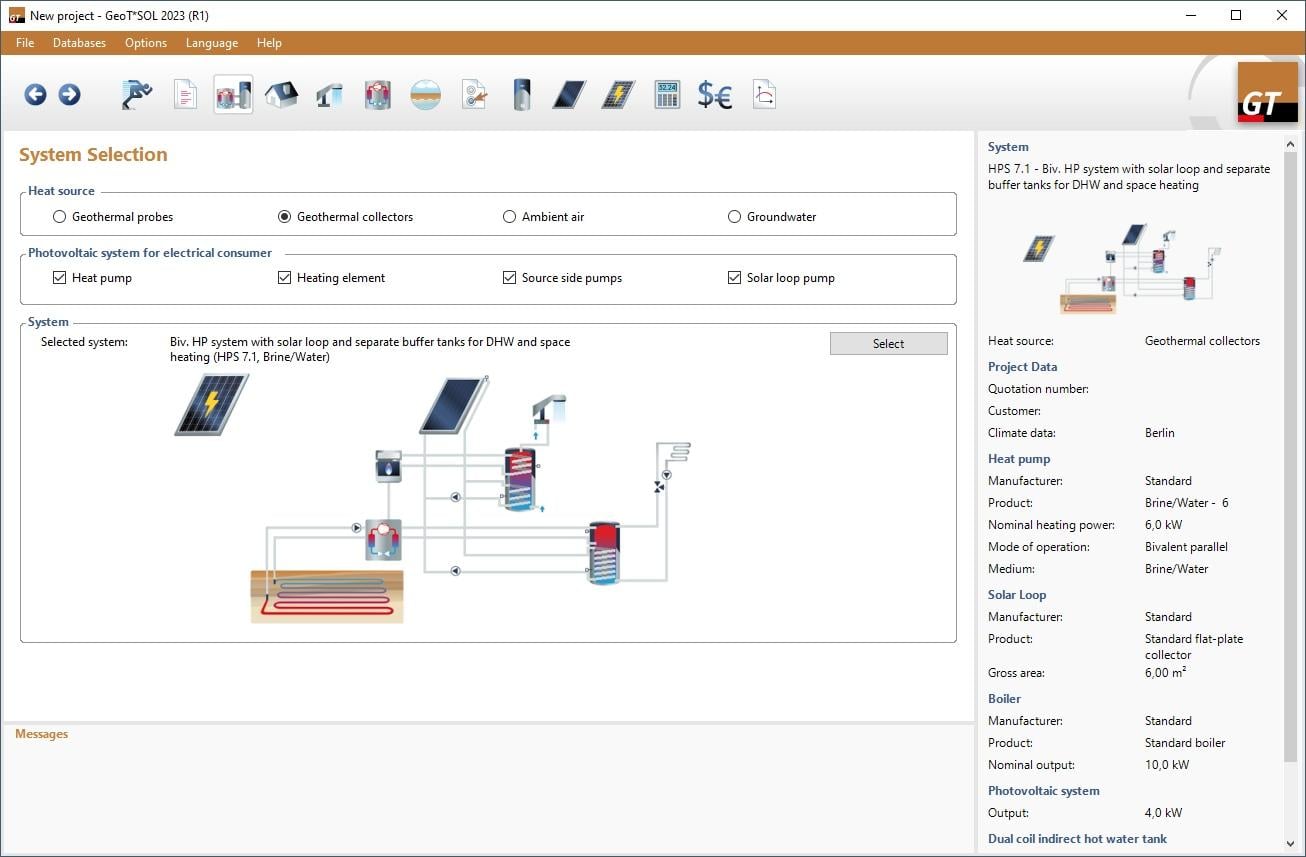
Valentin Software is a provider of dynamic simulation and design software for the renewable energy sector. Its flagship product line includes PV*SOL (photovoltaic simulation), T*SOL (solar thermal design), and GeoT*SOL (heat pump planning). The software serves as a comprehensive platform for technical planning, allowing users to transition from initial site assessment to detailed technical reports and financial forecasts.
The primary target users include solar engineers, EPC (Engineering, Procurement, and Construction) companies, energy consultants, and installers who require verifiable data to support their project proposals. The platform works by combining local meteorological data with specific hardware parameters—such as inverter efficiency curves and module power ratings—to simulate real-world system behavior. Valentin Software is recognized as an industry leader in Europe and beyond, with a history of software optimization dating back to 1998.
Features
- 3D Visualization and Shading Analysis: Allows users to model buildings and surrounding objects in 3D to simulate the exact impact of shadows on energy yield throughout the year.
- Extensive Component Database: Provides access to over 21,000 PV modules, 5,100 inverters, and thousands of battery systems, all updated regularly by manufacturers to ensure design accuracy.
- Dynamic Simulation: Calculates system performance in minute-by-minute intervals, which is essential for accurately modeling self-consumption and battery storage interactions.
- Automatic Circuit Diagrams: Generates fully customizable electrical circuit diagrams, including safety components like fuses and surge protection, without requiring manual drawing.
- Climate Data Integration: Features high-quality TMY (Typical Meteorological Year) datasets for any location worldwide, supporting precise yield predictions based on historical weather patterns.
- Economic Efficiency Analysis: Produces detailed financial reports covering payback periods, return on investment, and cash flow, based on specific local feed-in tariffs and electricity prices.
- Off-Grid and Hybrid System Modeling: Supports the design of stand-alone systems and systems with battery backup, helping users size components for reliable energy delivery in various conditions.
Screenshots




Valentin Software Pricing
Valentin Software recently shifted to a subscription-based licensing model (Named User licenses). Pricing is generally listed in euros and may vary based on regional exchange rates:
- Free Trial: A 30-day free trial is available for PV*SOL and other products, providing full access to simulation features except for project saving and report printing.
- PV*SOL Premium: Approximately €845 per year (plus VAT). This is the flagship tier including full 3D visualization and shading analysis.
- PV*SOL Standard: Approximately €585 per year (plus VAT). This tier is designed for users who only need 2D planning and basic simulation.
- Student License: Approximately €90 for 180 days. This non-renewable license is reserved for university students for educational purposes.
- PV*SOL Online: A free, web-based tool for quick, basic yield estimates without the advanced design features of the desktop versions.
- Maintenance and Updates: The annual subscription includes all program updates and database maintenance during the license term.
Integrations
Valentin Software focuses primarily on the technical design and simulation workflow, with specific technical integrations:
- Hardware Databases: Direct integration with product data from thousands of manufacturers who manage their own entries in the Valentin database.
- Meteorological Tools: Integration with Meteonorm 8.2 and DWD (German Weather Service) for global and regional climate data.
- CAD Support: Ability to import 3D models and object data in various file formats for site visualization.
- Mapping Services: Integration with mapping APIs, such as Google Solar API, to import orthophotos and elevation data for site layouts.
- Planning Tools: Interface to the K2 Base planning tool for structural and mounting system considerations.
How to Set Up Valentin Software
- Download the trial or purchased version from the Valentin Software official website.
- Install the software on a Windows-based PC (system requirements should be checked for 3D features).
- Activate the license using the credentials provided via email (activation typically takes 1–2 business days).
- Configure regional settings, including preferred units of measurement and default currency.
- Update the product database to ensure you have the latest module and inverter specifications.
- Select your first project location to download the necessary climate and meteorological data.
How to Use Valentin Software
The standard workflow begins with selecting a project location and climate data set. Users then define the type of system—such as grid-connected, off-grid, or battery-backed. In the design phase, users either use 2D photo-plan tools or the 3D environment to place modules on a roof or ground area, accounting for obstructions that might cause shading.
Once the layout is set, the software assists in component selection by suggesting compatible inverters and string configurations. Users then input load profiles (electricity consumption patterns) to simulate how much solar energy will be used on-site versus exported. The final step involves running the dynamic simulation, reviewing the results, and generating a comprehensive project report that includes technical data, yield diagrams, and economic analysis.
What You Can Produce with Valentin Software
- Detailed Energy Yield Reports: Professional documents showing expected annual and monthly energy production.
- 3D Shading Maps: Visual representations of how shadows move across a PV array throughout the day and year.
- Financial Feasibility Studies: Analyses of ROI, payback periods, and net present value based on local incentives.
- Technical Circuit Diagrams: Schematics for the electrical layout of the PV system, including cabling and safety devices.
- Self-Consumption Simulations: Visualizations of energy flow between PV, battery storage, and local loads.
- Project Proposals: Comprehensive quotes for clients that combine technical data with realistic visual renderings.
FAQs
What does Valentin Software do?
Valentin Software develops technical design and simulation tools, most notably PV*SOL, for planning solar energy systems. The software allows users to accurately predict energy yields, visualize 3D layouts, and calculate the financial returns of renewable energy projects.
Who is Valentin Software best for?
It is designed for solar engineers, designers, installers, and energy consultants who need high-precision data and professional reports. It is particularly valuable for those dealing with complex shading environments or those who need to simulate the interaction between PV and battery storage.
Is Valentin Software free?
Valentin Software offers a free web-based tool called PV*SOL Online for basic calculations, and a 30-day free trial of its professional desktop versions. However, full access to features like saving projects and generating reports requires a paid annual subscription.
What are the main limitations of Valentin Software?
The software has a significant learning curve for advanced 3D features and lacks an automated Single Line Diagram (SLD) generator, which may require users to use AutoCAD for certain technical drawings. Additionally, it is primarily a Windows-based application, which may limit users on other operating systems.
What are the best alternatives to Valentin Software?
Common alternatives for solar design and simulation include PVsyst for deep technical analysis, Aurora Solar for integrated sales and design, and HelioScope for fast, commercial-scale 2D and 3D layout planning.