PowerHub
Pros
- Proven reliability through deployment across large-scale global energy fleets.
- Comprehensive single-pane-of-glass visibility for solar, storage, and backup assets.
- Powerful remote control features that reduce the need for on-site personnel.
- Scalable architecture suitable for both small commercial sites and utility-scale plants.
- Sophisticated analytics that help minimize asset degradation and maximize ROI.
- Strong focus on grid compliance and participation in energy markets.
Cons
- Pricing is not transparent, requiring direct sales engagement for quotes.
- The platform's advanced feature set may present a steep learning curve for new users.
- Maximum value is often realized when used within specific hardware ecosystems.
- Complex setup process involving the integration of various on-site hardware and protocols.
- May require specialized technical staff to manage advanced SCADA and dispatch logic.
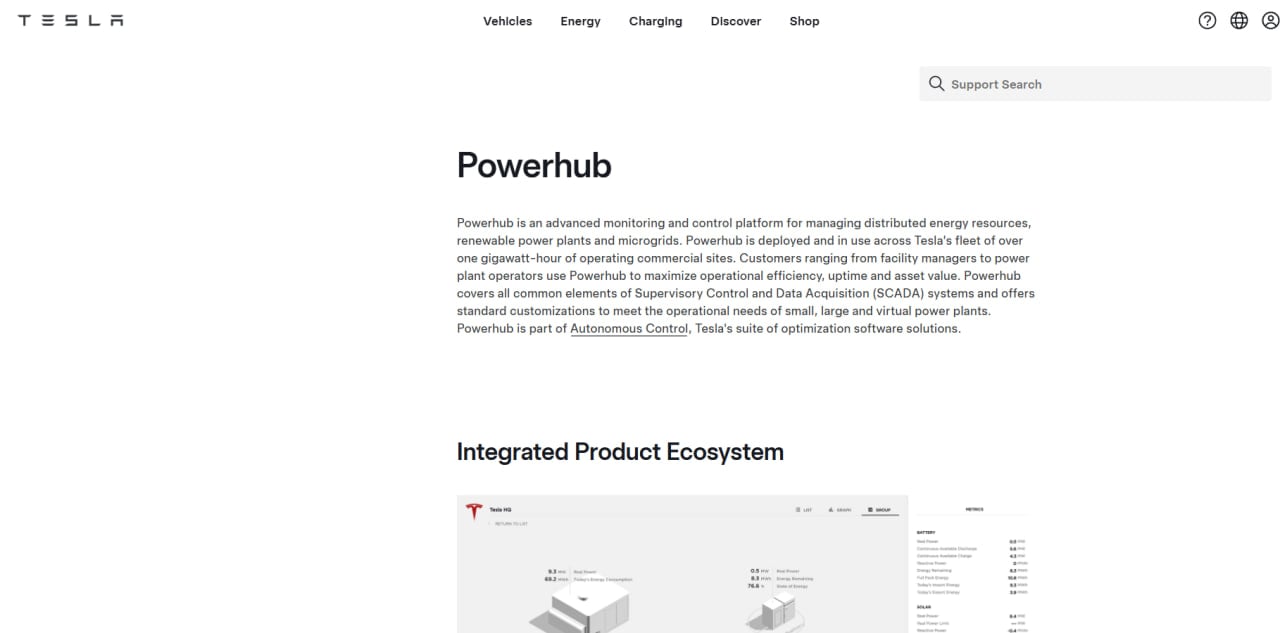
Managing a diverse portfolio of renewable energy assets often leads to fragmented data and operational inefficiencies. PowerHub addresses these challenges by providing a centralized interface that integrates various energy assets—including solar, battery storage, and generators—into a single pane of glass. This allows operators to streamline their workflows and improve the overall uptime of their energy systems.
Facility managers and power plant operators consider PowerHub to maximize the value of their clean energy portfolios. By offering real-time visibility and remote control capabilities, the platform helps users make informed decisions that reduce energy waste and optimize financial returns. Its scalability makes it suitable for everything from residential setups to large-scale virtual power plants.
What Is PowerHub?
PowerHub is a Software-as-a-Service (SaaS) platform categorized as an Energy Management System (EMS) and Supervisory Control and Data Acquisition (SCADA) solution. It is designed to manage distributed energy resources (DERs), such as solar PV arrays, battery energy storage systems (BESS), and microgrids. The platform functions by aggregating telemetry from on-site hardware and providing high-level dashboards for portfolio-wide oversight.
The software is engineered for a wide range of users, including energy traders, sustainability officers, and industrial facility managers. A significant credential for the platform is its deployment across Tesla’s global fleet, where it manages over one gigawatt-hour of operating commercial sites. It is built to handle the complexities of modern energy markets, enabling both on-site control and secure remote operational updates.
Features
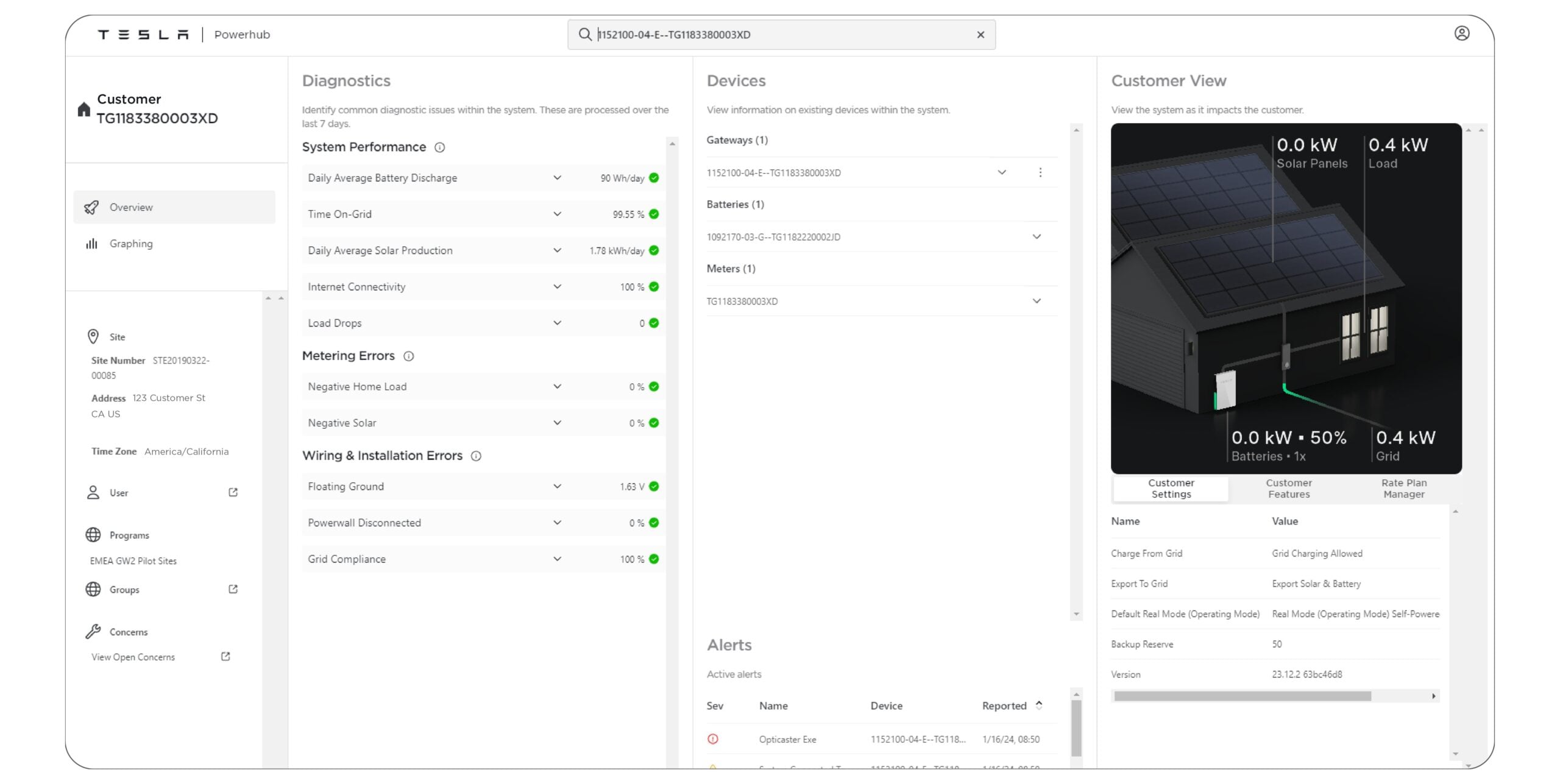
- Real-Time Telemetry and Monitoring: Provides a comprehensive view of site information, including data from site meters, battery blocks, and solar inverters to improve situational awareness.
- Advanced SCADA Capabilities: Offers localized and central SCADA functionality, allowing for predictable delivery and compliance with grid and market demands.
- Intelligent Dispatch and Optimization: Enables automated energy scheduling and dispatch to maximize revenue from energy arbitrage and participation in ancillary service markets.
- Asset Performance Management: Uses sophisticated analytics and intuitive workflows to optimize asset availability and yield at scale.
- Active Alerts and Notifications: Features a dashboard for system alerts that covers the balance of plant subsystems, such as breakers and fire detection, ensuring safe decision-making.
- Remote Operational Configuration: Allows users to securely update parameters from a remote location, such as setting quiet hours for microgrids or frequency/watt control set points.
- Custom Reporting and Data Export: Enables users to trend historical data and build custom reports tailored to their unique operations for extended analysis.
Screenshots


PowerHub Pricing
Pricing for PowerHub is not publicly listed. The company typically requires potential users to contact its sales team or book a demo to receive a custom quote based on the specific project scale and technical requirements.
Common factors that influence the cost of an EMS like PowerHub include the number of connected sites, the total energy capacity being managed, and the specific software modules required, such as advanced SCADA or basic monitoring. Some implementations may also involve usage-based fees related to data processing or API access for virtual power plant aggregations.
Integrations
PowerHub is built with a flexible architecture that supports a variety of technical integrations to manage combinations of energy assets:
- Hardware Integrations: Seamlessly connects with Tesla energy products and select non-Tesla assets, including diesel generators, breakers, and transformers.
- API and Webhooks: Provides a robust API for aggregators to manage virtual power plant dispatch and integrate telemetry into third-party Distributed Energy Resource Management Systems (DERMS).
- Grid and Market Interfaces: Supports connections to wholesale and ancillary service markets for revenue generation and grid support.
- Building Management Systems (BMS): Can be designed to work alongside existing on-site BMS hardware to avoid operational disruption.
How to Set Up PowerHub
- Consult with an applications engineer to audit your site requirements and energy asset mix.
- Design the system architecture, including the necessary gateways and communication protocols.
- Install and commission on-site hardware and connectivity modules to establish data flow.
- Configure the cloud workspace by setting up site hierarchies, tags, and user permissions.
- Connect your energy assets to the platform and verify telemetry accuracy.
- Customize dashboards and set specific operational alerts and dispatch parameters.
How to Use PowerHub
The daily workflow involves logging into the central dashboard to monitor real-time performance across a portfolio of sites. Users start by reviewing the active alerts dashboard to identify any abnormalities in battery health, inverter status, or grid connectivity. Facility managers use the performance metrics to ensure that energy consumption aligns with forecasts.
Energy traders and operators use the platform to manage dispatch schedules, choosing when to charge batteries from the grid or discharge stored energy to capture peak market prices. Throughout the day, users may generate custom reports to verify savings or compliance with ESG targets. For remote sites, operators use the interface to update operational set points without traveling to the physical location.
What You Can Manage with PowerHub
- Energy Storage Systems (BESS): Monitor state of charge, health, and bidirectional power flow.
- Solar PV Arrays: Track real-time generation, performance ratios, and inverter efficiency.
- Virtual Power Plants (VPP): Coordinate the aggregate dispatch of multiple distributed assets.
- Grid Services: Manage participation in frequency regulation and voltage support programs.
- Operational Reports: Generate automated documents detailing uptime, energy yield, and revenue.
- Maintenance Cycles: Use condition-based monitoring to transition from reactive to predictive maintenance.
FAQs
What does PowerHub do?
PowerHub is an advanced software platform for monitoring and controlling renewable energy assets. It provides real-time visibility, automated dispatch, and performance analytics for solar, battery storage, and microgrid systems.
Who is PowerHub best for?
The tool is designed for power plant operators, facility managers, and energy aggregators. It is particularly useful for those managing large-scale or distributed portfolios of energy resources that require centralized oversight.
Is PowerHub free?
No, PowerHub is an enterprise-grade software solution that requires a paid subscription or contract. There is no publicly listed free version, though interested parties can request a demo.
Does PowerHub support third-party hardware?
Yes, PowerHub can manage select non-Tesla assets, including certain generators, breakers, and transformers. This allows for a more comprehensive view of the entire balance of plant.
What are the main limitations of PowerHub?
The primary limitations include the lack of public pricing and the inherent complexity of integrating diverse legacy hardware. It also requires a certain level of technical expertise to fully utilize its advanced SCADA and market participation features.
What are the best alternatives to PowerHub?
Common alternatives in the EMS and SCADA space include Schneider Electric EcoStruxure, Stem PowerTrack, and Power Factors Unity. Each offers different levels of integration and specialized features for renewable energy management.