FTC SunPATH
Pros
- Can increase annual energy production by up to 6% compared with standard tracker controllers.
- Does not require additional sensors, wiring, or tracking hardware.
- May reduce civil engineering costs by limiting the need to flatten uneven terrain.
- Begins optimizing energy yields immediately without a lengthy calibration period.
- Supports secure, localized installation on individual site controllers.
- Can reduce the levelized cost of energy across a typical 25-year project lifecycle.
Cons
- Public pricing and subscription tiers are not available.
- Requires compatible tracker and controller hardware to provide its full performance benefits.
- Primarily designed for utility-scale solar portfolios rather than small commercial or residential projects.
Standard tracking systems often miss the mark when dealing with uneven landscapes or changing light, which leads to reduced energy output. FTC SunPATH addresses this problem by offering intelligent software that adapts solar tracking to the unique characteristics of each location. By reducing guesswork, the platform allows developers and operators to increase production without purchasing additional hardware.
For energy teams focused on lowering the levelized cost of energy, a software-driven optimization approach can provide significant value. FTC SunPATH uses site-aware adjustments to improve tracker performance and protect energy yields. This review covers the platform’s main features, integration options, and operational benefits for long-term solar portfolios.
What Is FTC SunPATH?
FTC SunPATH is an intelligent software platform developed by FTC Solar, a global provider of solar tracker systems, technology, and engineering services. It falls under the category of solar design and engineering optimization software, working with tracker control systems to increase energy production at utility-scale solar plants.
The platform is designed for solar asset owners, utility developers, performance engineers, and operations and maintenance (O&M) teams.
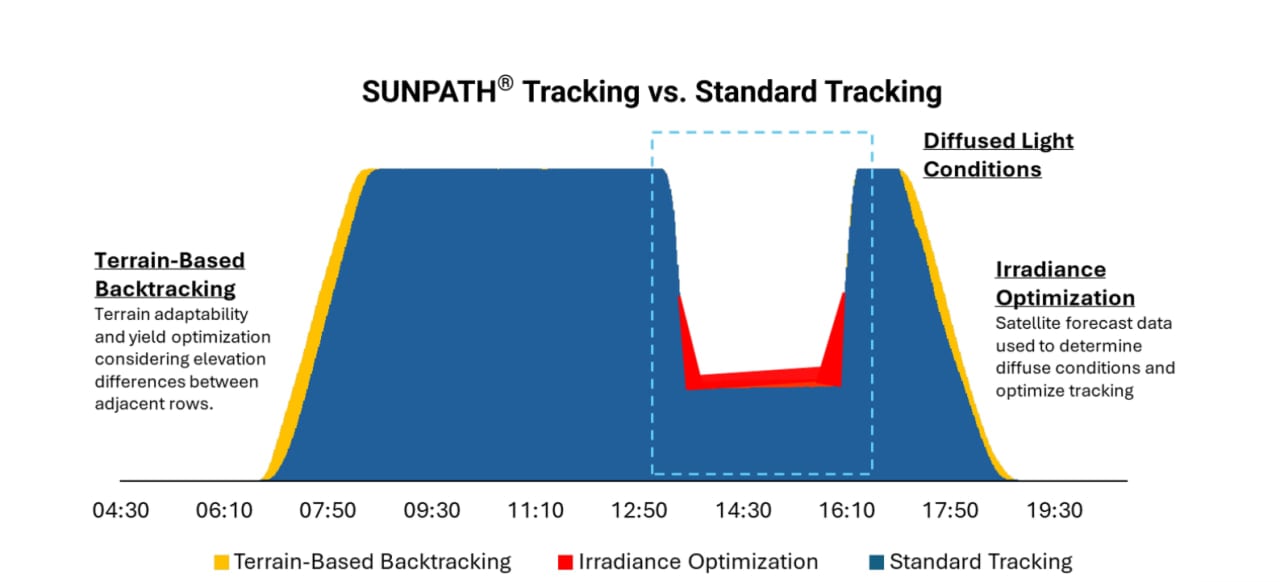
FTC SunPATH uses site-specific mathematical models, elevation data, and satellite weather forecasts to determine optimal tracker angles. This allows trackers to reduce row-to-row shading and capture more diffuse light, potentially increasing annual energy yield by up to 6% compared with standard controllers.
FTC Solar has deployed more than 4.5 GW of tracker projects worldwide, providing the platform with a strong base of practical utility-scale experience.
Features
- Terrain-Based Backtracking: Adjusts individual row angles based on site elevation data to prevent panels from shading each other on uneven or hilly terrain.
- Diffuse Light Optimization: Changes tracker angles using predictive satellite weather models to capture more scattered light during cloudy or overcast conditions.
- Model-Based Calculation: Begins operating immediately by using mathematical solar paths and site configurations instead of requiring lengthy calibration periods.
- Local Upload Connectivity: Allows engineers to install software updates locally on individual zone controllers, reducing the need for continuous remote network access.
- Tracker Hardware Compatibility: Works with FTC Solar’s controller ecosystem and tracking platforms, including Voyager and Pioneer.
Screenshots
FTC SunPATH Pricing
Pricing is not listed publicly. Interested organizations must contact the FTC Solar sales team or request a demonstration to receive a custom quote.
The software is generally included in larger enterprise agreements that may combine:
- FTC Solar tracker hardware.
- Zone controllers and supporting equipment.
- Software installation and commissioning services.
- Recurring Software-as-a-Service subscription fees.
- Technical support and performance monitoring.
Final pricing may depend on project size, installed capacity, site complexity, tracker configuration, and selected software services.
Integrations
- Hardware Integrations: Connects with FTC Solar’s controller ecosystem, including Voyager and Pioneer single-axis tracker systems.
- Weather Data Integrations: Uses third-party satellite weather services to obtain high-frequency atmospheric forecasts for diffuse light optimization.
- SUNDAT: Connects with FTC Solar’s automated site layout and design software.
- SUNOPS: Integrates with the company’s portfolio monitoring platform to track system performance and operational activity.
- ATLAS: Works with FTC Solar’s data management tools to support asset analytics and reporting.
How to Set Up FTC SunPATH
- Contact an FTC Solar specialist to arrange a site assessment and review the project terrain.
- Provide site elevation data, topographic surveys, or aerial drone maps of the property.
- Finalize the software licensing agreement and compatible tracker hardware configuration.
- Have trained FTC Solar engineers install the software locally on the individual zone controllers.
- Activate the platform so the automated, site-aware tracking optimization can begin operating.
How to Use FTC SunPATH
FTC SunPATH runs largely in the background as part of a solar plant’s control system. The platform continuously calculates solar positions while analyzing satellite weather forecasts.
When cloudy or variable conditions are detected, the software adjusts tracker rows to angles designed to capture more diffuse light. During clear conditions, it returns the trackers to configurations optimized for direct sunlight.
On sloped terrain, the software moves different tracker rows independently so uphill and downhill panels do not shade each other during the early morning or late evening.
Plant operators can monitor these automated adjustments and review resulting energy yield improvements through connected platforms such as SUNOPS. This information can also be used to create portfolio performance and efficiency reports.
What You Can Manage with FTC SunPATH
- Terrain Tracking Layouts: Monitor row positioning and optimize ground coverage ratios across steep or uneven sites.
- Shading Penalties: Identify and reduce energy losses caused by tracker rows casting shadows on neighboring panels.
- Diffuse Light Yields: Track additional energy captured during cloudy, overcast, or hazy conditions.
- Tracker Performance: Review automated row adjustments and compare their effects on site production.
- Site Security: Reduce exposure to remote access risks through localized controller installations and updates.
FAQs
What does FTC SunPATH do?
FTC SunPATH is intelligent software that adjusts single-axis tracker angles to optimize how solar panels face the sun. It uses terrain data and satellite weather forecasts to reduce row shading and capture more energy during cloudy conditions.
Who is FTC SunPATH best for?
The platform is designed for solar developers, utility-scale asset owners, performance engineers, and O&M teams managing tracker-based solar projects. It is particularly useful for solar farms built on complex, sloped, or uneven terrain.
Is FTC SunPATH free?
No. FTC SunPATH is commercial software generally offered through a Software-as-a-Service subscription. It may be included in technology supply agreements alongside FTC Solar tracker hardware.
Does FTC SunPATH support integrations?
Yes. FTC SunPATH integrates with FTC Solar’s Voyager and Pioneer tracker systems, satellite weather data services, and software products such as SUNDAT, SUNOPS, and ATLAS.
What are the main limitations of FTC SunPATH?
The software must be paired with compatible tracker components and controller hardware to perform its optimization calculations. Public pricing plans and contract details are also unavailable.
What are the best alternatives to FTC SunPATH?
Common alternatives include Nextracker TrueCapture and other tracker optimization platforms. Broader solar design and performance analysis alternatives include PVsyst, HelioScope, and Aurora Solar.