Meteocontrol VCOM Cloud
Pros
- Comprehensive platform combining monitoring, maintenance, and reporting.
- Broad hardware compatibility across mixed renewable portfolios.
- Scalable for rooftop, commercial, and utility-scale projects.
- Smart alarms reduce unnecessary maintenance noise.
- Strong mobile functionality for field operations.
- Excellent support for hybrid solar-plus-storage systems.
- Trusted provider with decades of renewable energy experience.
Cons
- Advanced feature set creates a learning curve for new users.
- Pricing is not fully transparent online.
- Some analytics and maintenance modules require premium licensing.
- Historical data migration can be technically complex.
Managing large renewable energy portfolios requires a centralized platform capable of handling multiple data streams, monitoring equipment health, and simplifying maintenance operations. Meteocontrol VCOM Cloud addresses these challenges by combining professional solar monitoring, battery analytics, and maintenance workflows into one integrated cloud-based environment.
Designed as a “Virtual Control Room,” the platform helps asset managers, O&M providers, and investors monitor global solar and storage portfolios through a unified interface. By integrating hardware, analytics, and maintenance management tools, VCOM Cloud improves operational visibility, fault detection, and long-term asset profitability.
What Is Meteocontrol VCOM Cloud?
Meteocontrol VCOM Cloud is a Software-as-a-Service (SaaS) platform built for monitoring and managing solar and battery storage assets.
The platform collects data from inverters, sensors, data loggers, and battery systems to generate customizable dashboards, performance analytics, maintenance workflows, and investor reporting tools for renewable energy portfolios.
Features
- Portfolio Management: Monitor KPIs and performance across global solar and storage fleets.
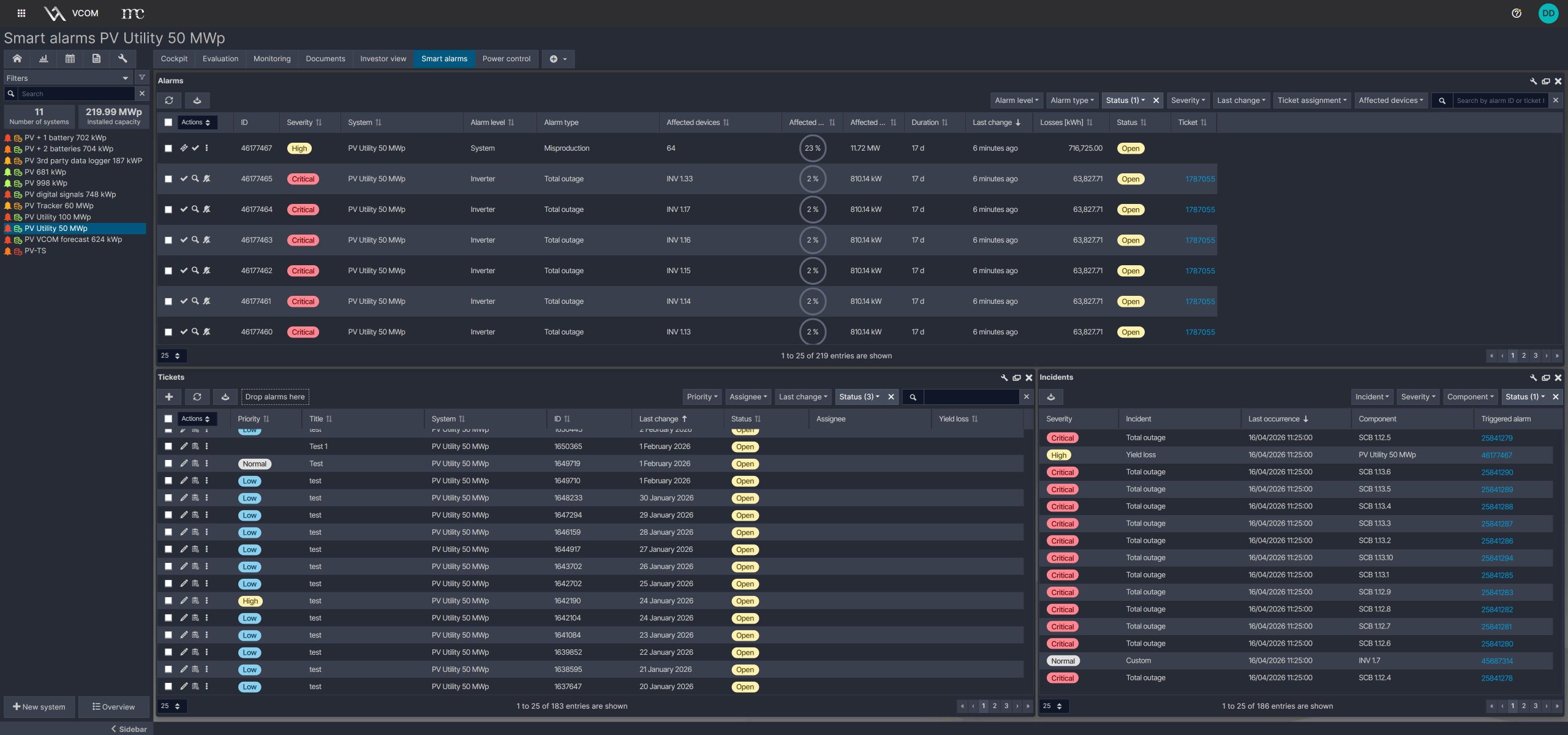
- Smart Alarms: Automatically detect and prioritize faults based on energy yield impact.
- VCOM CMMS: Convert alarms into maintenance tickets and coordinate technician workflows.
- Advanced Data Visualization: Analyze performance through customizable charts and heat maps.
- Battery Monitoring: Track State of Health (SoH) and State of Charge (SoC) metrics.
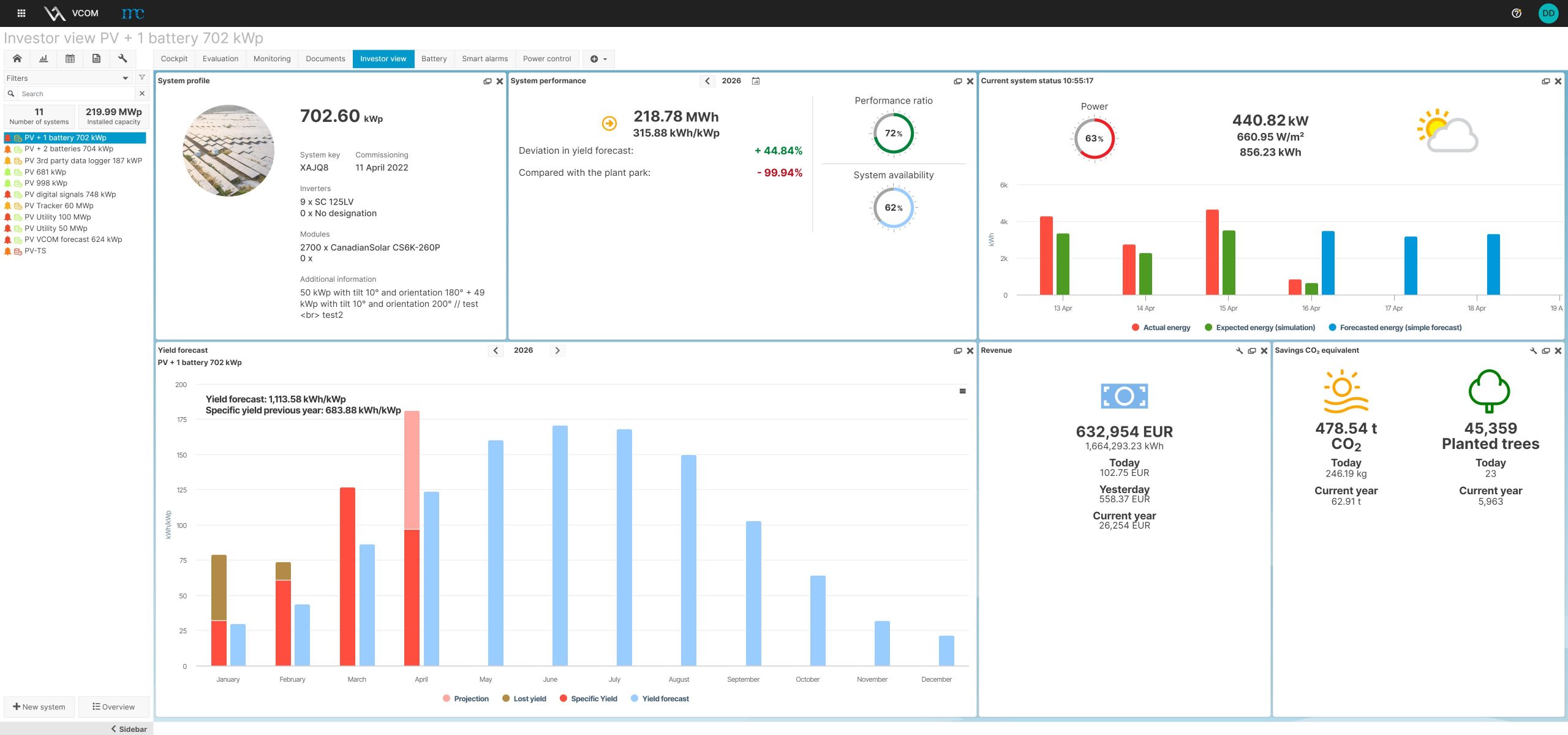
- Investor Reporting: Generate automated operational and financial reports.
- Mobile Applications: Support field technicians and managers with real-time mobile access.
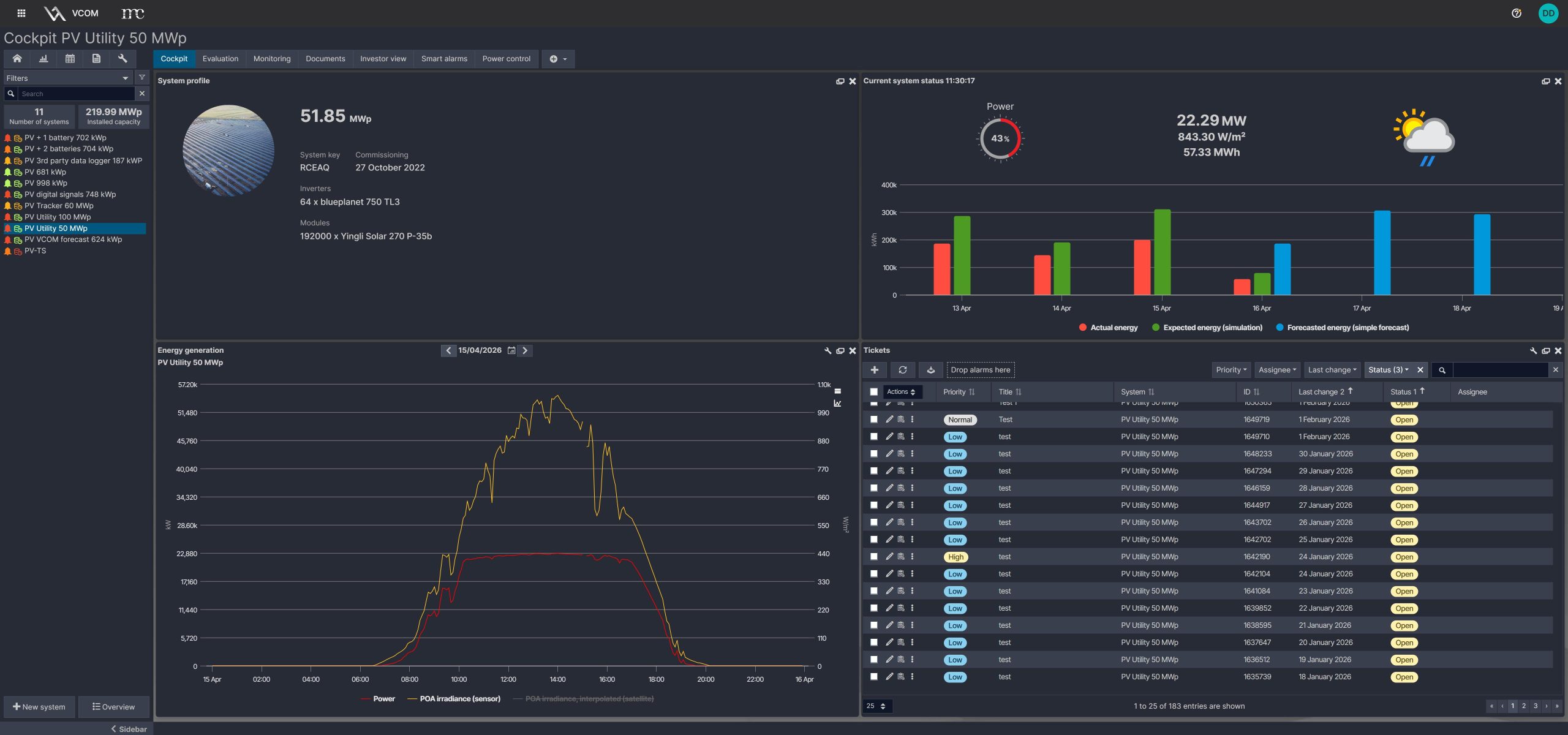
Screenshots
Meteocontrol VCOM Cloud Pricing
Meteocontrol VCOM Cloud uses a subscription-based pricing model tailored to system size and project requirements.
- License Tiers: Pricing is generally based on installed solar capacity (kWp).
- Battery Monitoring Fees: BESS monitoring is billed separately based on storage capacity.
- Demo Access: Trial versions and live demonstrations are available upon request.
- Add-On Services: Advanced analytics, audits, and historical data migration may require additional fees.
- Enterprise Licensing: Multi-year agreements available for larger portfolios.
Integrations
Meteocontrol VCOM Cloud is designed as an open platform compatible with a wide range of renewable energy hardware.
- Hardware Support: Compatible with more than 4,000 devices from multiple manufacturers.
- Data Logger Integration: Supports Meteocontrol blue’Log devices and third-party loggers.
- API and Webhooks: Connect operational data with ERP and enterprise systems.
- Protocol Support: Compatible with HTTP/REST APIs, FTP, XML, JSON, and CSV.
- SolarEdge Integration: Direct support for module-level monitoring data.
How to Set Up Meteocontrol VCOM Cloud
- Consult with Meteocontrol to evaluate your renewable portfolio.
- Install compatible data loggers or connect existing monitoring hardware.
- Create an mc Cloud account and select the appropriate license tier.
- Configure plant details, expected production targets, and team permissions.
- Set alarm rules, maintenance workflows, and reporting schedules.
- Launch monitoring and maintenance operations through the platform.
How to Use Meteocontrol VCOM Cloud
Operators typically begin by reviewing portfolio dashboards that display real-time system performance and active alarms. Smart alarms help identify underperforming equipment and prioritize maintenance actions.
When faults are detected, service tickets are automatically generated and assigned to field technicians through the CMMS module. Managers can then review completed work, analyze system performance trends, and generate investor reports using automated reporting tools.
What You Can Manage with Meteocontrol VCOM Cloud
- Performance Analytics: Track energy yield, uptime, and system efficiency.
- Maintenance Workflows: Manage service tickets and technician coordination.
- Technical Documentation: Store layouts, maintenance records, and operational logs.
- Battery Health: Monitor storage cycles and thermal performance.
- Investor Reporting: Share verified portfolio performance with stakeholders.
- Grid Compliance: Monitor plant controller status and export limitations.
FAQs
What does Meteocontrol VCOM Cloud do?
Meteocontrol VCOM Cloud monitors and manages solar and battery assets by combining operational analytics, maintenance workflows, and reporting tools into one cloud platform.
Who is Meteocontrol VCOM Cloud best for?
It is designed for asset managers, O&M providers, investors, and renewable energy operators managing large or diverse solar and storage portfolios.
Is Meteocontrol VCOM Cloud free?
No, the platform requires paid licensing based on system capacity and enabled modules, although demo and trial access may be available.
What are the main limitations of Meteocontrol VCOM Cloud?
Main limitations include pricing transparency, implementation complexity for large portfolios, and the learning curve associated with advanced monitoring features.
What are the best alternatives to Meteocontrol VCOM Cloud?
Popular alternatives include Stem PowerTrack, Schneider Electric EcoStruxure, Solytic, and other renewable asset monitoring platforms.