Stem Athena
Pros
- Advanced AI capabilities that improve forecasting accuracy over time through machine learning.
- Hardware-agnostic platform that works with multiple battery and inverter brands.
- Proven track record with billions of data points processed and extensive operating hours.
- Simplifies participation in complex energy markets and utility demand response programs.
- Scalable architecture suitable for small commercial sites up to large-scale 400 MW utility projects.
- Comprehensive visibility into both solar and storage performance in a single interface.
Cons
- Lack of transparent, public pricing makes initial budgeting difficult for smaller operators.
- Higher complexity compared to basic monitoring tools, requiring a learning curve for new users.
- Deployment typically requires specialized hardware controllers and professional installation.
- The most significant value is tied to energy market participation, which may vary by region.
Managing energy storage and renewable assets involves balancing complex variables, including fluctuating utility rates, weather patterns, and grid constraints. Stem Athena is an energy management system (EMS) designed to automate these decisions using artificial intelligence and machine learning. By processing vast amounts of data in real time, the platform helps asset owners maximize the financial and operational value of their clean energy investments.
The software is primarily used by commercial and industrial businesses, independent power producers, and utility companies. It addresses the challenge of manual energy management by providing an automated layer of control that optimizes when to store energy and when to discharge it. This capability is essential for organizations looking to lower peak demand charges, participate in grid services, or manage complex hybrid solar-plus-storage systems.
What Is Stem Athena?
Stem Athena is a cloud-based energy management system (EMS) that provides end-to-end monitoring and control for battery energy storage systems (BESS) and solar installations. It functions as an intelligent brain for energy assets, using predictive analytics to forecast energy demand and supply. The platform falls under the Battery Monitoring & EMS category and is recognized as a market leader in AI-driven energy optimization.
The platform works by connecting on-site hardware controllers to a secure cloud infrastructure. It aggregates data from various sources—including weather feeds, utility pricing, and real-time equipment performance—to execute high-level control functions. Athena is hardware-agnostic, meaning it can integrate with various battery and power conversion system (PCS) suppliers, providing flexibility for organizations with diverse equipment portfolios.
Features
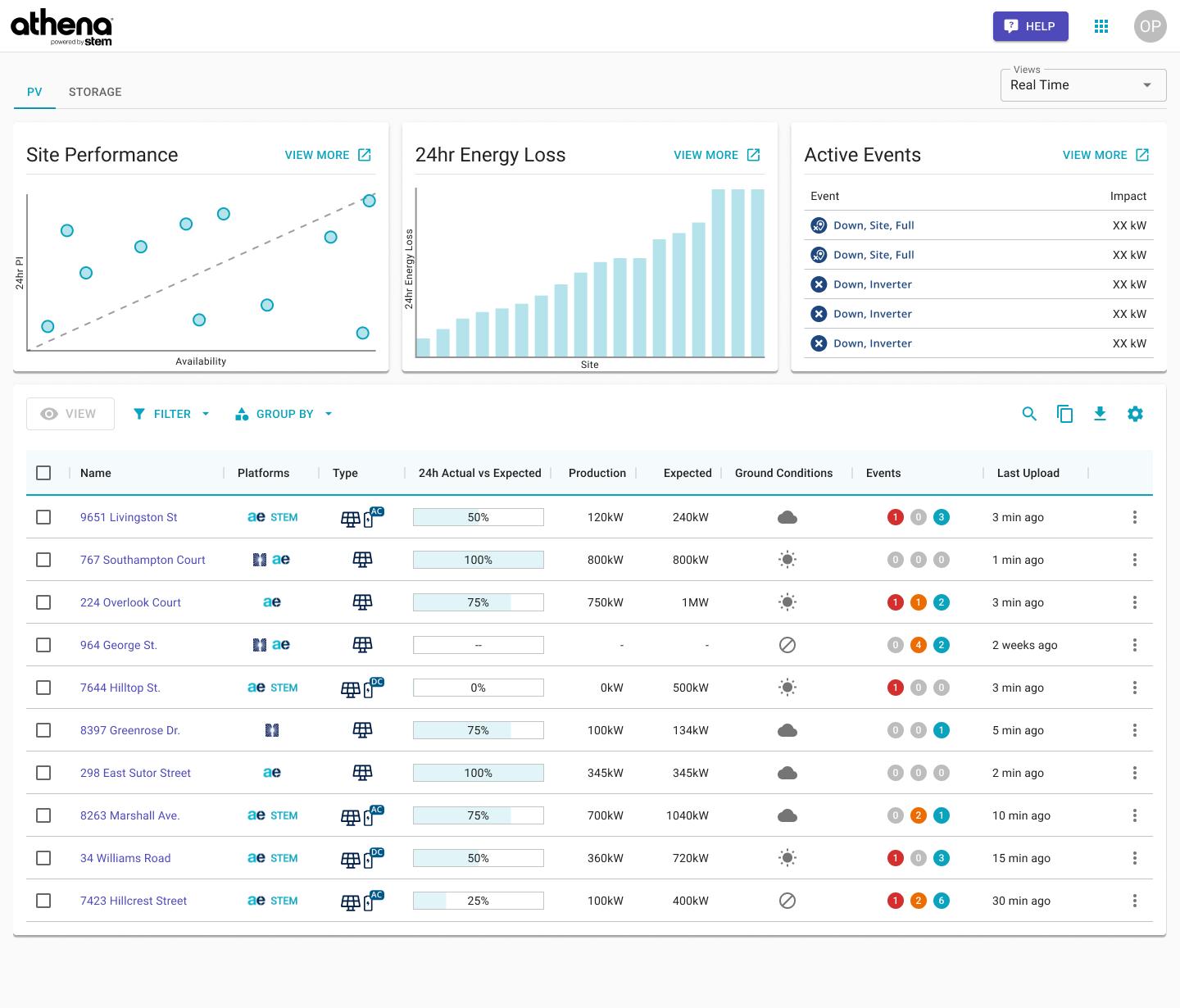
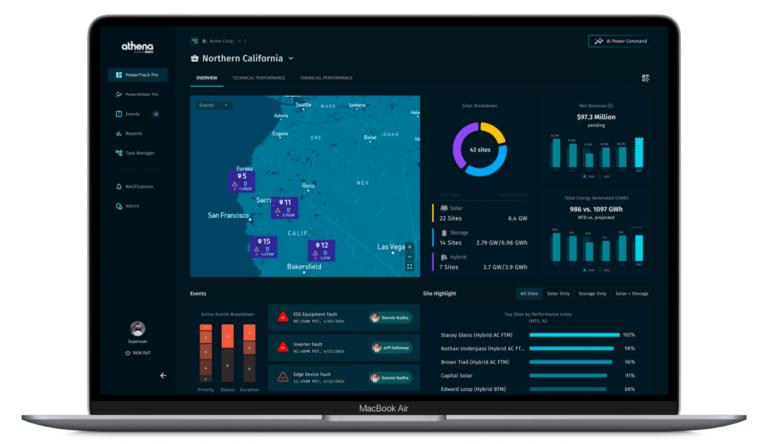
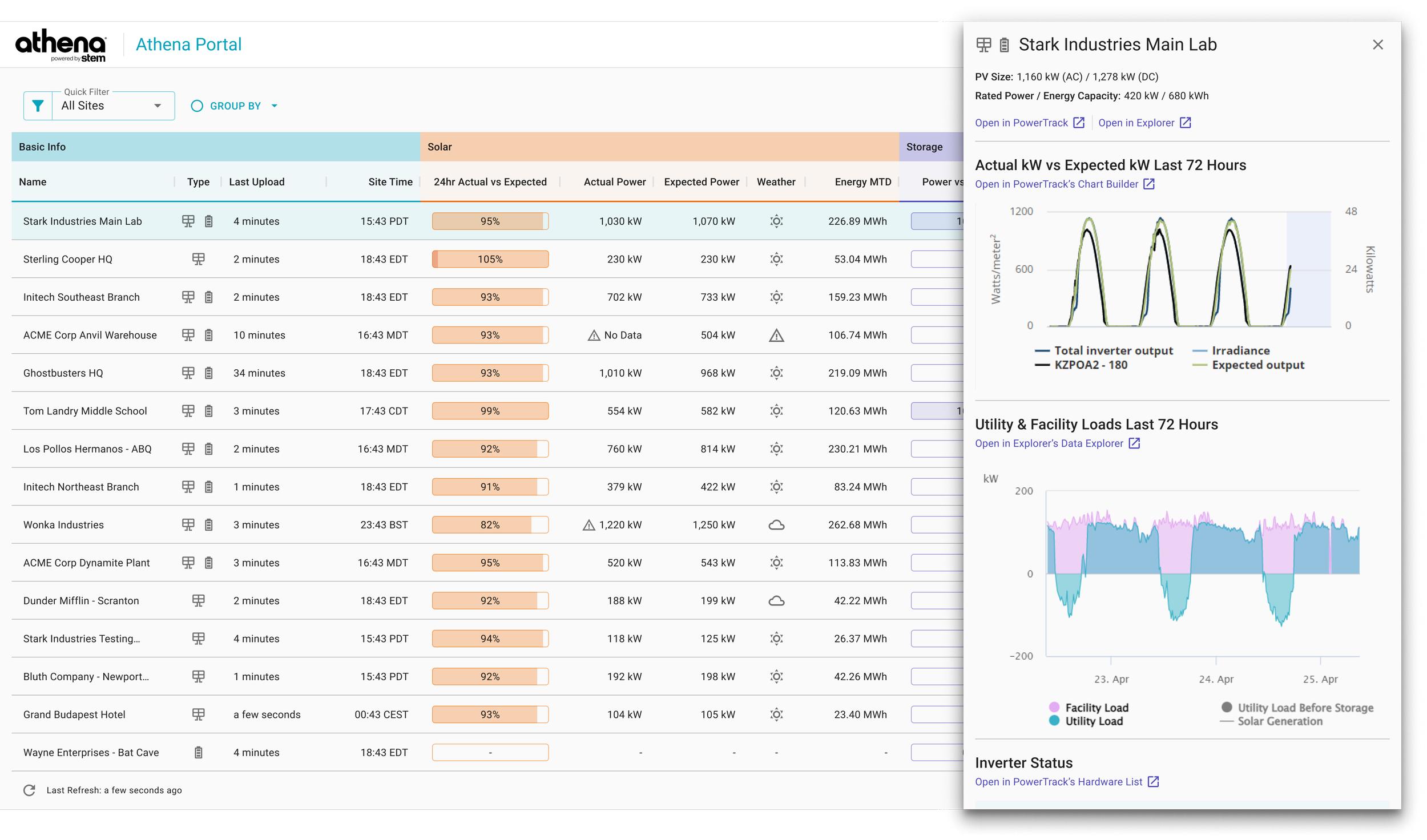
- Real-Time Monitoring: Offers a centralized dashboard to track the health and performance of energy assets across a single site or an entire global portfolio.
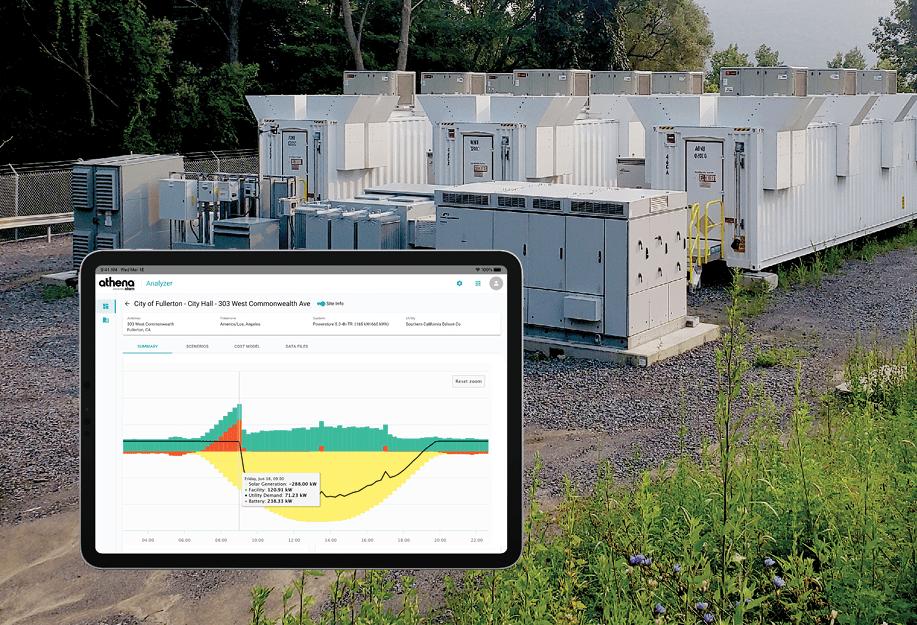
- Predictive Analytics: Uses machine learning algorithms to process terabytes of data daily, generating forecasts for weather, energy prices, and site-specific load patterns.
- Automated Energy Optimization: Automatically schedules battery charging and discharging cycles to capture the highest economic value, such as shifting loads away from expensive peak periods.
- Demand Response Participation: Enables users to enroll their storage assets in utility programs, automatically responding to grid signals to generate additional revenue.
- Battery Management and Diagnostics: Provides granular data on battery state of health and diagnostics, helping operators extend asset life and plan maintenance effectively.
- Customizable Reporting: Generates performance reports and financial analytics that help stakeholders track savings, carbon footprint reductions, and system uptime.
- Configurable Alerts: Sends immediate notifications through web or mobile interfaces when the system detects abnormalities or equipment failures, reducing downtime.
Screenshots
Stem Athena Pricing
Pricing is not publicly listed. To get a figure for Stem Athena, teams book a demo or go through the sales team.
Stem Athena typically operates on a subscription-based model tailored to the scale of the energy project. Since the software is often bundled with Stem’s hardware solutions or specialized service agreements, costs vary significantly based on system capacity (kW/kWh), the number of sites, and the specific grid services being utilized.
Integrations
Stem Athena is designed with a hardware-agnostic architecture to support broad technical interoperability:
- Hardware Integrations: Compatible with major battery manufacturers and Power Conversion System (PCS) suppliers to ensure seamless on-site control.
- Cloud and API: Built on a cloud-native infrastructure that allows for data sharing and integration with third-party asset management or monitoring tools.
- Grid and Utility Interfaces: Connects with utility dispatch systems and market operators to facilitate participation in demand response and grid service programs.
- Industrial Protocols: Supports standard communication protocols like Modbus TCP/IP, CAN bus, and RS-485 for local device connectivity.
How to Set Up Stem Athena
- Contact Stem to conduct an energy audit and define the project scope and hardware requirements.
- Finalize the system design, including the selection of compatible battery and PCS hardware.
- Install the Stem on-site edge controller and connect it to the local energy assets.
- Commission the system through the Athena cloud platform to establish secure data communication.
- Configure site-specific parameters, such as utility rate structures and operational constraints.
- Launch the automated optimization workflow and set up user access for the monitoring dashboard.
How to Use Stem Athena
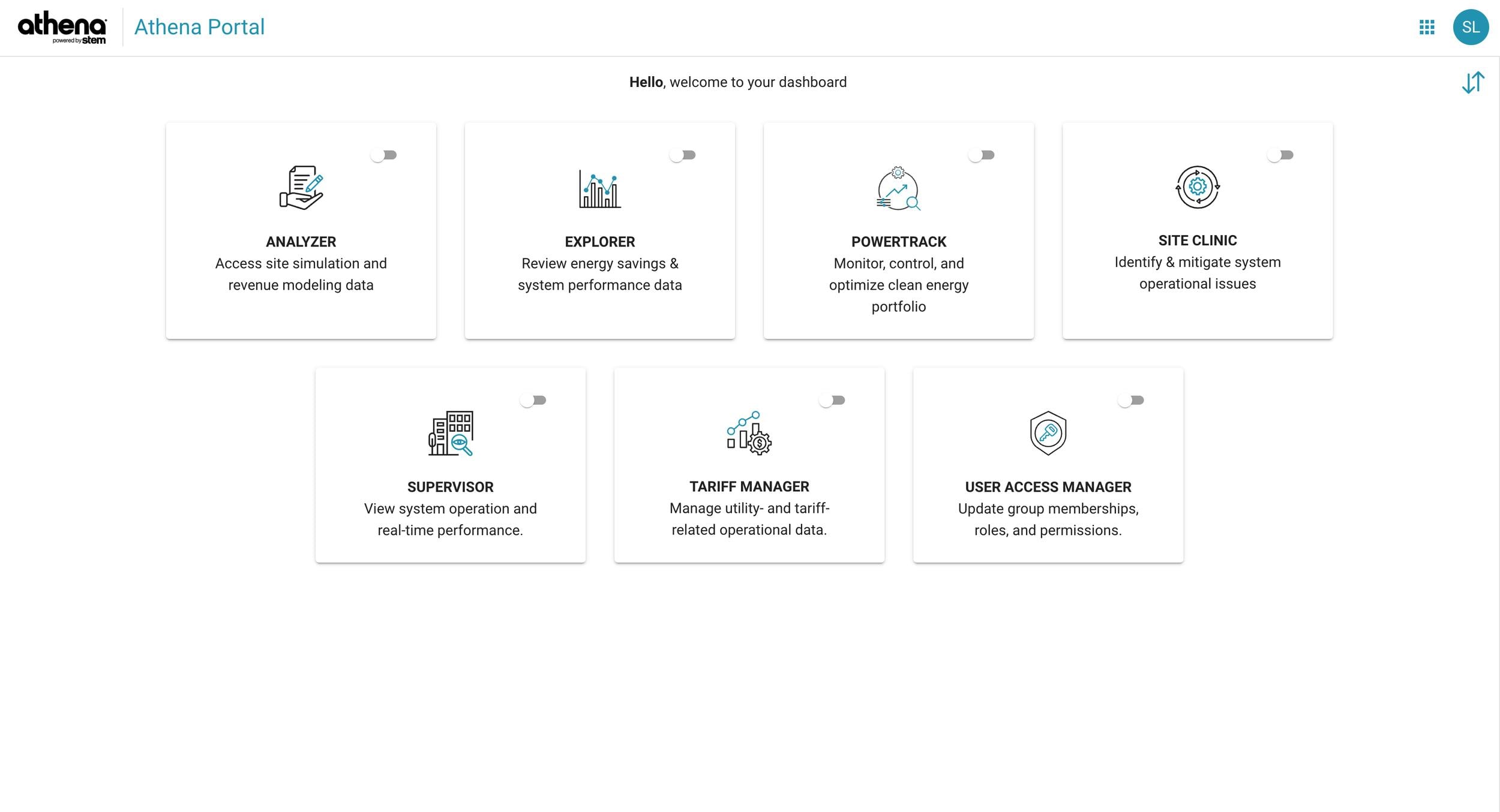
A typical daily workflow involves logging into the Athena dashboard to review the automated performance of the energy storage system. Users can view real-time data on how the battery is responding to current building loads or grid signals. The software operates mostly in the background, making autonomous decisions to charge or discharge based on the preset economic or sustainability goals.
Facility managers use the platform to generate weekly or monthly reports that quantify energy savings and carbon reductions. If the site is enrolled in a demand response program, the user might check the “”Events”” log to see how the system responded to recent utility calls. When maintenance is required, technicians use the diagnostic tools within Athena to identify specific modules or components that need attention, moving from reactive to proactive asset management.
What You Can Manage with Stem Athena
- Energy Storage Assets: Monitor and control the state of charge and discharge cycles for batteries.
- Solar PV Systems: Track generation data and manage hybrid solar-plus-storage workflows.
- Utility Costs: Optimize energy usage to reduce peak demand charges and time-of-use costs.
- Grid Service Revenue: Manage participation in programs that pay for grid stability and capacity.
- Sustainability Goals: Track and export data related to greenhouse gas emissions and clean energy usage.
- Asset Health: Manage maintenance schedules based on real-time diagnostics and health alerts.
FAQs
What does Stem Athena do?
Stem Athena is an AI-powered software platform that monitors and optimizes energy storage and solar assets. It uses machine learning to forecast energy needs and utility prices, automatically controlling batteries to save money and support the power grid.
Who is Stem Athena best for?
The platform is designed for commercial and industrial businesses, utility companies, and energy developers. It is ideal for organizations that want to maximize the ROI of battery storage through automated, intelligent energy management.
Is Stem Athena free?
No, Stem Athena is a commercial enterprise platform. It requires a paid subscription or service agreement, which is typically customized based on the size and complexity of the energy project.
What are the main limitations of Stem Athena?
The primary limitations include the lack of public pricing and the necessity for on-site hardware controllers. Additionally, its full financial benefit is often dependent on local utility rates and the availability of grid service markets.
What are the best alternatives to Stem Athena?
Common alternatives in the energy management and storage space include Tesla Opticaster, Fluence OS, Schneider Electric EcoStruxure, and specialized EMS providers like Energy Toolbase or Geli.