Solargis Monitor
Pros
- Eliminates maintenance and calibration costs associated with physical irradiance sensors.
- Provides globally consistent solar resource data across multiple regions.
- High spatial resolution enables site-specific analysis.
- Near real-time updates support rapid operational decision-making.
- Trusted by financial institutions and renewable energy investors.
- Gap-free datasets improve reporting and compliance activities.
- Flexible integration options support enterprise-scale deployments.
Cons
- Pricing information is not publicly available.
- Satellite-derived estimates may differ slightly from high-quality ground measurements.
- API and data integration require technical implementation expertise.
- May be costly for small residential or commercial portfolios.
- Focuses on data delivery rather than providing a comprehensive operational dashboard.
Maintaining solar asset performance requires accurate reference data to determine whether production losses are caused by weather conditions or technical issues. Traditional irradiance sensors can be expensive to install, require ongoing maintenance, and often suffer from calibration problems or data gaps. Solargis Monitor addresses these challenges by providing a satellite-based irradiance and weather data service that delivers a consistent, high-quality reference for solar plant performance analysis.
Designed for asset managers, operations and maintenance providers, performance engineers, and portfolio owners, Solargis Monitor helps organizations benchmark solar plant output against reliable solar resource data. By eliminating dependence on physical measurement infrastructure, the platform simplifies performance monitoring and improves operational decision-making.
What Is Solargis Monitor?
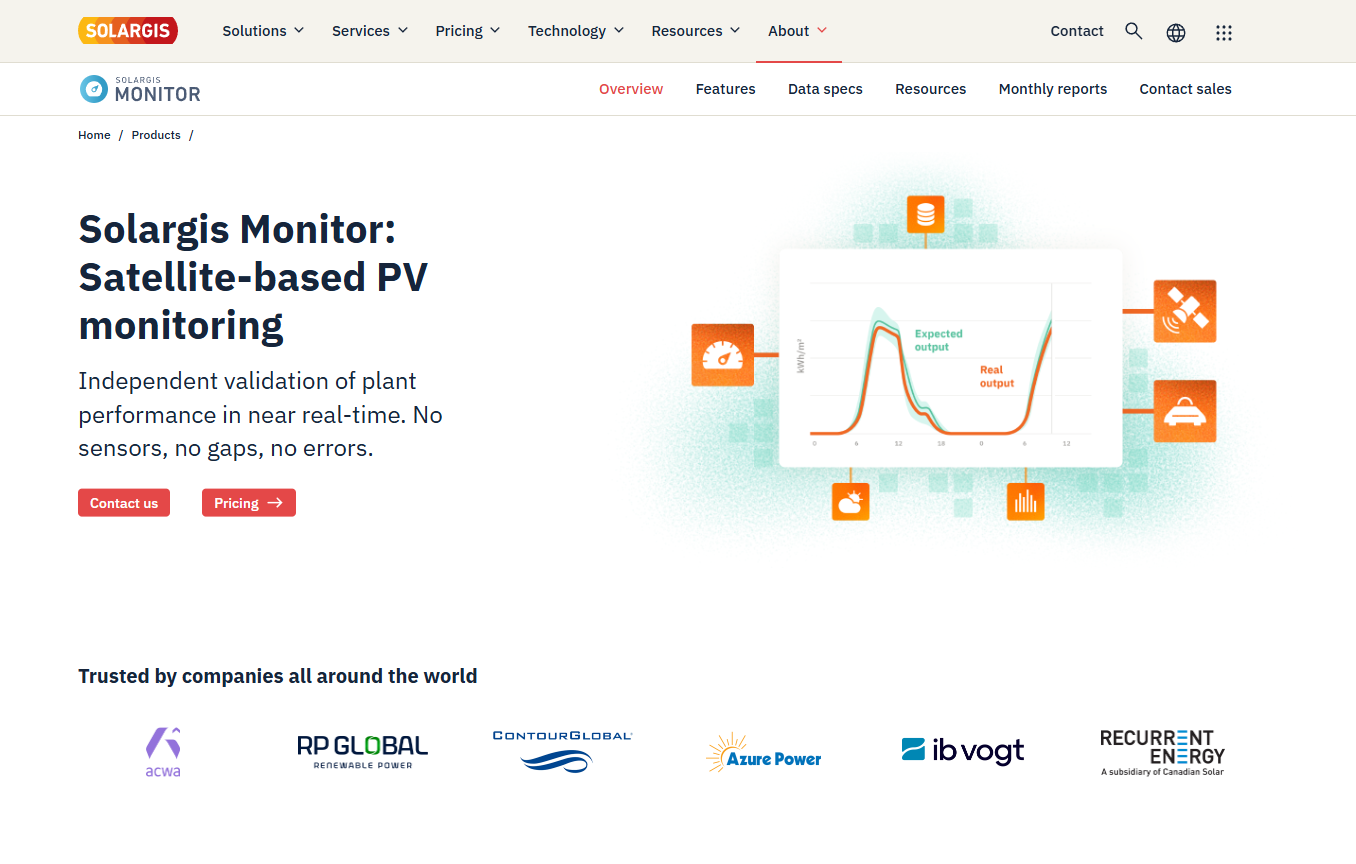
Solargis Monitor is a satellite-based solar monitoring and meteorological data service developed by Solargis.
The platform delivers near real-time solar irradiance and weather information that can be integrated directly into solar monitoring systems, asset management platforms, and performance analytics tools. It serves as an independent reference source for evaluating photovoltaic system performance and calculating performance ratios.
Features
- Satellite-Based Irradiance Reference: Access reliable GHI, DNI, and GTI data without requiring on-site solar sensors.
- Near Real-Time Data Delivery: Receive updated irradiance and weather information shortly after satellite acquisition.
- Gap-Free Time Series: Utilize complete historical and operational datasets without missing values.
- Monthly Data Reanalysis: Improve long-term accuracy through periodic recalibration and data refinement.
- Comprehensive Meteorological Parameters: Access more than 40 weather variables including temperature, wind speed, and snow depth.
- Probability and Clear-Sky Metrics: Analyze weather variability and expected production conditions.
- API and SFTP Integration: Automate data delivery into operational and analytical systems.
Screenshots
Solargis Monitor Pricing
Solargis Monitor uses a custom subscription model based on portfolio size, data resolution, and service requirements.
- Demo Access: Trial and demonstration options are available for evaluation.
- Basic Plans: Typically include hourly data and periodic updates.
- Professional Plans: Provide higher-frequency updates and enhanced datasets.
- Enterprise Packages: Designed for large-scale portfolios and utility operators.
- Usage-Based Pricing: Costs vary according to monitored locations and data requirements.
- Custom Quotes: Pricing is generally provided through direct consultation with Solargis.
Integrations
Solargis Monitor is designed to function as a data source for monitoring, analytics, and asset management platforms.
- REST API: Deliver operational irradiance and weather data programmatically.
- SFTP Delivery: Support automated CSV and bulk data transfers.
- PVsyst Integration: Compatible with energy simulation and performance analysis workflows.
- RatedPower Compatibility: Supports utility-scale solar engineering processes.
- Cloud Asset Management Platforms: Integrate monitoring data into portfolio management systems.
- Custom Software Environments: Flexible integration options for proprietary applications and ERP systems.
How to Set Up Solargis Monitor
- Contact Solargis to define monitoring requirements and portfolio scope.
- Provide site coordinates and technical system information.
- Select a preferred data delivery method such as API or SFTP.
- Receive authentication credentials and integration documentation.
- Configure monitoring platforms to ingest Solargis data.
- Validate performance calculations against operational plant data.
How to Use Solargis Monitor
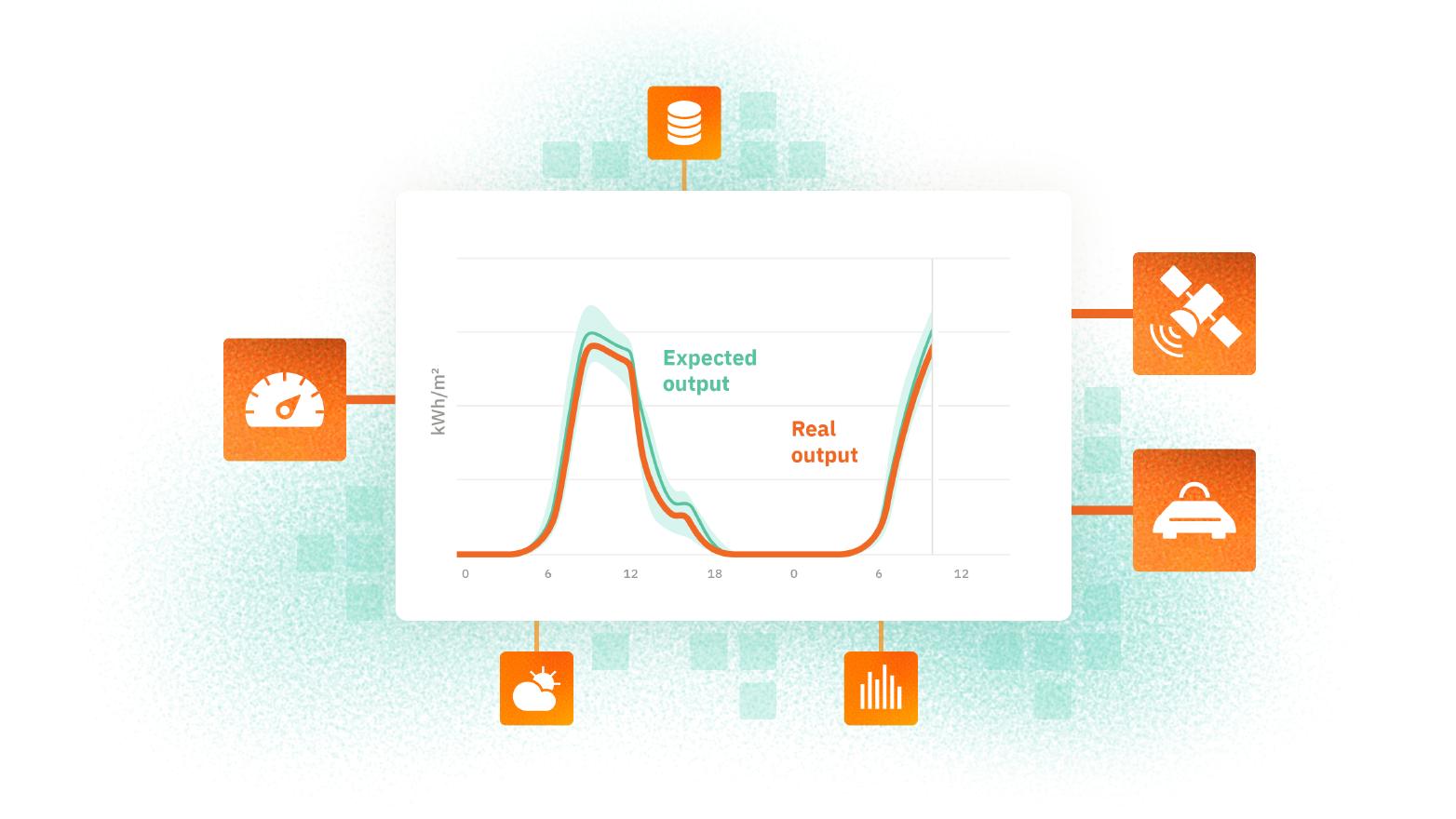
Once integrated, Solargis Monitor continuously supplies irradiance and weather data to connected monitoring platforms. Asset managers use this information to compare actual plant output against expected performance under current weather conditions.
When production deviations occur, analysts can investigate whether the cause is weather-related or the result of equipment faults. Historical datasets support long-term performance analysis, contractual reporting, and investor communications, while monthly reanalysis improves data quality for operational audits.
What You Can Manage with Solargis Monitor
- Performance Ratio Calculations: Benchmark actual production against independent solar resource data.
- Asset Performance Monitoring: Identify underperforming systems and operational issues.
- Portfolio Benchmarking: Compare solar assets across different geographic regions.
- Operational Reporting: Generate accurate performance and compliance reports.
- Data Validation: Verify sensor readings and identify measurement anomalies.
- Grid and Market Analysis: Support operational optimization and energy trading decisions.
FAQs
What does Solargis Monitor do?
Solargis Monitor provides satellite-derived solar irradiance and weather data that serve as an independent reference for monitoring photovoltaic system performance and calculating performance ratios.
Who is Solargis Monitor best for?
It is designed for asset managers, O&M providers, performance analysts, utilities, and renewable energy portfolio operators who require reliable solar resource reference data.
Is Solargis Monitor free?
No, Solargis Monitor is a commercial subscription service, although demonstrations and trial access may be available.
How much does Solargis Monitor cost?
Pricing depends on the number of monitored sites, data frequency, and service requirements. Solargis provides custom quotations based on project needs.
What are the main limitations of Solargis Monitor?
Main limitations include the need for technical integration, lack of public pricing transparency, and its focus on data delivery rather than full operational asset management functionality.
What are the best alternatives to Solargis Monitor?
Popular alternatives include Solcast, SolarAnywhere, Meteonorm, Vaisala solar resource services, and other satellite-based irradiance and weather data providers.