Raycatch
Pros
- Requires no additional hardware or on-site installation, reducing upfront deployment costs.
- Provides root-cause analysis rather than just basic monitoring alerts.
- Prioritizes maintenance tasks based on financial ROI, improving resource allocation.
- Scalable for large global portfolios with diverse equipment types.
- Strong technical credibility through partnerships with major firms like SAP and Microsoft.
- Reduces the time engineers spend on manual data crunching and report generation.
Cons
- Pricing is not transparent and requires a direct sales consultation.
- Primary value is for utility-scale and large C&I portfolios, making it less suitable for small residential installers.
- Requires high-quality existing SCADA data to provide the most accurate diagnostics.
- The advanced nature of the analytics may have a learning curve for non-technical users.
Maintaining high energy yield in solar photovoltaic (PV) plants is a complex challenge. Over time, environmental factors, equipment degradation, and technical faults can lead to significant energy losses that often go unnoticed. Raycatch solves this problem by providing a cloud-based diagnostic tool that converts raw system data into actionable technical insights.
The platform is designed for solar asset managers, owners, and operations and maintenance (O&M) providers who need to oversee large or diverse portfolios. By automating the analysis of SCADA data, Raycatch identifies specific root causes of underperformance, allowing teams to prioritize maintenance tasks that offer the highest financial return.
What Is Raycatch?
Raycatch is a Software-as-a-Service (SaaS) platform categorized as a solar data analytics and diagnostic solution. Unlike standard monitoring tools that only report that a plant is producing power, Raycatch focuses on “why” a plant might be underperforming. It uses artificial intelligence and proprietary algorithms to separate noise from significant data, providing a clear picture of plant health.
The platform is built to serve the utility-scale and commercial and industrial (C&I) solar sectors. It operates by connecting to existing SCADA (Supervisory Control and Data Acquisition) systems, meaning it does not require the installation of additional hardware or sensors on-site. Founded in 2015 and based in Israel, Raycatch has established itself as a technical leader in the digital solar space, securing millions in venture funding and partnering with global enterprises like SAP.
Features
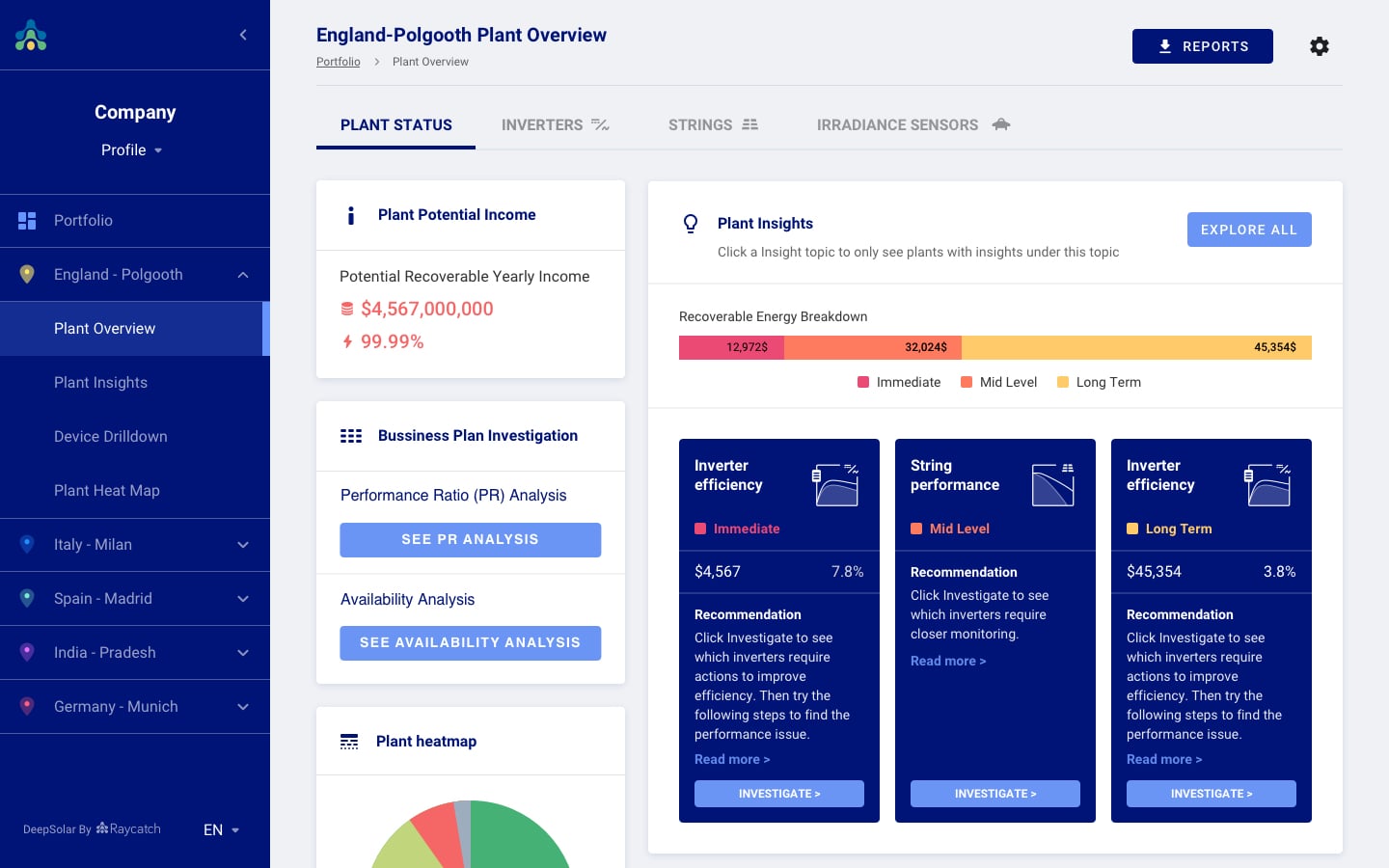
- AI-Driven Diagnostics: Automatically identifies and categorizes the causes of energy loss, such as soiling, PID (Potential Induced Degradation), or inverter inefficiency.
- Actionable O&M Task Lists: Converts complex data into a prioritized list of maintenance activities, ranked by their potential impact on ROI.
- Hardware-Agnostic Integration: Connects directly to existing monitoring systems and SCADA interfaces, eliminating the need for new physical sensors.
- Performance Mapping: Provides a high-resolution view of how individual components are performing across an entire portfolio.
- Financial Impact Analysis: Calculates the specific monetary loss associated with technical issues, helping managers justify maintenance expenses.
- Cloud-Hosted Dashboard: Offers a centralized workspace where teams can monitor multiple sites regardless of their geographical location or equipment brand.
Screenshots


Raycatch Pricing
Pricing is not publicly listed. To get a figure for Raycatch, teams book a demo or go through the sales team.
The cost of the platform typically depends on the total capacity (MWp) of the portfolio being managed and the specific depth of analytics required. As an enterprise-grade solution, Raycatch focuses on providing a return on investment that outweighs the subscription cost by identifying recoverable energy losses.
Integrations
Raycatch is designed to sit on top of existing infrastructure, making its integration capabilities a core part of its value proposition.
- SCADA and Monitoring Integrations: Compatible with major solar monitoring platforms and SCADA interfaces to pull raw high-resolution data.
- ERP and Management: Has a verified integration with SAP, allowing users to merge technical diagnostics with broader enterprise resource planning and asset management workflows.
- API Access: Provides interfaces for data exchange with other third-party software tools used in energy management.
How to Set Up Raycatch
- Request a demo through the official website to discuss portfolio size and needs.
- Provide Raycatch with access credentials for your existing SCADA or monitoring platform.
- The Raycatch team configures the AI model to map your specific plant architecture.
- Verify the initial data ingestion and diagnostic results during the onboarding phase.
- Grant access to team members and set up customized reporting schedules.
How to Use Raycatch
On a day-to-day basis, users log into the Raycatch dashboard to view the health of their solar assets. Instead of looking at raw graphs, managers check the “Action Items” list which highlights which plants have recoverable energy losses.
An asset manager might see that a specific site is losing 3% of its yield due to soiling. The system calculates the cost of this loss versus the cost of cleaning. If the cleaning is profitable, the manager exports the task to the O&M team. Engineers use the platform to drill down into specific inverter or string data to troubleshoot persistent technical faults remotely before sending a technician to the field.
What You Can Manage with Raycatch
- Energy Yield Optimization: Tracking and recovering lost kilowatt-hours through better diagnostics.
- O&M Prioritization: Managing maintenance schedules based on financial impact rather than fixed calendars.
- Asset Health Records: Maintaining a digital history of plant performance and degradation over time.
- Portfolio Performance Reports: Generating high-level summaries for investors and stakeholders.
- Technical Audits: Using independent data to verify the performance of O&M contractors.
FAQs
What does Raycatch do?
Raycatch is an AI-driven software platform that analyzes data from solar plants to identify technical issues and energy losses. It provides users with a prioritized list of maintenance tasks designed to increase energy yield and maximize the financial return of solar assets.
Who is Raycatch best for?
The tool is designed for owners of large-scale solar portfolios, asset management firms, and O&M providers. It is most effective for users managing multiple megawatts of solar capacity who need to automate complex technical diagnostics.
Is Raycatch free?
No, Raycatch is commercial enterprise software. While they may offer demos or trial periods to prospective clients, the full platform requires a paid subscription.
What are the main limitations of Raycatch?
Raycatch relies on the quality of the data provided by the existing SCADA or monitoring system; if the source data is missing or highly inaccurate, the diagnostics will be limited. Additionally, it is an analytical tool rather than a design or drafting software, so it does not create blueprints or CAD drawings.
What are the best alternatives to Raycatch?
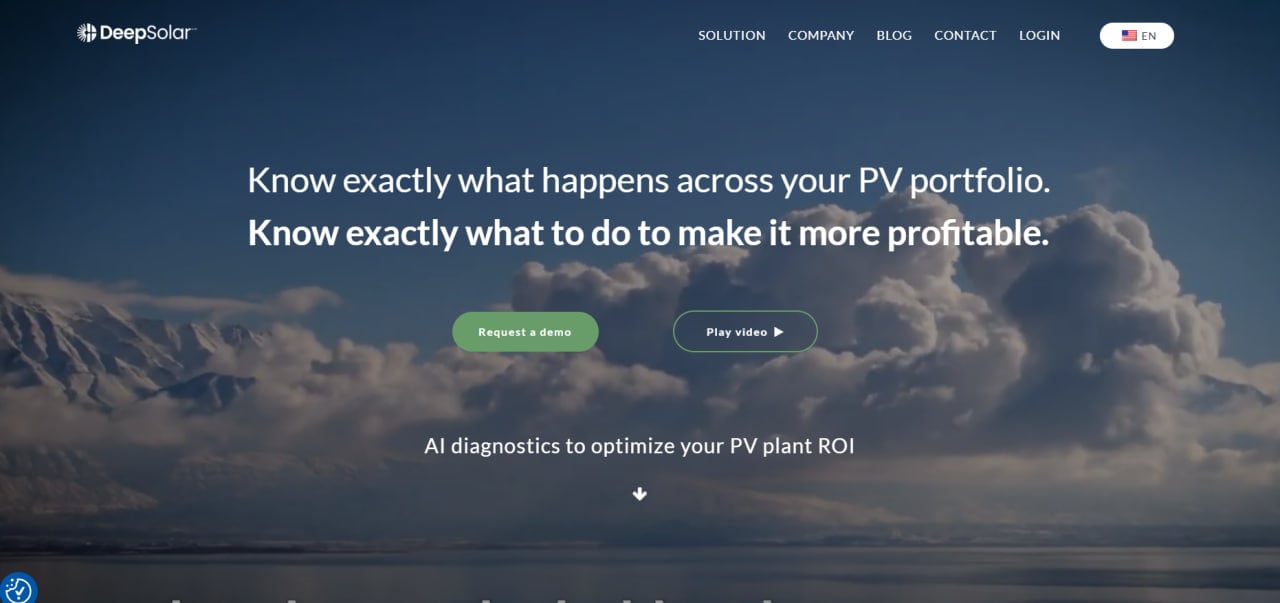
Common alternatives in the solar analytics and asset management space include SMA Sunny Portal, Power Factors, and Stem PowerTrack. Other specialized AI diagnostic tools include DeepSolar and Solar Analytics.