DECK Monitoring
Pros
- Long history in commercial solar monitoring.
- Flexible hardware and deployment options.
- Strong technical support and engineering assistance.
- Detailed monitoring and diagnostics capabilities.
- Useful public-facing sustainability dashboards.
- Backed by AlsoEnergy and Stem technologies.
Cons
- No public pricing information available.
- Implementation can require technical expertise and onsite setup.
- Relies on dedicated hardware installations.
- Primarily focused on commercial and utility-scale projects rather than residential systems.
Managing solar assets effectively requires sharp data and real-time visibility. Many developers and owners find themselves struggling with scattered data or unreliable hardware, which often leads to missed performance issues and lost revenue. DECK Monitoring steps in to solve these problems with a vertically integrated platform, combining tough data acquisition hardware with a smart, cloud-based management app.
Based in Bend, Oregon, DECK Monitoring started as an independent provider before joining AlsoEnergy in 2013. Today, its technology is a key part of the AlsoEnergy and Stem ecosystem, offering a specialized choice for professionals who need top-tier data accuracy and analytics.
What Is DECK Monitoring?
DECK Monitoring is an all-in-one management platform built specifically for commercial, industrial, and utility-scale solar systems. It is widely used by developers, EPC firms, and asset managers to monitor energy production, detect faults, and track financial performance.
The platform combines onsite monitoring hardware—such as gateways, weather stations, and revenue-grade meters—with a cloud-based analytics application that provides dashboards, reporting, and alerting tools.
Features
- Web-based management application: Monitor solar portfolios remotely through secure dashboards.
- Public-facing dashboards: Display solar production and sustainability metrics publicly.
- Granular performance monitoring: Detect underperforming equipment and array-level issues.
- Automated alerts and diagnostics: Receive notifications when hardware or performance problems occur.
- Revenue-grade metering: Support accurate financial and PPA reporting.
- Flexible hardware configuration: Support turnkey and custom monitoring hardware setups.
- Managed services and support: Access engineering and installation assistance.
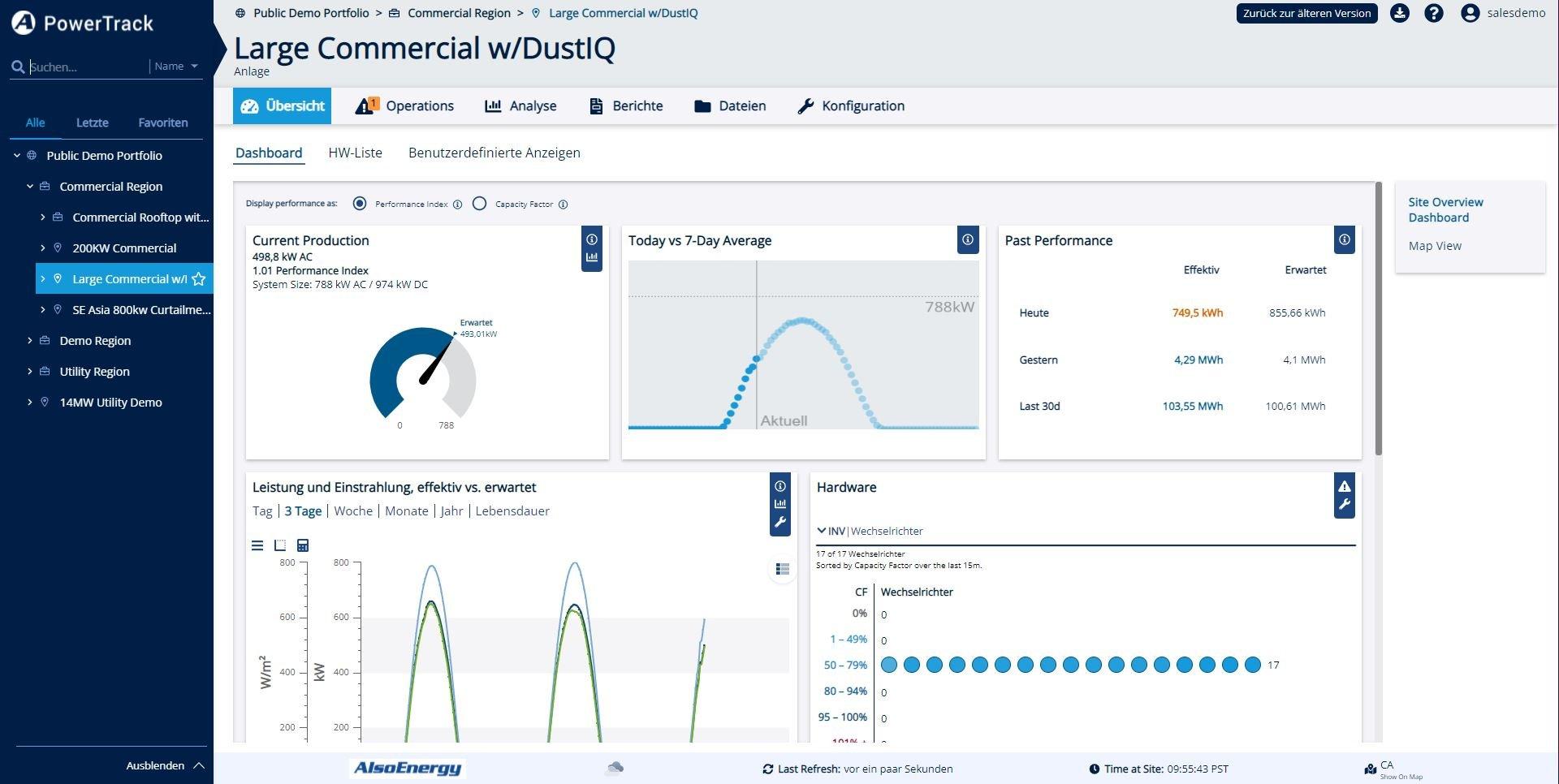
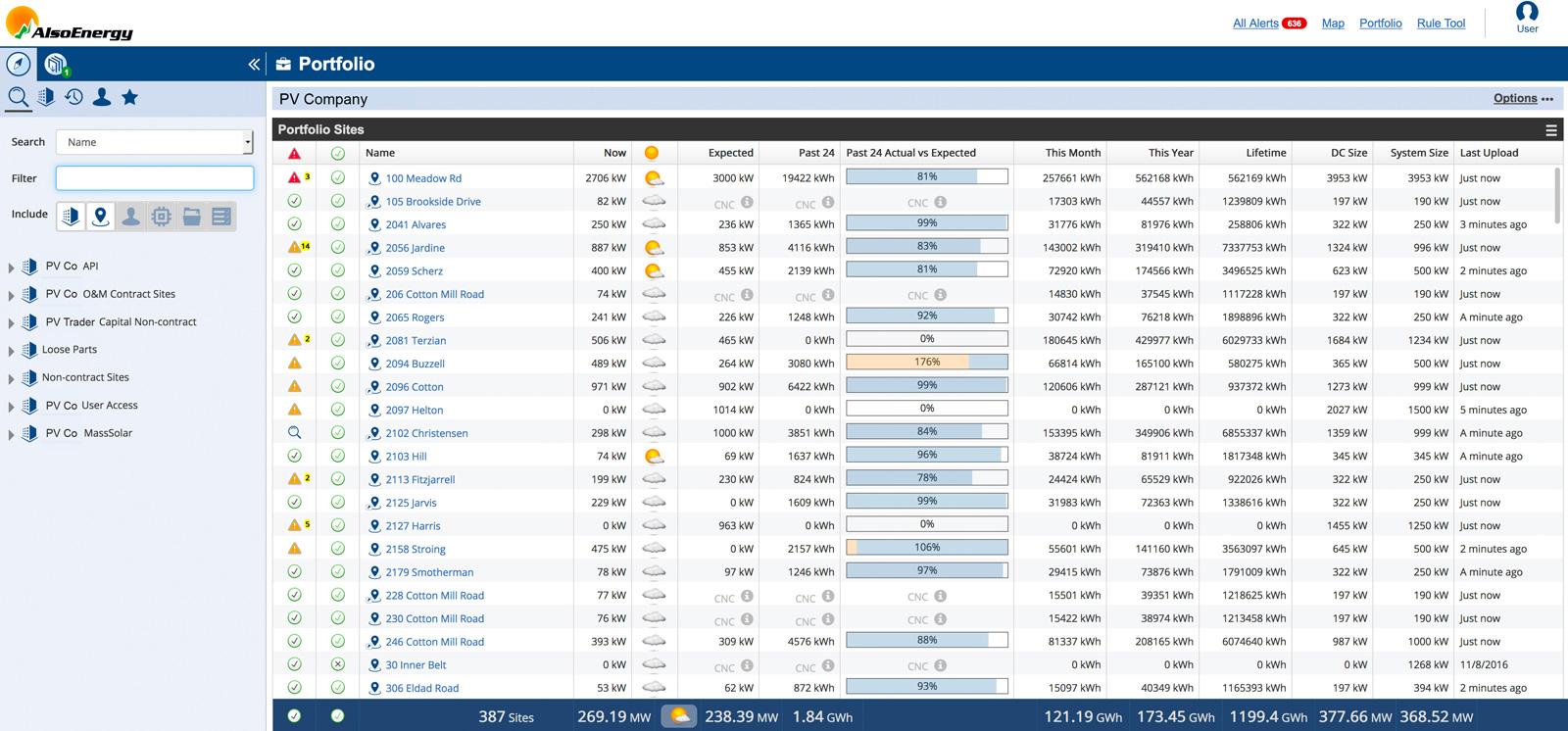
Screenshots
DECK Monitoring Pricing
DECK Monitoring uses custom pricing based on project size, hardware requirements, and support services.
- Custom Quotes: Pricing is tailored to each deployment.
- Hardware Costs: Pricing varies depending on gateways, sensors, and weather stations.
- Subscription Fees: Ongoing cloud monitoring and analytics subscriptions apply.
- Enterprise Deployments: Designed primarily for commercial and utility-scale projects.
Integrations
DECK Monitoring supports integrations with a wide range of solar and industrial systems.
- Inverter Integrations: Compatible with major inverter manufacturers.
- Communication Protocols: Modbus RS-485, Modbus TCP, and DNP3.
- CMMS and BI Systems: API connectivity through AlsoEnergy integrations.
- Environmental Sensors: Weather stations, irradiance sensors, temperature sensors, and wind monitoring devices.
How to Set Up DECK Monitoring
- Consult with DECK Monitoring or AlsoEnergy engineers.
- Select monitoring hardware and communication equipment.
- Install gateways, sensors, and network connections onsite.
- Configure cloud connectivity and site registration.
- Create monitoring dashboards and user accounts.
- Validate system communication before going live.
How to Use DECK Monitoring
Asset managers use the dashboard to monitor real-time system performance, review alerts, and identify underperforming equipment across solar portfolios.
Technicians analyze inverter data, weather conditions, and expected production reports to diagnose issues and optimize maintenance workflows.
What You Can Manage with DECK Monitoring
- Solar PV Performance: Monitor AC and DC production across sites.
- Hardware Health: Track inverter, sensor, and gateway status.
- Environmental Monitoring: Collect irradiance, temperature, and weather data.
- Financial Reporting: Support PPA billing and ROI analysis.
- Maintenance Prioritization: Identify critical performance losses quickly.
- Public Sustainability Displays: Showcase renewable energy generation metrics.
FAQs
What does DECK Monitoring do?
DECK Monitoring provides hardware and cloud-based software for monitoring, analyzing, and managing commercial and utility-scale solar energy systems.
Who is DECK Monitoring best for?
It is best suited for EPC firms, solar developers, commercial asset managers, and utility-scale renewable energy operators.
Is DECK Monitoring free?
No, DECK Monitoring is a paid enterprise monitoring platform that requires hardware installations and software subscriptions.
How much does DECK Monitoring cost?
Pricing depends on project size, monitoring hardware, and service requirements. Custom quotes are provided through AlsoEnergy.
What are the main limitations of DECK Monitoring?
Main limitations include the need for dedicated hardware, technical implementation complexity, and a focus on larger commercial deployments.
What are the best alternatives to DECK Monitoring?
Popular alternatives include SMA Sunny Portal, Schneider Electric EcoStruxure, PowerTrack by AlsoEnergy, and other solar asset management platforms.