AMS DERMS
Pros
- Industry-leading AI that can outperform manual bidding strategies in wholesale markets.
- Scalable architecture capable of managing large portfolios across different geographic regions.
- Strong focus on financial optimization, helping project owners achieve faster returns on battery investments.
- Seamless transition between grid-following and market-participating modes.
- Backed by the global service and support network of Fluence.
- Advanced forecasting reduces the risk of penalties associated with asset underperformance.
Cons
- High entry barrier makes the platform more suitable for large enterprises than small businesses.
- Lack of public pricing transparency can make initial budget planning difficult.
- Complex onboarding process requires deep technical integration with existing hardware.
- Significant learning curve for operators transitioning from traditional grid management tools.
The rapid transition to renewable energy has introduced a significant challenge for utility providers and asset owners: volatility. Distributed Energy Resources (DERs), such as battery storage and solar arrays, are intermittent by nature, making it difficult to maintain a balanced grid while ensuring financial profitability. AMS DERMS (Distributed Energy Resource Management System) was developed to bridge this gap, using advanced artificial intelligence to transform these fragmented assets into reliable, dispatchable resources.
Utility companies, independent power producers, and energy traders typically use AMS DERMS to navigate complex wholesale energy markets. By automating the bidding and dispatch process, the platform allows users to capture revenue opportunities that would be impossible to manage manually. This review explores the technical capabilities, market positioning, and practical applications of the AMS DERMS software suite.
What Is AMS DERMS?
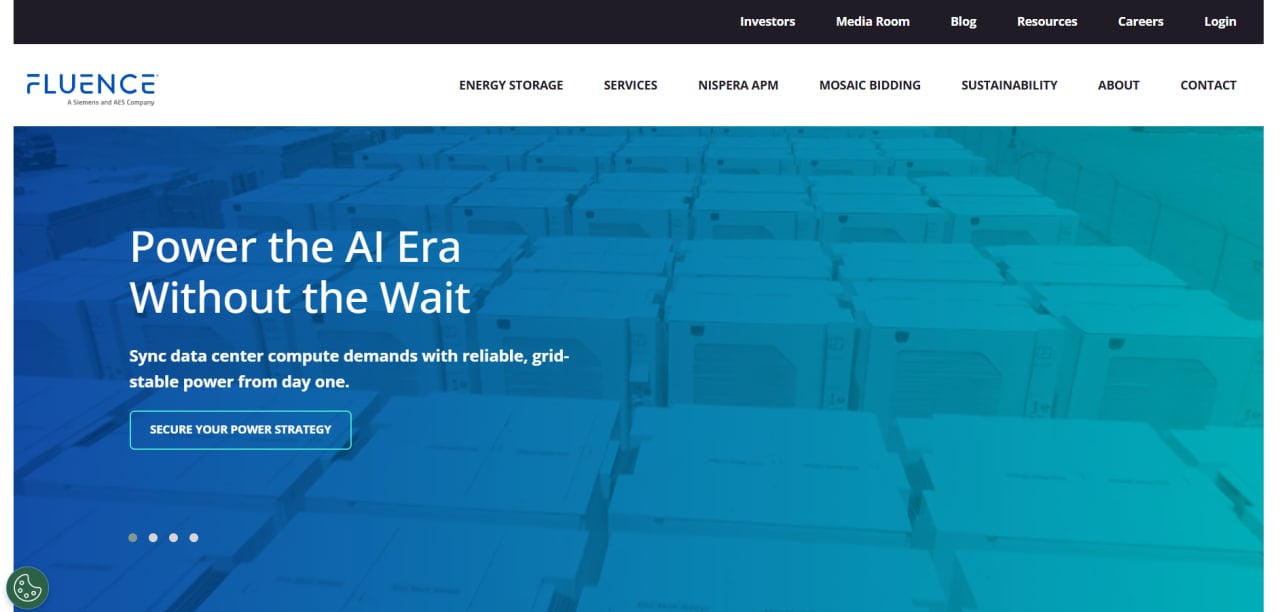
AMS DERMS is an enterprise-grade software platform categorized as a Distributed Energy Resource Management System with a specific focus on Virtual Power Plant (VPP) optimization. Originally developed by Advanced Microgrid Solutions (AMS) and later acquired by Fluence, the platform is designed to manage the economic side of the grid. It acts as an intelligent layer between physical energy assets and wholesale electricity markets, such as CAISO in California or the NEM in Australia.
The platform is engineered for large-scale energy stakeholders who manage portfolios of batteries, solar, wind, and demand-response assets. At a high level, the system works by ingesting vast amounts of market data and weather forecasts to predict price fluctuations. It then uses machine learning algorithms to determine the optimal time to charge, discharge, or hold energy, ensuring that assets are always performing at their highest value.
Trust signals for the brand include its acquisition by Fluence, a global leader in energy storage, and its track record of managing hundreds of megawatts of assets across multiple continents.
Features
- AI-Driven Market Bidding: Automates the submission of bids into wholesale energy markets using price forecasting to maximize revenue from frequency regulation and energy arbitrage.
- Virtual Power Plant Aggregation: Groups diverse, decentralized assets—such as residential batteries or industrial loads—into a single virtual resource that can be dispatched like a traditional power plant.
- Real-Time Telemetry and Monitoring: Provides a centralized dashboard that tracks the state of charge, health, and performance of every connected asset in the portfolio.
- Predictive Analytics: Uses historical data and machine learning to forecast energy demand and renewable generation, helping operators prepare for grid stress events.
- Co-Optimized Dispatch: Simultaneously manages multiple value streams, such as local peak shaving and global market participation, to ensure that local site needs are met without missing market opportunities.
- Automated Reporting: Generates detailed financial and operational reports that simplify the settlement process and provide transparency for asset owners and investors.
AMS DERMS Pricing
Pricing is not publicly listed. To get a figure for AMS DERMS, teams book a demo or go through the sales team.
As an enterprise-level infrastructure solution, AMS DERMS typically follows a custom pricing model. Fees are often structured based on the total megawatt capacity of the assets under management or through a performance-sharing model where the software cost is tied to the additional revenue generated by the optimization.
Prospective clients generally undergo a site or portfolio audit before receiving a formal proposal.
Integrations
AMS DERMS is designed to work within a broader ecosystem of energy hardware and utility software. Confirmed integrations include:
- Hardware Integrations: Compatible with various battery energy storage systems, including equipment from Fluence, Tesla, and LG, as well as industrial inverter systems.
- Market Integrations: Provides native connectivity with major Independent System Operators and Regional Transmission Organizations for direct market participation.
- Utility Software: Integrates with Advanced Distribution Management Systems and SCADA platforms through standard protocols.
- APIs and Webhooks: Provides programmatic access for developers to transfer performance data into external financial, reporting, or ERP systems.
How to Set Up AMS DERMS
- Initial Consultation: Engage with Fluence or AMS experts to define portfolio goals and target energy markets.
- Technical Audit: Provide specifications for existing hardware, including inverters and battery management systems.
- Integration Phase: Engineers establish secure communication links between the assets, cloud platform, and local grid operator.
- Model Training: Supply historical site data to calibrate the platform’s price forecasting and load prediction models.
- Pilot Testing: Run the system in shadow mode to validate its bidding strategies against actual market conditions.
- Full Activation: Allow the platform to take over automated dispatch and energy market participation.
How to Use AMS DERMS
The daily workflow for an energy trader or plant manager revolves around the optimization dashboard. Users typically start the day by reviewing the AI-generated trading plan, which outlines expected market prices and planned asset activity for the next 24 hours. While bidding is largely automated, operators monitor real-time telemetry to ensure assets respond correctly to dispatch signals.
Throughout the day, users can adjust operational constraints, such as reserving a specific amount of battery capacity for an upcoming local demand peak. The AI then recalculates the most profitable way to use the remaining energy.
At the end of a trading cycle, managers use the reporting tools to compare actual and predicted revenue, providing data-backed performance insights for stakeholders.
What You Can Manage with AMS DERMS
- Virtual Power Plants: Aggregated groups of distributed resources operating as a single entity.
- Market Bids: Automated entries into energy and ancillary service markets.
- Revenue Dashboards: Real-time tracking of financial performance and market earnings.
- Asset Health: Detailed records of battery cycles, degradation, capacity, and efficiency.
- Demand Response: Managed reductions in energy use during periods of peak grid demand.
- Forecasting Models: Customizable predictions covering electricity prices, weather, renewable generation, and load.
FAQs
What does AMS DERMS do?
AMS DERMS is an AI-powered software platform that optimizes how distributed energy resources, such as batteries, participate in energy markets. It automates bidding and dispatch to maximize revenue while helping stabilize the electrical grid.
Who is AMS DERMS best for?
The platform is designed for large-scale utility companies, independent power producers, energy traders, and energy aggregators. It is specifically built for organizations managing Virtual Power Plants or large portfolios of energy storage assets.
Is AMS DERMS free?
No, AMS DERMS is a premium enterprise solution. There is no public free version or self-service trial because deployment requires significant technical integration and custom configuration.
Does AMS DERMS support integrations?
Yes. The platform can integrate with battery energy storage systems, inverters, utility SCADA platforms, Advanced Distribution Management Systems, energy market operators, and external enterprise software through APIs and webhooks.
What are the main limitations of AMS DERMS?
The primary limitations include its high complexity and specific hardware integration requirements. It is an enterprise-focused platform, meaning it may be too expensive and feature-heavy for small-scale solar or storage operators.
What are the best alternatives to AMS DERMS?
Common alternatives include Tesla Autobidder, Schneider Electric EcoStruxure DERMS, and Stem Athena. Each platform provides different levels of AI optimization, energy market support, and hardware compatibility.