Sunverge Energy Platform
Pros
- More than a decade of experience in the VPP and DERMS market.
- Edge-to-cloud architecture provides strong local control and operational reliability.
- Co-optimizes energy services for utilities and participating consumers.
- Proven track record with major municipal utilities and international projects.
- Supports hardware from multiple manufacturers through an open-platform approach.
- Real-time data processing supports high-speed grid services such as frequency regulation.
- Combines solar, battery storage, smart loads, and EV charging management in one environment.
Cons
- Primarily designed for utilities and enterprise clients rather than individual homeowners.
- Requires Sunverge Infinity edge hardware to access its full real-time control capabilities.
- Setup requires professional assessment, integration, and utility-grade commissioning.
- Public pricing information is unavailable, making initial budgeting difficult.
- Advanced multi-objective optimization features may have a significant learning curve.
The rapid transition toward renewable energy has introduced significant complexity to the electrical grid, as utilities must now manage thousands of decentralized energy sources. Sunverge Energy Platform addresses this by providing a comprehensive solution for Virtual Power Plants (VPPs) and Distributed Energy Resource Management Systems (DERMS). By aggregating behind-the-meter resources like residential batteries and solar arrays, the platform helps balance grid demand and reduce operational costs.
Utilities and energy retailers often consider Sunverge when they need to increase grid resiliency and integrate volatile renewable sources more effectively. The platform serves as a bridge between the utility’s high-level requirements and the granular control of individual consumer devices, providing a scalable way to manage the modern energy landscape.
What Is Sunverge Energy Platform?
Sunverge Energy Platform is a cloud-based Software-as-a-Service (SaaS) tool categorized as a Virtual Power Plant (VPP) and Distributed Energy Resource Management System (DERMS). It is designed to orchestrate and aggregate distributed energy resources (DERs)—such as solar panels, battery storage, and electric vehicle chargers—into a single, grid-aware power source.
The platform’s primary target users are electric utilities, retail energy providers, and grid operators that need to manage peak load and maintain frequency regulation. It works through an edge-to-cloud architecture: the Sunverge Infinity edge controller operates on-site to provide real-time local control, while the cloud platform manages fleet-wide orchestration.
Sunverge is recognized as a pioneer in the VPP space, having launched its first load-control and storage VPP in 2012. The platform has since been used by major organizations such as the Sacramento Municipal Utility District (SMUD).
Features
- Real-Time DER Control: Offers near-real-time, autonomous control over decentralized energy resources, ensuring the system can respond quickly to grid fluctuations or price signals.
- Virtual Power Plant Aggregation: Groups individual residential or commercial battery systems into a single virtual resource that utilities can dispatch to reduce peak demand or provide frequency support.
- Multi-Objective Optimization: Uses algorithms to balance multiple goals simultaneously, such as maximizing a homeowner’s savings while providing the utility with grid services.
- Dynamic Pricing Support: Connects with independent system operators to retrieve day-ahead or hourly pricing, allowing batteries to charge when prices are low and discharge during expensive peak periods.
- Grid-Edge Intelligence: Uses the Sunverge Infinity controller to provide local intelligence for backup power, voltage regulation, and other critical functions—even when cloud connectivity is interrupted.
- Predictive Analytics: Learns consumption and generation patterns to forecast future energy needs, helping utilities stay below contracted power limits and avoid penalties.
- EV Charging Orchestration: Integrates with electric vehicle infrastructure to manage charging cycles while minimizing their effect on local distribution feeders.
Screenshots
Sunverge Energy Platform Pricing
Pricing is not publicly listed. Prospective users must contact the company or request a demo to receive a custom quote.
Enterprise energy platforms of this scale typically involve a combination of:
- Hardware costs for Sunverge Infinity edge controllers.
- Implementation and commissioning fees for utility-scale integrations.
- Recurring SaaS subscription fees based on the number of connected nodes or total megawatt capacity under management.
- Additional costs for custom integrations, analytics, and ongoing technical support.
Integrations
- Energy Storage Systems: Confirmed compatibility with storage products from companies such as Panasonic, LG Energy Solution, and Schneider Electric.
- EV Charging Infrastructure: Supports residential EV charging management through collaborations with companies such as Eaton.
- Grid and Utility Protocols: Supports industrial and utility communication methods such as Modbus and CAN-based APIs for hardware-level control.
- Utility Systems: Can connect with SCADA, billing, and other utility management platforms through APIs.
- Cloud Infrastructure: Uses a cloud-native SaaS architecture to support large-scale data processing and fleet orchestration.
- Budderfly Ecosystem: Sunverge’s acquisition by Budderfly supports integration with a broader collection of sustainability and energy management services.
How to Set Up Sunverge Energy Platform
- Contact the Sunverge or Budderfly sales team to arrange a grid requirements and site assessment.
- Design a pilot or full-scale deployment plan that identifies the types of distributed energy resources to be aggregated.
- Install Sunverge Infinity edge controllers and compatible battery or EV charging hardware at participating sites.
- Integrate the cloud platform with the utility’s existing management, SCADA, and billing systems through APIs.
- Configure VPP parameters, including optimization objectives, pricing signals, backup requirements, and alert thresholds.
- Test device communications and control commands during the commissioning process.
- Launch the orchestration workflow to begin aggregating and dispatching connected resources.
How to Use Sunverge Energy Platform
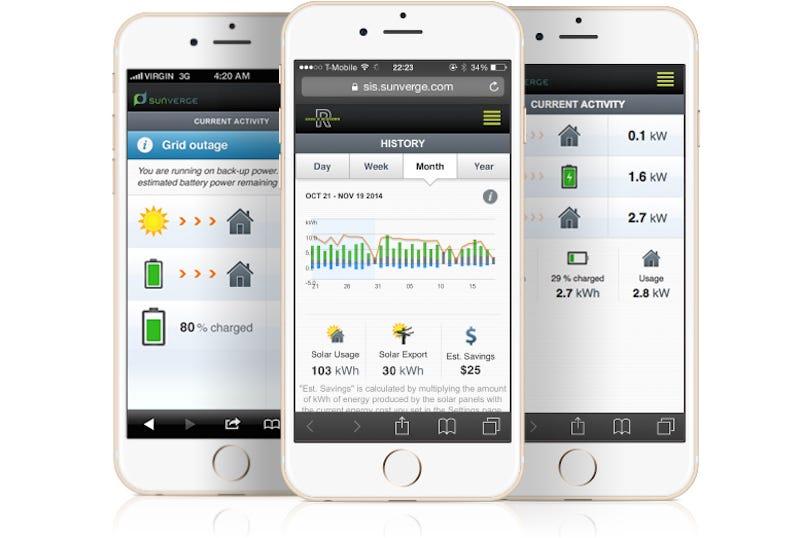
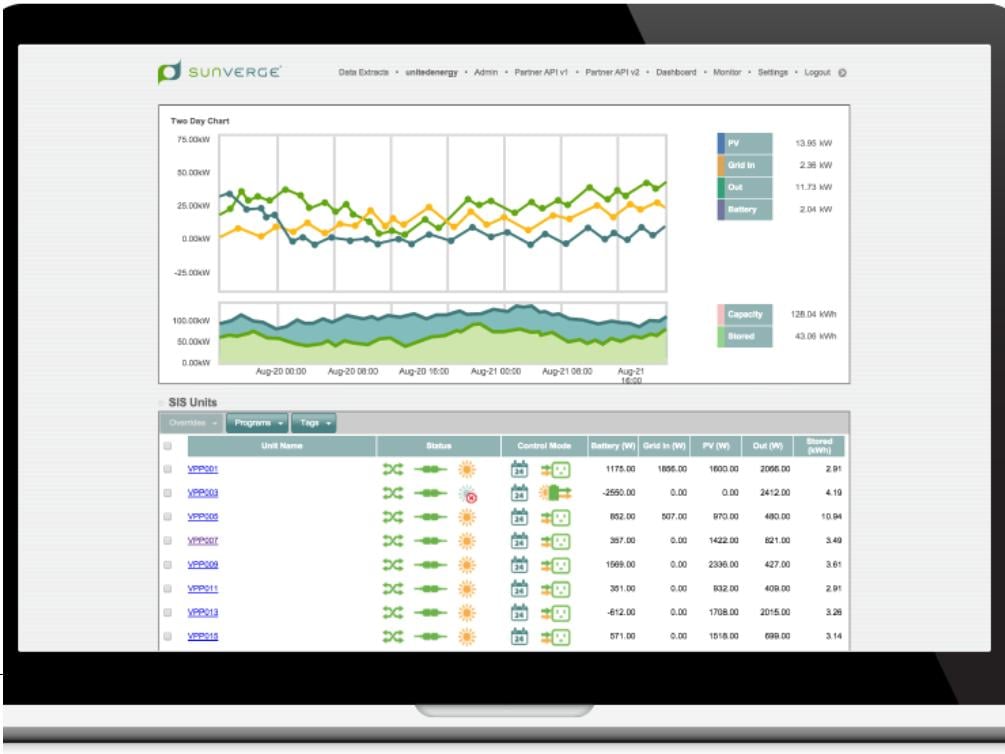
The daily operation of the Sunverge platform involves monitoring a centralized dashboard that displays the real-time status of the aggregated DER fleet. Utility operators can view total available capacity, the current state of charge across the network, and the effect of ongoing demand-response events.
When the grid experiences a demand peak, operators can initiate an automated discharge event across the VPP to reduce the load on specific feeders. The platform can also respond automatically to configured price signals, grid conditions, and optimization rules.
On the consumer side, the system operates largely in the background. It automatically manages the battery to ensure the homeowner retains sufficient backup power while participating in eligible utility programs.
Energy managers can use the reporting tools to analyze performance, verify peak-load reductions, and calculate the financial credits earned through grid participation.
What You Can Manage with Sunverge Energy Platform
- Virtual Power Plants: Aggregated groups of batteries and other resources operating as a single grid asset.
- Distributed Energy Resources: Individual solar arrays, battery systems, EV chargers, and flexible loads.
- Grid Services: Peak shaving, frequency regulation, voltage support, and demand response.
- EV Charging Infrastructure: Charging schedules and energy load management for residential EV chargers.
- Utility Billing Data: Energy usage, program participation, and DER performance data used for financial settlement.
- Fleet Analytics: Real-time and historical reports covering the health, capacity, availability, and efficiency of connected assets.
FAQs
What does Sunverge Energy Platform do?
Sunverge Energy Platform combines software and edge hardware to aggregate distributed energy resources, such as residential batteries, into a Virtual Power Plant. This allows utilities to manage grid demand in real time while helping consumers save money and maintain backup power.
Who is Sunverge Energy Platform best for?
The platform is primarily designed for electric utilities, retail energy providers, grid operators, and solar or storage companies managing large portfolios. It is ideal for organizations that want to use behind-the-meter assets to support grid stability.
Is Sunverge Energy Platform free?
No. It is a professional, enterprise-grade solution that requires a paid contract. Pricing is customized according to the deployment scale, connected capacity, hardware requirements, and selected features.
Does Sunverge Energy Platform support integrations?
Yes. The platform supports integrations with energy storage systems, EV charging infrastructure, utility SCADA and billing systems, and compatible third-party hardware. It also supports APIs and standard communication methods such as Modbus and CAN-based interfaces.
What are the main limitations of Sunverge Energy Platform?
The main limitation is its enterprise focus, which makes it less accessible to individual homeowners and small organizations. Its most advanced real-time control capabilities also require Sunverge Infinity edge hardware and professional commissioning.
What are the best alternatives to Sunverge Energy Platform?
Common alternatives in the DERMS and VPP market include Schneider Electric EcoStruxure, Tesla Autobidder, Generac Grid Services’ Enbala Concerto, and EnergyHub. The best option depends on hardware compatibility, deployment scale, required grid services, and integration needs.