IBM Maximo Renewables
Pros
- Unified monitoring for solar, wind, and battery assets.
- Advanced AI-powered diagnostics and anomaly detection.
- Automates maintenance workflows and reduces downtime.
- Strong enterprise security and scalability.
- Drone integration improves inspection accuracy.
- Comprehensive asset lifecycle management capabilities.
Cons
- No transparent public pricing.
- Implementation may require significant onboarding and training.
- Legacy SCADA integrations can be technically complex.
- Best value comes within the larger Maximo ecosystem.
- More suitable for large enterprises than small operators.
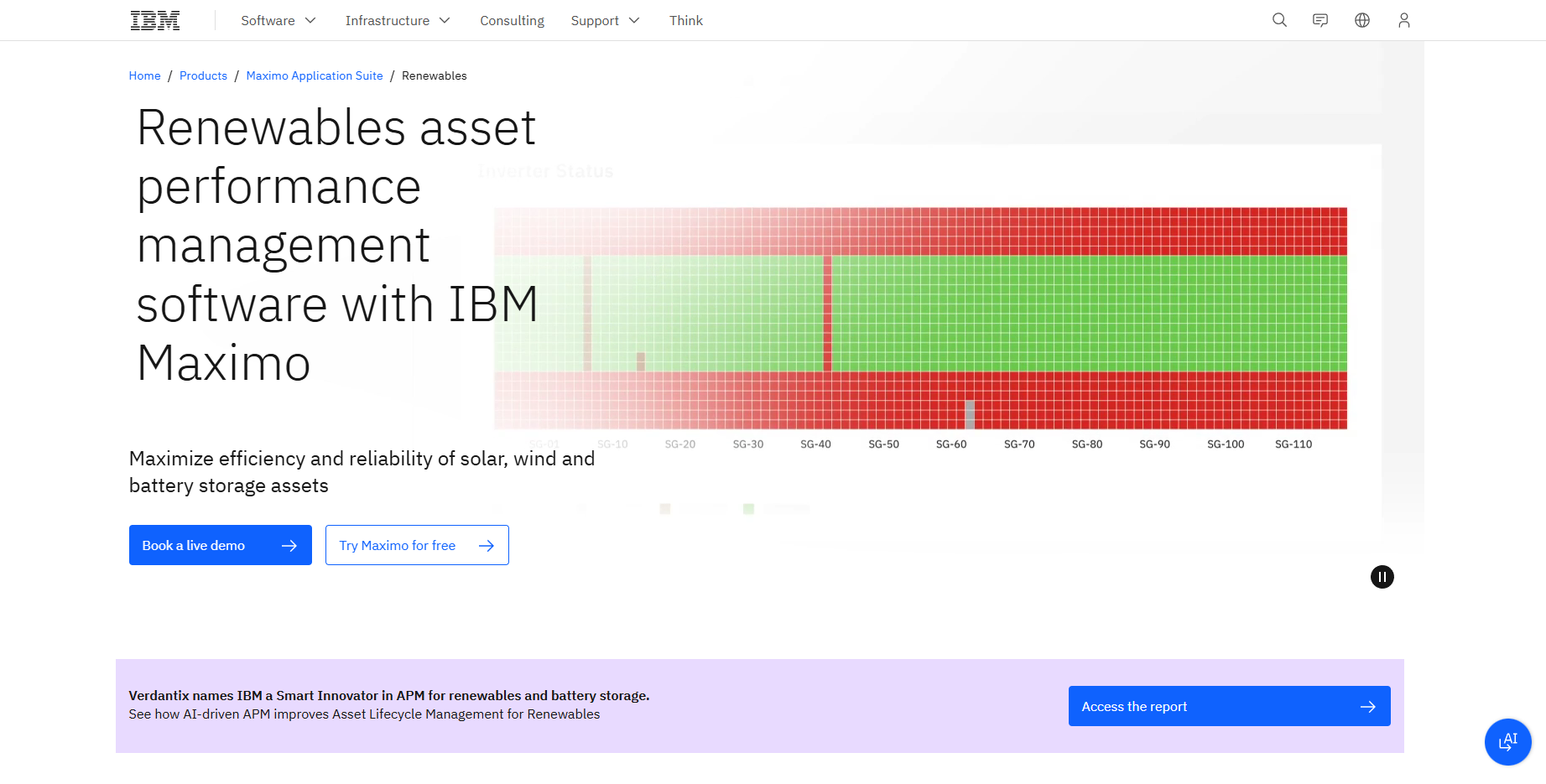
Managing renewable energy portfolios becomes increasingly difficult as operators scale across solar farms, wind parks, and battery storage systems. Weather variability, scattered equipment, and disconnected operational data often make it hard to identify underperforming assets and maintain profitability. IBM Maximo Renewables addresses these challenges by centralizing monitoring, analytics, and maintenance workflows into one AI-driven platform.
Built for utility-scale renewable operators, the platform combines SCADA data, IoT sensors, drone inspections, and predictive analytics to help teams move from reactive maintenance toward proactive asset optimization. This improves uptime, lowers operational costs, and supports long-term sustainability goals.
What Is IBM Maximo Renewables?
IBM Maximo Renewables is an AI-powered Asset Performance Management (APM) platform designed specifically for renewable energy operations.
As part of the IBM Maximo Application Suite, the platform focuses on monitoring and optimizing solar, wind, and Battery Energy Storage System (BESS) assets by combining real-time operational data with predictive maintenance analytics and asset lifecycle management tools.
Features
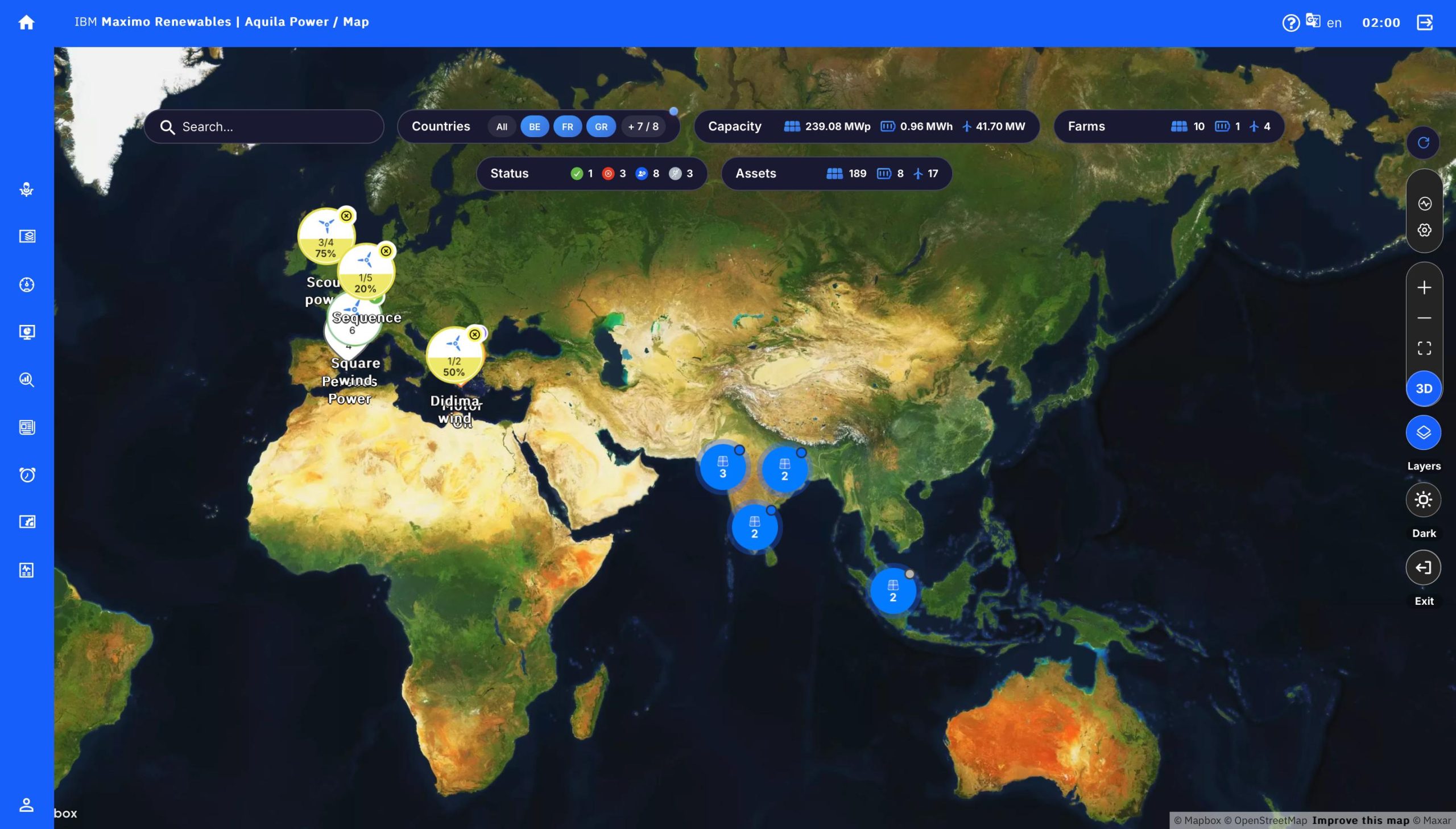
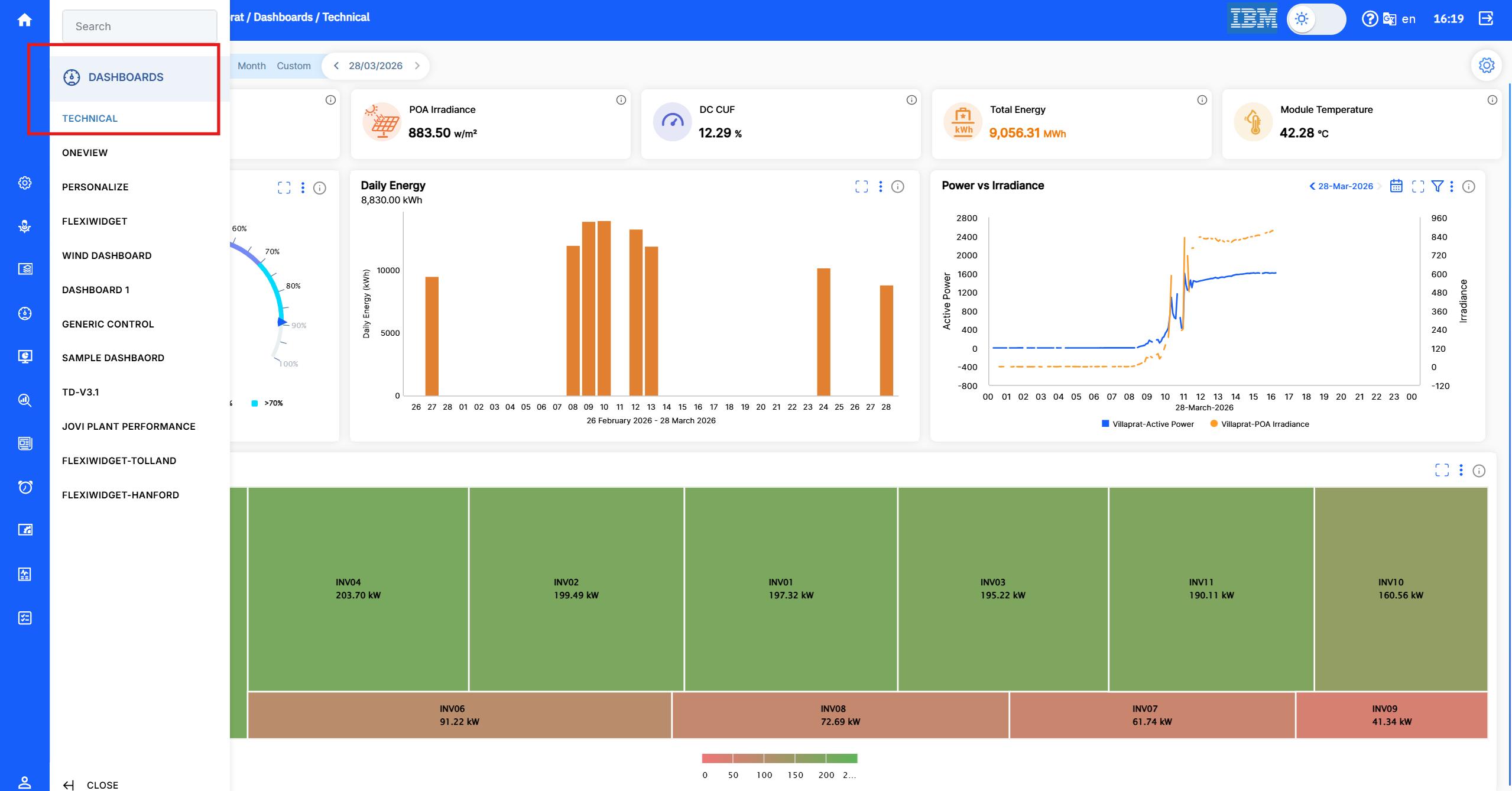
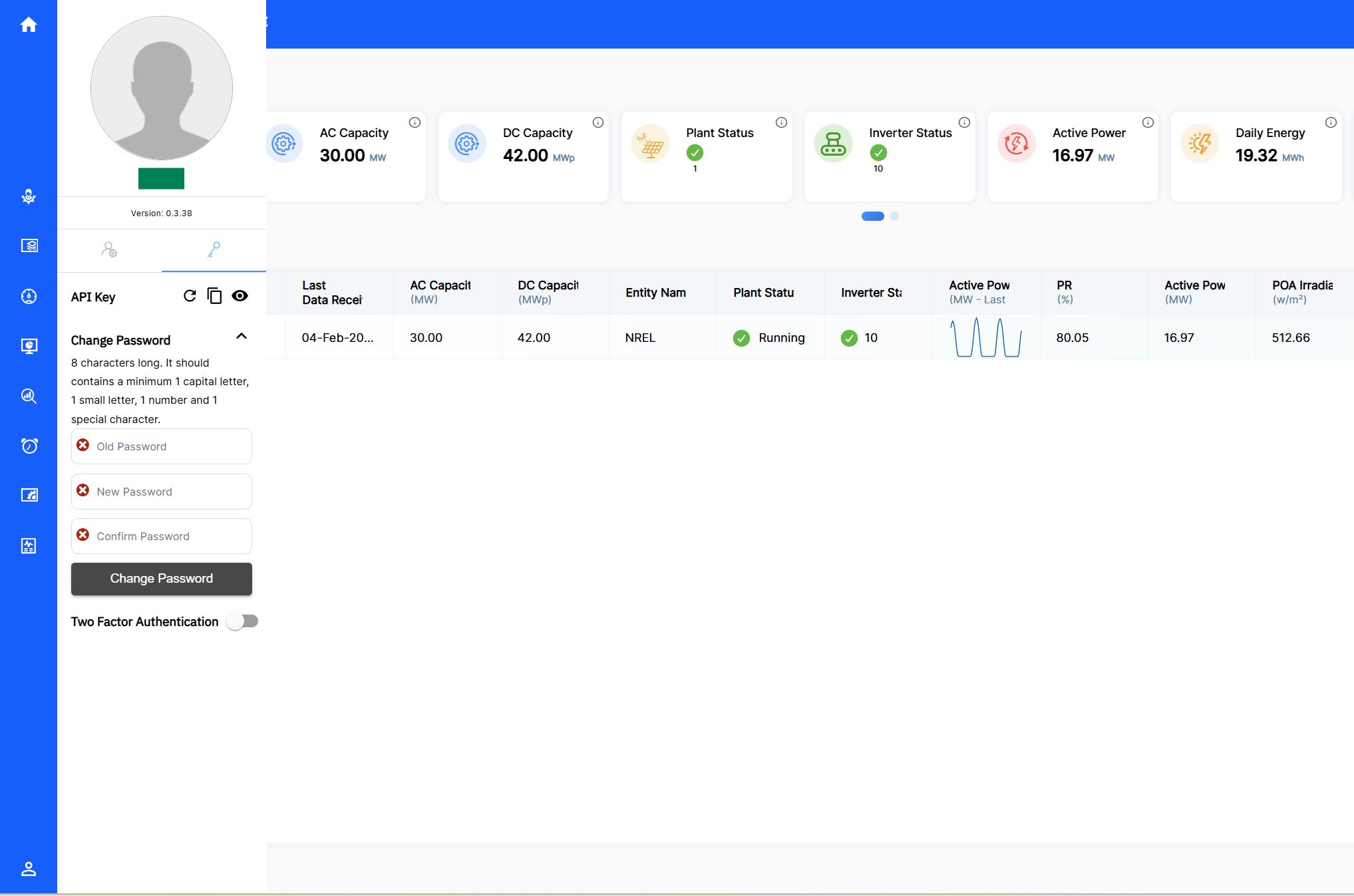
- Portfolio-Wide Monitoring: View all renewable assets across multiple sites through centralized dashboards and maps.
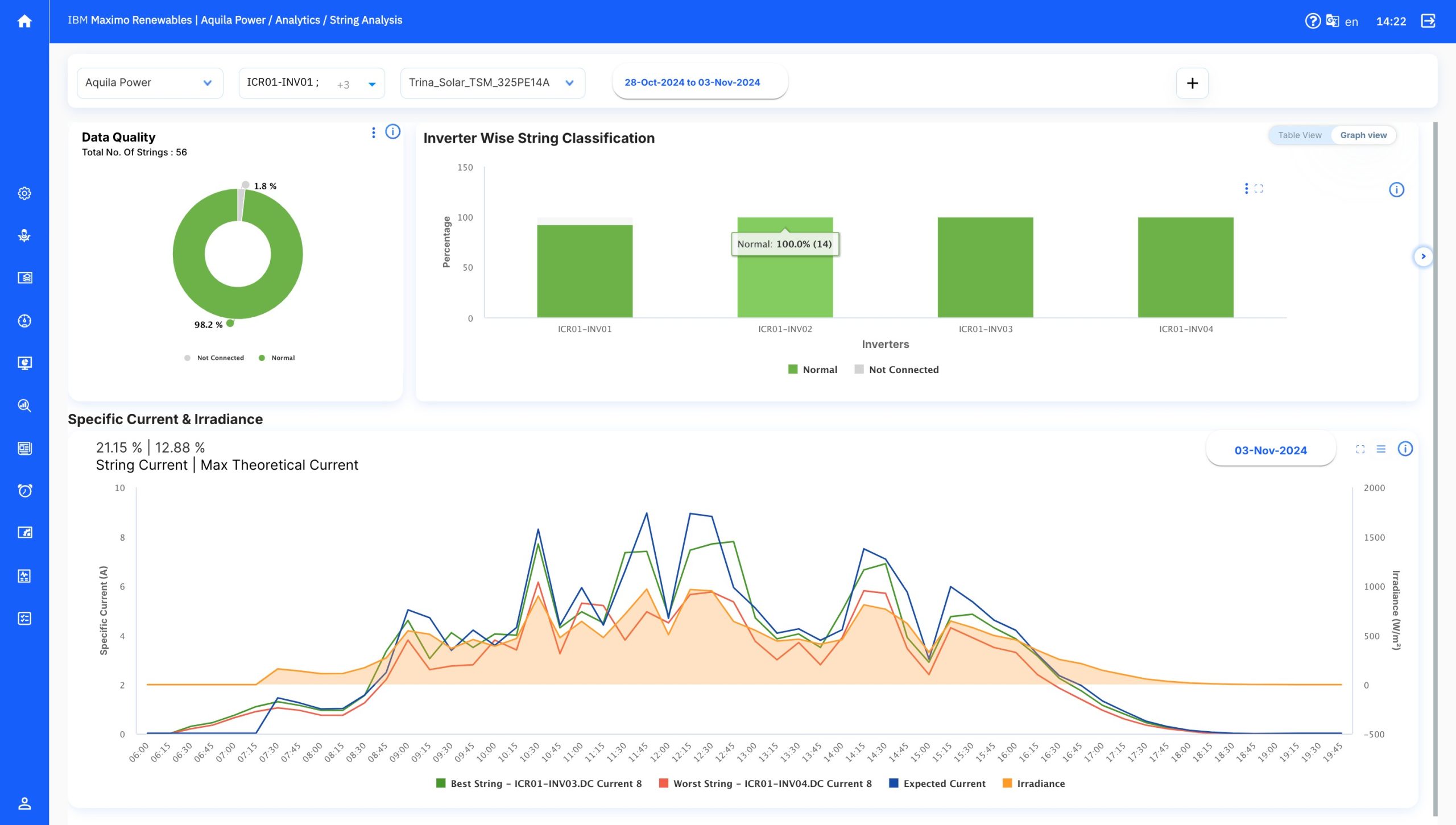
- AI-Driven Root Cause Analysis: Automatically identify equipment issues and production losses.
- Solar Loss Bucketing: Categorize energy losses by weather, equipment, grid, or operational causes.
- Drone Thermography Integration: Analyze thermal imagery to detect panel hotspots and turbine defects.
- Automated Maintenance Workflows: Generate work orders automatically from detected anomalies.
- BESS Cycle Monitoring: Track battery charge/discharge cycles and module health.
- Predictive Maintenance Analytics: Forecast equipment failures before they impact production.
Screenshots
IBM Maximo Renewables Pricing
IBM Maximo Renewables uses a custom enterprise subscription model based on portfolio size and platform requirements.
- Custom Pricing: Pricing depends on total renewable capacity and enabled features.
- Enterprise Licensing: Offered through the IBM Maximo Application Suite.
- Demo and Trial Access: Organizations can request product demonstrations and evaluation access.
- Scalable Deployments: Supports large utility-scale global portfolios.
Integrations
IBM Maximo Renewables integrates with industrial hardware, enterprise software, and inspection systems.
- SCADA and IoT Systems: Connect real-time operational equipment data.
- IBM Maximo Suite: Integrate with enterprise asset lifecycle management tools.
- GIS and Dashboard Systems: Visualize assets geographically and operationally.
- Drone Inspection Platforms: Import thermal imaging and inspection data.
- APIs and Webhooks: Share operational data with financial and sustainability systems.
How to Set Up IBM Maximo Renewables
- Schedule a consultation with IBM to assess portfolio requirements.
- Review SCADA, IoT, and operational data infrastructure.
- Create cloud accounts and configure portfolio hierarchies.
- Connect hardware systems and APIs.
- Configure dashboards, KPIs, and alert thresholds.
- Train operations and maintenance teams on AI workflows.
How to Use IBM Maximo Renewables
Operations teams typically begin by reviewing centralized map dashboards to identify critical alerts and underperforming assets across the portfolio. Users can then investigate root causes using AI-powered diagnostics and loss analysis tools.
Maintenance planners use the generated insights to prioritize repairs, create work orders, and coordinate inspections. Managers can also analyze long-term trends, compare equipment performance, and optimize maintenance budgets using portfolio-wide reporting tools.
What You Can Manage with IBM Maximo Renewables
- Renewable Asset Health: Monitor turbines, inverters, and battery systems.
- Energy Production Reporting: Compare actual output against production targets.
- Maintenance Workflows: Automate repair planning and work order generation.
- Operational KPIs: Track efficiency, availability, and downtime metrics.
- Inspection Analytics: Analyze thermal imagery and field inspection data.
- Root Cause Diagnostics: Identify technical causes of production losses.
FAQs
What does IBM Maximo Renewables do?
IBM Maximo Renewables uses AI and asset performance management tools to monitor, optimize, and maintain solar, wind, and battery storage systems.
Who is IBM Maximo Renewables best for?
It is designed for utility-scale renewable asset owners, operations teams, and enterprises managing large renewable energy portfolios.
Is IBM Maximo Renewables free?
No, IBM Maximo Renewables is a commercial enterprise platform that requires subscription licensing through IBM.
What are the main limitations of IBM Maximo Renewables?
Main limitations include implementation complexity, lack of transparent pricing, and dependence on high-quality operational data from field hardware.
What are the best alternatives to IBM Maximo Renewables?
Popular alternatives include Schneider Electric EcoStruxure, Siemens MindSphere, Power Factors, and SAP asset management platforms.