GreenFlux

Pros
- Proven scalability, capable of managing thousands of charging points across multiple countries.
- Advanced smart charging capabilities that reduce the need for costly grid reinforcements.
- Hardware-agnostic design prevents vendor lock-in and allows for diverse hardware portfolios.
- Strong backing by DKV Mobility provides financial stability and a massive roaming reach.
- Remote maintenance tools help maintain high uptime and reduce operational expenses.
- Comprehensive white-label options for companies wanting to maintain brand consistency.
- High security and reliability standards suitable for utility-grade deployments.
Cons
- Lack of transparent, public pricing makes it difficult for smaller startups to benchmark costs.
- The platform’s depth of features can lead to a steep learning curve for new administrators.
- Primarily focused on large-scale enterprises, which may make it feel overbuilt for small businesses.
- Requires technical expertise to fully utilize API integrations and custom configurations.
The rapid transition to electric vehicles (EVs) has created a significant challenge for businesses managing charging infrastructure. Charge point operators (CPOs) and e-mobility service providers (eMSPs) must balance complex energy demands, maintain high equipment uptime, and provide a seamless payment experience for drivers. GreenFlux solves these operational hurdles by providing a hardware-agnostic cloud platform that centralizes the management of large-scale charging networks.
Businesses consider GreenFlux when they need to move beyond basic charger connectivity to a more sophisticated, automated system. By automating billing, optimizing energy distribution through smart charging, and facilitating global roaming, the platform allows companies to focus on expansion rather than the technical minutiae of network maintenance.
What Is GreenFlux?
GreenFlux is a Software-as-a-Service (SaaS) platform categorized under EV Charging Network Management. It is designed for enterprise-level users, including utilities, automotive manufacturers, fleet owners, and independent charge point operators. The platform acts as the “brain” behind the physical charging stations, allowing users to remotely monitor, control, and monetize their EV infrastructure.
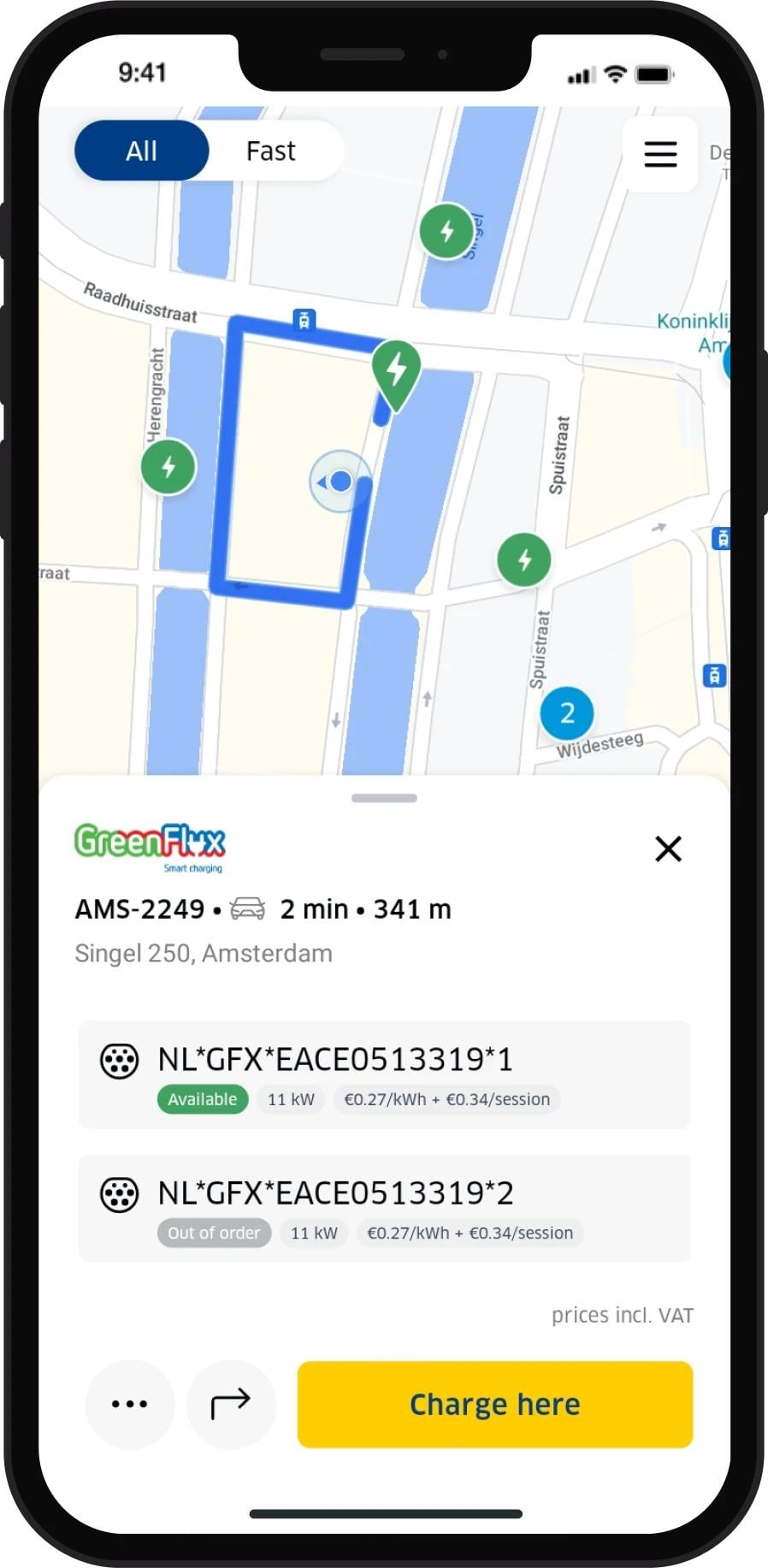
The platform works by connecting to charging hardware via the Open Charge Point Protocol (OCPP). Once connected, it aggregates data to a central dashboard where operators can manage thousands of locations simultaneously. The brand’s credentials include its 2021 acquisition by DKV Mobility, a major European B2B platform for on-the-road payments, and its role in managing extensive public networks, such as the 2,500 public charging stations in Amsterdam operated by Equans.
Features
- Smart Charging Algorithms: These algorithms respond to energy demand in real time, allowing operators to handle more charging sessions using existing grid connections without requiring expensive infrastructure upgrades.
- Hardware-Agnostic Management: The platform supports various makes and models of charging stations, giving operators the freedom to mix and match hardware without being locked into a single manufacturer.
- Roaming Integration: Through its global roaming network, GreenFlux enables drivers to access thousands of third-party charging points across different regions using a single token or app.
- Automated Billing and Payments: Handles complex financial transactions, including flexible tariff setting, driver reimbursement for home charging, and multi-currency support for international operations.
- Capacity Management: Provides tools to manage local grid constraints by distributing available power across groups of chargers, preventing peak demand penalties and power outages.
- Operational Dashboard: Offers 99.9% uptime management with remote troubleshooting tools to resolve errors without sending technicians to the site, significantly reducing maintenance costs.
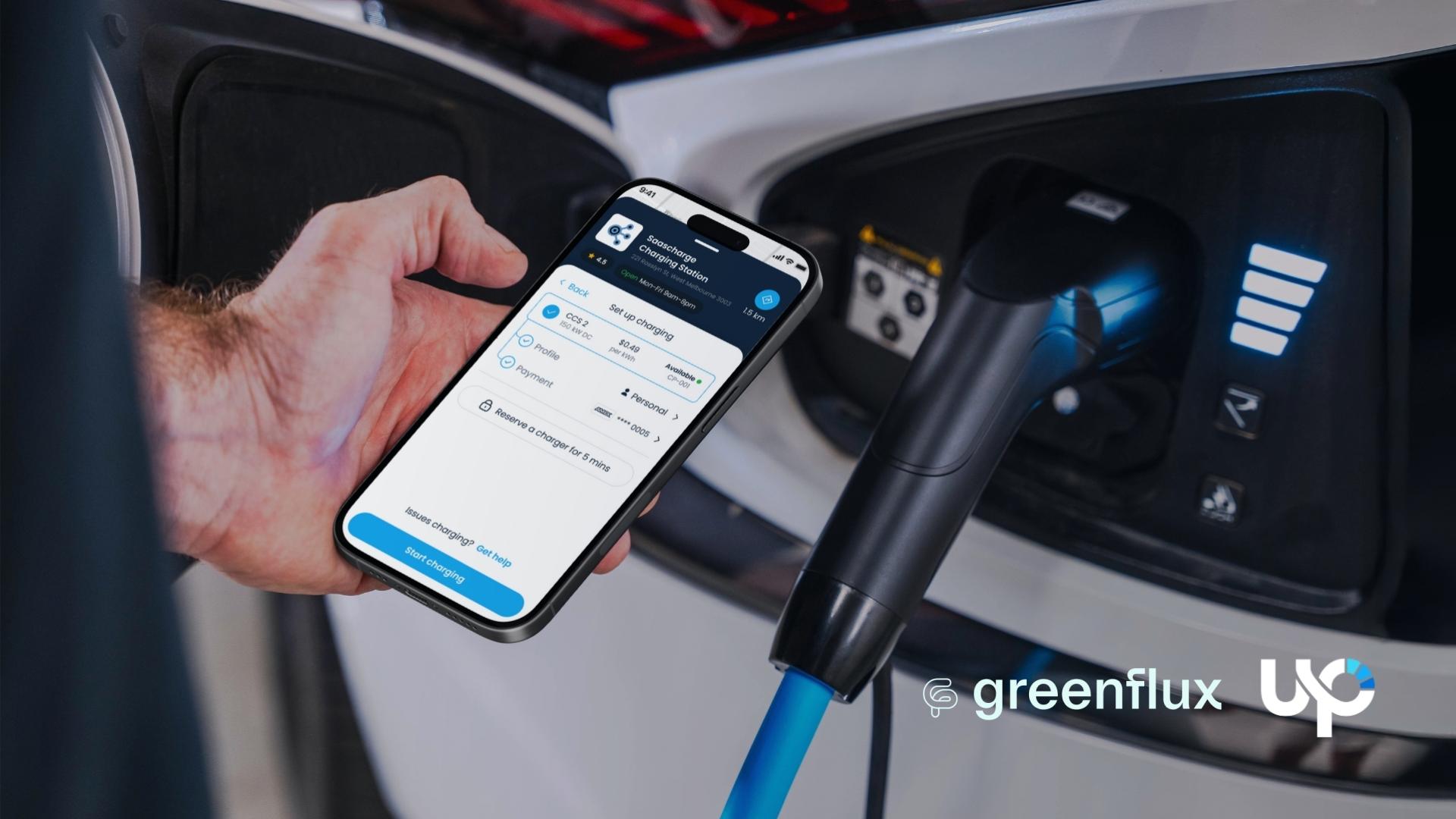
- White-Label Mobile App: Allows eMSPs to offer their own branded app to drivers, featuring real-time charger availability, navigation, and digital payment options.
Screenshots
GreenFlux Pricing
Pricing is not publicly listed. Quotes for GreenFlux come out of a scoping call or a product demo.
Typically, enterprise platforms in this space base their costs on the number of connected charge points, the volume of transactions processed, and the specific modules required, such as roaming or advanced smart charging.
Integrations
GreenFlux is built on an open architecture to ensure compatibility across the e-mobility ecosystem.
Hardware Integrations
Supports all OCPP-compliant charging stations using versions 1.5, 1.6, and 2.0.1, ensuring compatibility with major brands like ABB, Alfen, and Schneider Electric.
Roaming Integrations
Connects to major roaming hubs such as Hubject and Gireve, as well as direct peer-to-peer connections with other operators.
Payment Integrations
Supports various payment service providers (PSPs) and contactless terminal integrations for on-site payments.
API and Webhooks
Offers extensive APIs that allow businesses to integrate charging data into their own CRM, ERP, or fleet management systems.
How to Set Up GreenFlux
- Book a demo and consultation to define your network scale and required features.
- Receive a custom quote and sign the service agreement.
- Onboard your technical team to the platform through guided training sessions.
- Connect your OCPP-compliant charging hardware to the GreenFlux cloud backend.
- Configure your tariffs, roaming settings, and white-label driver interfaces.
- Launch your network and begin managing live charging sessions from the dashboard.
How to Use GreenFlux
The daily workflow for a network operator involves logging into the central dashboard to monitor the “health” of the charging network. Operators start by checking for any offline chargers or active error codes. Using remote commands, they can often reset a station or update its firmware without leaving the office.
During peak hours, the system automatically manages energy distribution via smart charging profiles to ensure the grid is not overloaded. For e-mobility service providers, the focus is on managing driver accounts and tokens. They use the platform to track roaming transactions, ensuring that drivers can charge at third-party stations and that billing is settled correctly in the background. Marketing teams may also use the platform to adjust pricing models or offer promotional rates for specific locations or times of day.
What You Can Manage with GreenFlux
- Charge Point Networks: Complete remote control over the configuration and status of physical chargers.
- Energy Loads: Real-time distribution of power to optimize grid usage and reduce costs.
- Driver Portfolios: Management of user accounts, RFID tokens, and access permissions.
- Pricing Models: Creation of dynamic tariffs based on time, location, or session duration.
- Financial Transactions: Automated billing, invoicing, and cross-border payment settlements.
- Roaming Agreements: Access to hundreds of thousands of charging points through industry hubs.
- Uptime Reports: Detailed analytics on station performance, energy throughput, and revenue.
FAQs
What does GreenFlux do?
GreenFlux provides a cloud-based software platform that manages the operations of electric vehicle charging networks. It handles everything from charger connectivity and energy management to roaming and billing for drivers.
Who is GreenFlux best for?
The platform is designed for large-scale charge point operators, e-mobility service providers, utilities, and automotive companies. It is ideal for businesses that need to manage a high volume of chargers across multiple locations or regions.
Is GreenFlux free?
No, GreenFlux is an enterprise-grade SaaS platform and does not offer a free version. Interested businesses must contact its sales team to arrange a demo and receive a custom pricing quote.
Does GreenFlux support all chargers?
GreenFlux is hardware-agnostic and supports any charging station that is compliant with the Open Charge Point Protocol (OCPP). This includes most modern AC and DC charging stations from major global manufacturers.
What are the main limitations of GreenFlux?
The main limitations are the lack of public pricing and a relatively high entry barrier for very small operators. Its advanced feature set also requires a degree of technical proficiency to manage effectively.
What are the best alternatives to GreenFlux?
Common alternatives in the EV charging management space include EV Connect, AMPECO, ChargePoint, and Virta. These competitors offer similar cloud-based tools for network management and driver services.