Honeywell Forge Energy Optimization

Pros
- Significant energy savings, with pilot programs showing improvements over traditional smart building techniques.
- Autonomous operation reduces the workload on facility management staff.
- Scalable across large, diverse building portfolios.
- Enhances occupant comfort by maintaining precise environmental conditions.
- Robust reporting tools for carbon and sustainability goal tracking.
- Strong security and reliability backed by Honeywell’s industrial reputation.
Cons
- Pricing is not transparent and often targets large enterprise budgets.
- Implementation can be complex, potentially requiring 6 to 18 months for full deployment.
- Effectiveness depends on the quality of existing on-site hardware and sensors.
- Significant initial investment for setup and integration services.
Large-scale commercial and industrial facilities often face the challenge of rising energy costs and complex HVAC management across diverse portfolios. Honeywell Forge Energy Optimization addresses these issues by using autonomous, closed-loop machine learning to adjust building systems in real time based on occupancy and environmental conditions.
By shifting from manual or schedule-based building management to an AI-driven approach, organizations can achieve significant energy savings without sacrificing occupant comfort. This review explores the platform’s core capabilities, pricing structure, and practical benefits to help facility managers determine if it is the right fit for their sustainability goals.
What Is Honeywell Forge Energy Optimization?
Honeywell Forge Energy Optimization is a cloud-based Software-as-a-Service (SaaS) solution categorized as Energy Cost Optimization Software. It is a key component of the broader Honeywell Forge for Buildings suite, designed specifically to automate the optimization of heating, ventilation, and air conditioning (HVAC) systems.
The platform targets facility managers, sustainability officers, and building owners in sectors such as commercial real estate, higher education, and manufacturing. Unlike traditional building management systems (BMS) that rely on static schedules, this platform continuously ingests data from various sources—including weather, occupancy, and energy prices—to make micro-adjustments to equipment setpoints. Honeywell is a global leader in industrial technology, and this platform has been successfully deployed in high-profile environments like Hamdan Bin Mohammed Smart University to drive energy efficiency beyond standard smart building benchmarks.
Features
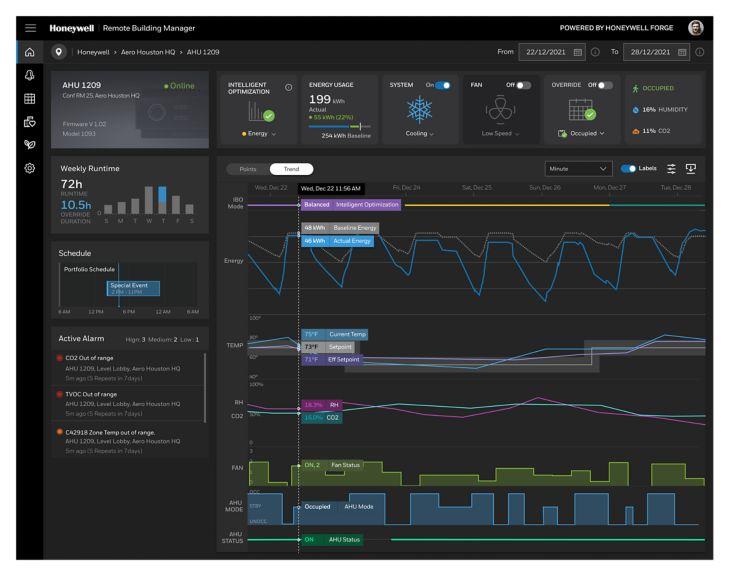
- Autonomous HVAC Optimization: Uses closed-loop control to automatically adjust HVAC setpoints in real time, removing the need for manual intervention and ensuring systems run at peak efficiency.
- Predictive Machine Learning: Analyzes historical and real-time data from weather feeds, occupancy sensors, and utility rates to anticipate energy needs and prevent waste.
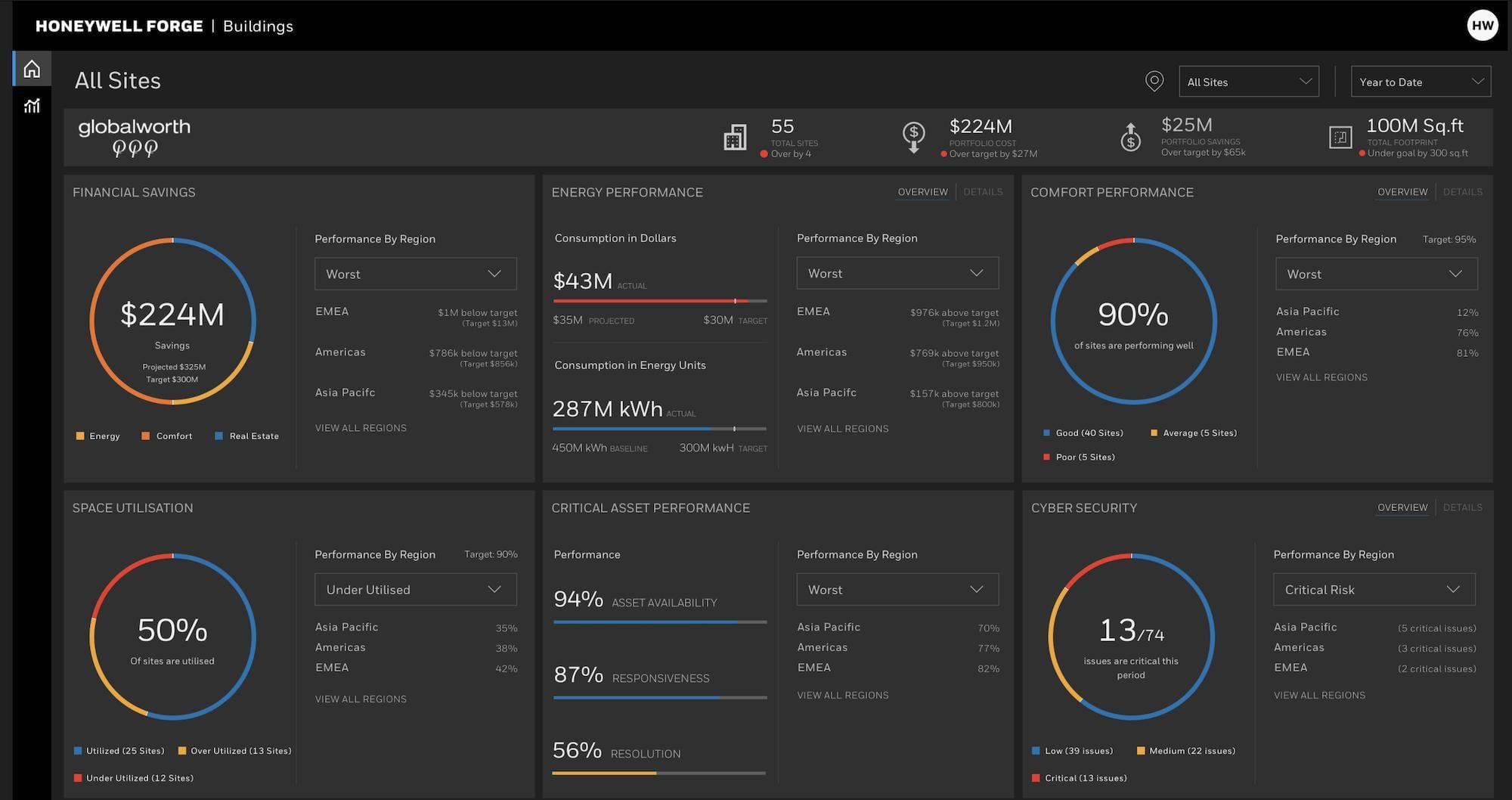
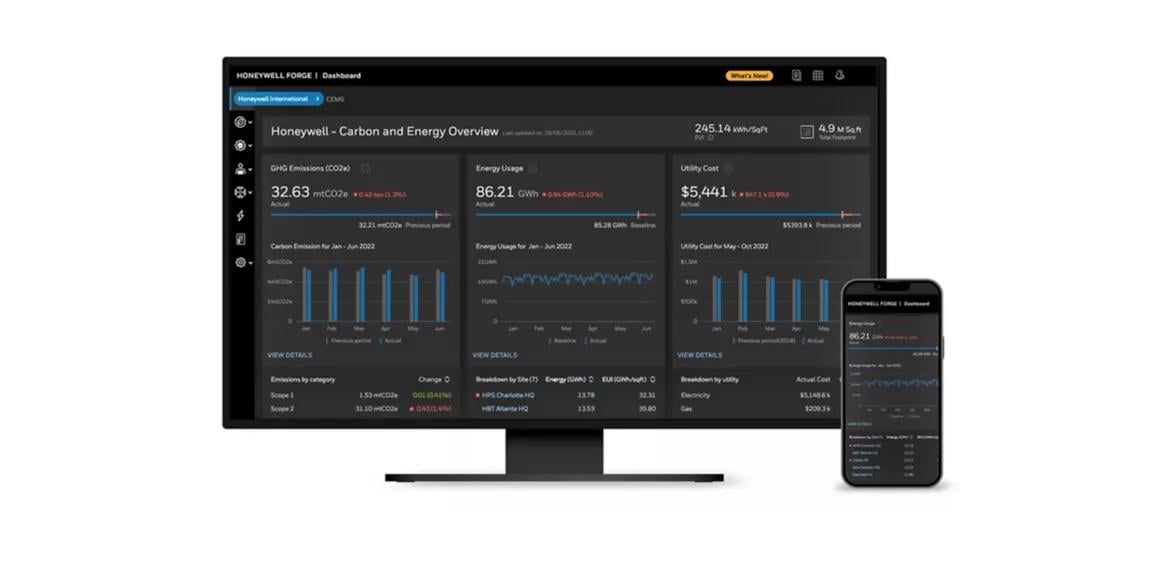
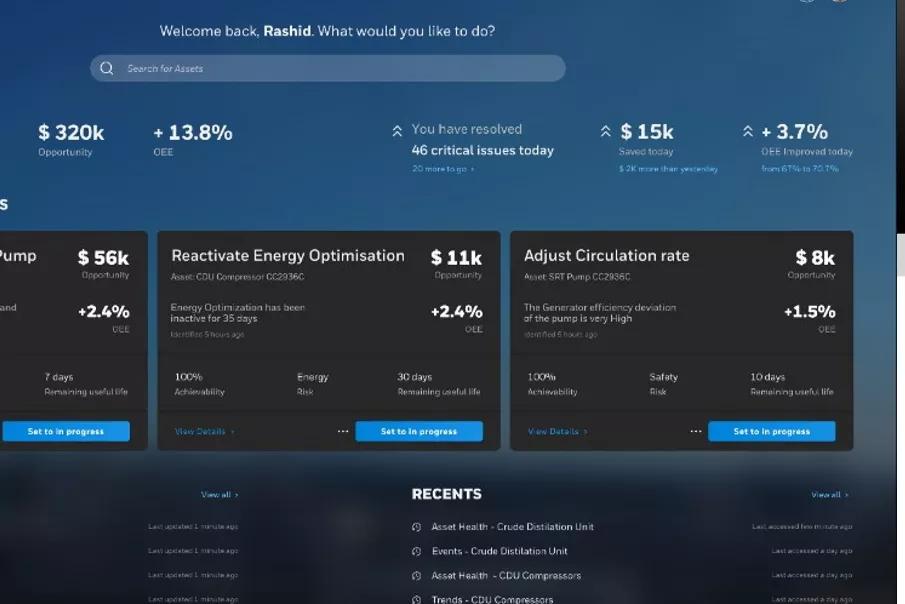
- Centralized Sustainability Dashboard: Provides a single view of carbon emissions (Scope 1 and 2), energy consumption, and indoor air quality across an entire portfolio of buildings.
- Occupancy-Based Adjustments: Syncs with building sensors to reduce energy use in unoccupied zones while maintaining optimal comfort levels in active areas.
- ENERGY STAR Integration: Allows users to track and report building performance data directly to ENERGY STAR, simplifying compliance and benchmarking.
- Advanced Analytics and Reporting: Generates detailed reports on estimated savings, utility cost data, and system performance to support internal audits and ESG reporting.
Screenshots
Honeywell Forge Energy Optimization Pricing
Honeywell Forge Energy Optimization pricing is not publicly listed on the official website. The company typically provides custom quotes based on the scale of the deployment, the number of connected assets, and the specific software modules required.
- Free Trial/Demo: A demo is available upon request through the Honeywell website.
- Subscription Model: The software is generally sold as an annual SaaS subscription.
- Implementation Costs: Users should expect one-time costs for setup, integration with existing BMS, and potential hardware upgrades for connectivity.
- Usage-Based Fees: Some enterprise customers report that pricing can be influenced by the volume of data processed or the number of specific check-ins and alerts managed within the broader Forge suite.
Integrations
Honeywell Forge Energy Optimization is designed to work within a modern digital ecosystem, supporting various technical integrations:
- Building Management Systems: Integrates with Honeywell’s own building controllers and many third-party BMS platforms through standard industrial protocols.
- Cloud and IoT: Built on a secure cloud architecture that supports integration with Microsoft Azure services for scalable data processing.
- Utility and Weather Services: Connects to external web service providers for real-time weather forecasting and energy pricing data.
- API and Webhooks: Honeywell Forge APIs provide structured access to building and IoT data, enabling custom automations and data sharing with other enterprise tools.
How to Set Up Honeywell Forge Energy Optimization
- Contact a Honeywell representative to schedule a site audit and technical assessment.
- Define the scope of the project, including the buildings and specific HVAC assets to be optimized.
- Integrate the Forge cloud platform with your existing Building Management System (BMS).
- Deploy any necessary edge gateways or sensors to ensure real-time data flow.
- Configure the machine learning models with historical data and building-specific parameters.
- Launch the closed-loop control and monitor initial performance through the dashboard.
How to Use Honeywell Forge Energy Optimization
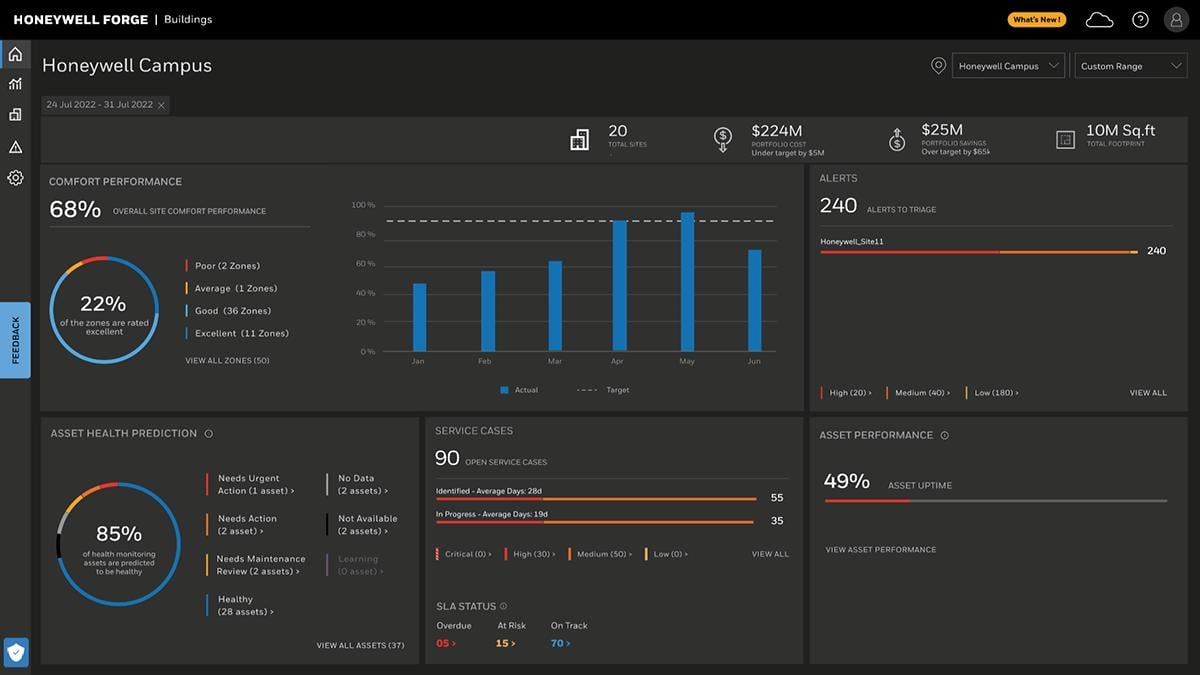
The daily workflow involves logging into the centralized Forge dashboard to monitor the autonomous performance of building systems. Users can view real-time energy savings and carbon emission reductions across multiple sites. While the system operates autonomously, facility managers use the tool to review “”Energy Optimization Analysis”” reports to verify that savings are aligning with organizational targets.
Sustainability teams use the platform to generate compliance documents and verify data for ESG reporting. If specific equipment requires attention, the system provides alerts, allowing maintenance teams to address issues before they lead to energy waste. The platform serves as a high-level command center, where users can toggle between macro-level portfolio views and granular zone-specific data.
What You Can Manage with Honeywell Forge Energy Optimization
- HVAC Setpoints: Automated adjustments to temperature and airflow for maximum efficiency.
- Carbon Footprint: Real-time tracking of Scope 1 and Scope 2 emissions.
- Utility Budgets: Monitoring of utility costs and identification of billing anomalies.
- Energy Savings Reports: Visual and data-driven summaries of efficiency gains.
- Occupancy Trends: Insights into how and when building spaces are actually used.
- Sustainability Compliance: Documentation for ENERGY STAR, ISO, and other certifications.
FAQs
What does Honeywell Forge Energy Optimization do?
It is an AI-powered software solution that automatically adjusts a building’s HVAC systems in real time. By using machine learning to analyze occupancy, weather, and energy prices, it reduces energy waste and lowers operating costs without requiring manual intervention.
Who is Honeywell Forge Energy Optimization best for?
The platform is designed for owners and managers of large commercial buildings, industrial sites, and educational campuses. It is particularly effective for organizations with high energy costs that want to automate their sustainability efforts across multiple locations.
Is Honeywell Forge Energy Optimization free?
No, there is no free version of the software. Interested users can request a demo to see the platform’s capabilities, but full access requires a paid enterprise subscription and implementation services.
What are the main limitations of Honeywell Forge Energy Optimization?
The primary limitations include the high initial cost of implementation and the complexity of integrating with older, legacy building systems. Additionally, the software’s effectiveness is closely tied to the quality of the on-site sensors and connectivity hardware.
What are the best alternatives to Honeywell Forge Energy Optimization?
Common alternatives in the building optimization space include Schneider Electric EcoStruxure, Siemens Opcenter, and specialized AI-driven platforms like Nuuka or Plex Smart Manufacturing. Organizations may also consider specialized MES (Manufacturing Execution Systems) if their energy needs are tied closely to production.