Fluence Mosaic
Pros
- Proven revenue uplift, with some reports indicating returns 40% to 60% higher than traditional manual trading strategies.
- Significant scalability, allowing companies to manage large portfolios without hiring additional human traders for every new asset.
- High automation frequency, capable of processing five-minute market signals that are too fast for manual intervention.
- Technology-agnostic platform that supports a mix of renewable and storage assets from various manufacturers.
- Reduces human error and emotional bias in high-stakes, volatile trading environments.
- Strong track record with over 16 GW of assets optimized or awarded globally.
Cons
- Lack of transparent, public pricing makes initial budget estimation difficult for smaller developers.
- Highly specialized for utility-scale assets, making it less suitable for small commercial or residential storage projects.
- Complex setup process that requires deep integration with site hardware and market communications.
- Dependency on accurate market data and algorithm performance during unprecedented black swan grid events.
- Enterprise-focused support and sales model may be slower than self-service SaaS platforms.
Wholesale electricity markets are becoming increasingly volatile as more weather-dependent renewable energy enters the grid. Traditional manual bidding strategies often struggle to keep up with five-minute pricing fluctuations and complex market rules, leading to missed revenue opportunities and increased operational risk. Asset owners and managers need tools that can process vast amounts of data in real time to make informed dispatch decisions.
Fluence Mosaic addresses these challenges by using artificial intelligence to automate the bidding process for battery energy storage systems (BESS) and renewable portfolios. By shifting from reactive to predictive trading, the platform helps operators capture peak pricing and provide essential grid services more efficiently. It is designed for those managing utility-scale assets who want to scale their operations without significantly increasing their trading desk headcount.
What Is Fluence Mosaic?
Fluence Mosaic is an AI-enabled digital application designed for the automated bidding and optimization of energy storage and renewable energy assets. It falls into the category of Energy Management Systems (EMS) and market participation software. The platform is primarily used by independent power producers (IPPs), utilities, and energy asset managers operating in competitive wholesale markets such as the National Electricity Market (NEM) in Australia, CAISO, and ERCOT in the United States.
The software works by using machine learning algorithms to forecast market prices, supply, and demand. It then generates and submits optimized bids directly to market operators, taking into account specific asset constraints like battery state of charge, degradation limits, and warranty requirements. Fluence, the company behind Mosaic, is a global leader in energy storage, with over 50 GWh of storage deployed or contracted and 17 GW of assets optimized through its digital platforms.
Features
- AI-Powered Price Forecasting: Uses machine learning to analyze historical and real-time data to predict future price spikes and market trends more accurately than human traders.
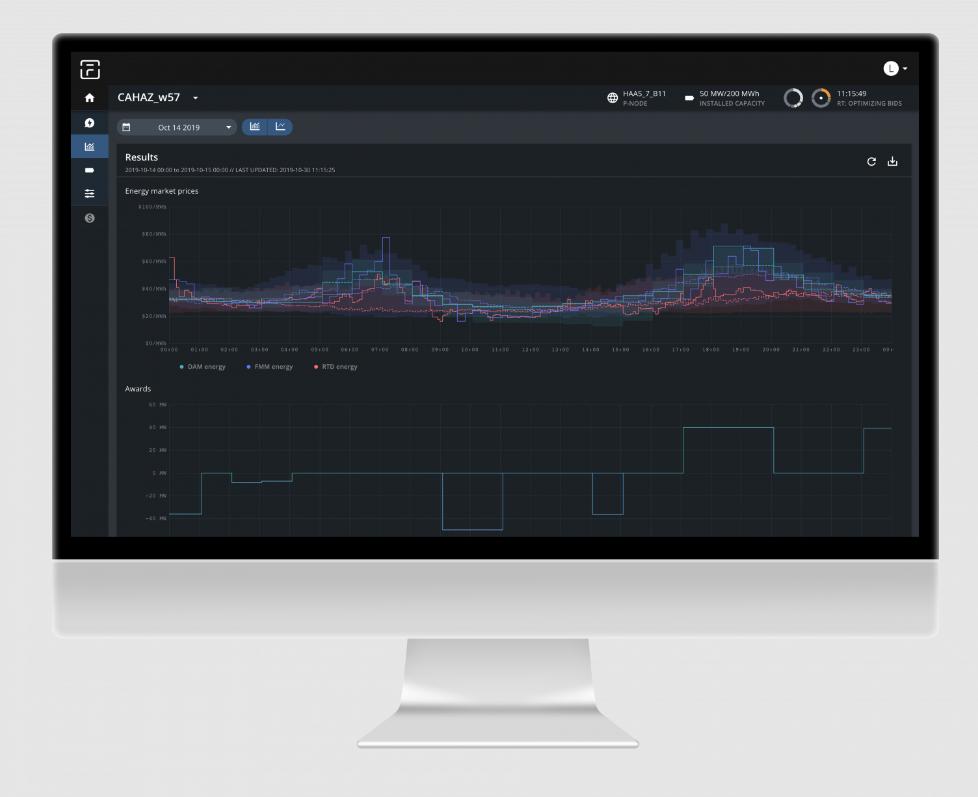
- Automated Bid Submission: Directly integrates with market operators like AEMO or ISOs to submit bids every five minutes, ensuring the asset is always positioned to capture the best financial returns.
- Multi-Service Optimization: Evaluates multiple revenue streams simultaneously, such as energy arbitrage and Frequency Control Ancillary Services (FCAS), to determine the most profitable dispatch strategy at any given moment.
- Technology-Agnostic Integration: While developed by Fluence, the software can optimize wind, solar, and storage assets from any hardware provider, preventing vendor lock-in.
- Constraint Management: Automatically incorporates physical and contractual limitations, such as battery cycle limits or solar farm output caps, into the bidding logic to protect asset health.
- Real-Time Monitoring and Diagnostics: Provides 24/7 visibility into asset performance and market interactions, allowing operators to identify and resolve issues quickly.
- Mosaic Pro and Trading-as-a-Service: Offers tiered levels of support, ranging from software-only solutions to full market operations where Fluence experts manage daily trading strategies and scheduling.
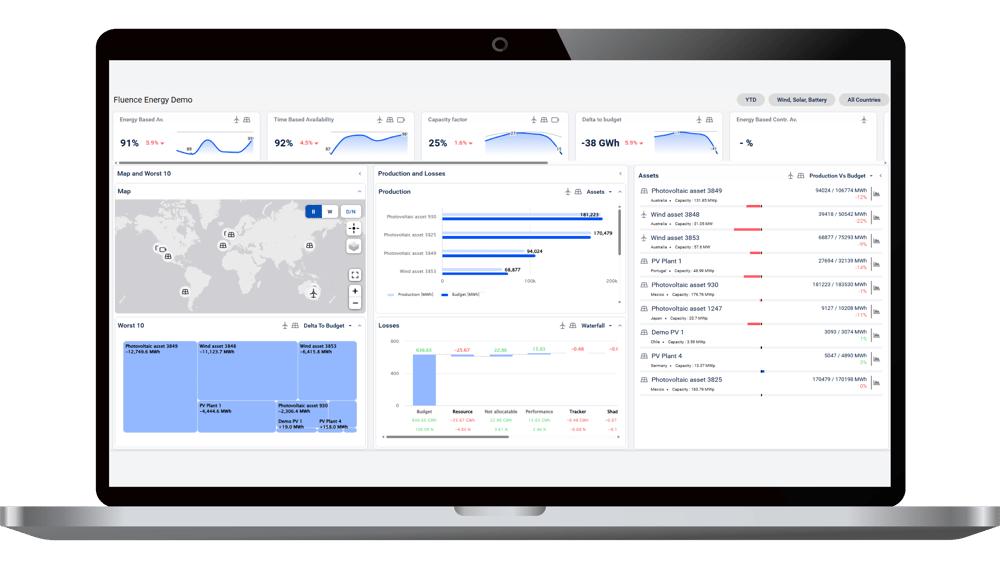
Screenshots
Fluence Mosaic Pricing
Pricing is not publicly listed. The vendor prices each Fluence Mosaic deployment individually, once the scope is clear.
As enterprise-grade industrial software, Fluence Mosaic typically utilizes a subscription-based or licensing model. Costs are generally influenced by the total megawatt (MW) capacity of the assets being managed and the specific service level chosen, such as standard Mosaic software or the full Trading-as-a-Service offering. Prospective clients should expect a consultative sales process to determine the specific needs of their energy portfolio.
Integrations
Fluence Mosaic is built with an open architecture to support the diverse technical needs of global energy markets:
- Market Operator Integrations: Confirmed connections with AEMO in Australia, CAISO in California, and ERCOT in Texas, with ongoing expansion into MISO and international markets like Japan.
- Hardware Integrations: Seamlessly connects with Fluence storage products like Gridstack and Sunstack, as well as third-party BESS, wind turbines, and solar inverters.
- Data and API: Provides Application Programming Interfaces (APIs) to share data with external enterprise systems and third-party asset performance management software.
- Cloud Infrastructure: Leverages secure cloud environments to ensure high availability and cybersecurity compliance for critical infrastructure
How to Set Up Fluence Mosaic
- Book a demo and consultation with Fluence to audit your asset portfolio and market requirements.
- Complete the technical integration phase, connecting the Mosaic software to your asset’s on-site control systems and market communication gateways.
- Define asset constraints, including warranty limits, degradation curves, and specific operational goals.
- Conduct simulation and shadow-bidding tests to verify algorithm performance against historical and live market data.
- Finalize user permissions and dashboard configurations for your operations team.
- Go live with automated bidding and transition to real-time performance monitoring.
How to Use Fluence Mosaic
The daily workflow with Fluence Mosaic is centered on oversight rather than manual data entry. Asset managers log into the central dashboard to review current market positions and forecasted revenue for their portfolio. The software automatically handles the heavy lifting of analyzing price signals and submitting bids every few minutes.
Users spend their time monitoring the “”health”” of the bidding strategy, ensuring that the AI’s actions align with the long-term goals of the asset. If market conditions change drastically, such as during a grid emergency, operators can use the platform to pause algorithmic bidding and switch to manual overrides. Throughout the day, the system generates performance reports that compare actual earnings against benchmarks, helping teams justify the ROI of their automated trading strategy to stakeholders.
What You Can Manage with Fluence Mosaic
- Automated Bidding Strategies: Digital instructions that dictate how an asset participates in energy and ancillary markets.
- Revenue Forecasts: Data-driven predictions of expected earnings based on machine learning price models.
- Asset Constraints: Digital guardrails that prevent the software from operating the hardware in a way that violates warranties.
- Performance Analytics: Detailed reports comparing algorithmic returns against traditional trading benchmarks.
- Multi-Asset Portfolios: A centralized view for managing a mix of solar, wind, and battery storage sites across different regions.
- Market Compliance Records: Auditable logs of all bids submitted to market operators to ensure regulatory compliance.
FAQs
What does Fluence Mosaic do?
Fluence Mosaic is an AI-powered software platform that automates the bidding and dispatch of energy storage and renewable energy assets in wholesale markets. It uses machine learning to forecast prices and optimizes bids to maximize revenue while respecting the physical limits of the hardware.
Who is Fluence Mosaic best for?
The tool is designed for utility-scale energy developers, independent power producers, and asset managers who operate in complex, fast-moving electricity markets like the NEM or ERCOT. It is ideal for organizations looking to scale their renewable portfolios without a linear increase in trading staff.
Is Fluence Mosaic free?
No, Fluence Mosaic is an enterprise-grade software solution that requires a paid license or subscription. There is no free version, though interested organizations can request a demo to see the platform’s capabilities and potential ROI.
What are the main limitations of Fluence Mosaic?
The primary limitation is its focus on large-scale, front-of-the-meter assets, meaning it is not a fit for small-scale residential or light commercial use. Additionally, because pricing is not public and setup is complex, it requires a significant initial commitment of time and resources.
What are the best alternatives to Fluence Mosaic?
Common alternatives in the energy bidding and optimization space include Tesla’s Autobidder, Habitat Energy, and specialized EMS providers like Stem or Wärtsilä’s GEMS platform. The choice often depends on the specific hardware being used and the geographic market of the project.