eMobility Planner
Pros
- Completely free public planning framework.
- Strong focus on transportation equity and environmental justice.
- Includes surveys, templates, and planning resources.
- Built using trusted government and environmental datasets.
- Supports projects ranging from e-bikes to transit hubs.
- Helps organizations prepare grant applications and funding plans.
Cons
- Not a fully automated software platform.
- Requires manual planning and community outreach.
- Success depends on public engagement participation.
- Provides planning guidance but not direct project funding.
- Focused mainly on planning rather than operational management.
Planning for a sustainable future is about more than just hardware; it is about truly understanding what a community needs to get around. The eMobility Planning Toolkit—often called the eMobility Planner—helps local leaders and planners connect big sustainability goals with real-world projects that residents actually support. By combining data with genuine public conversation, the toolkit makes sure new mobility projects are fair and effective.
If you are looking at this resource, you likely want a clear way to check your local transportation landscape and find where electric options like e-bikes, carsharing, or shuttles can help. It is especially helpful for those working in underserved areas where past decisions have left people with fewer options. This toolkit gives you a clear path to turn community feedback into plans that are ready for funding.
What Is eMobility Planner?
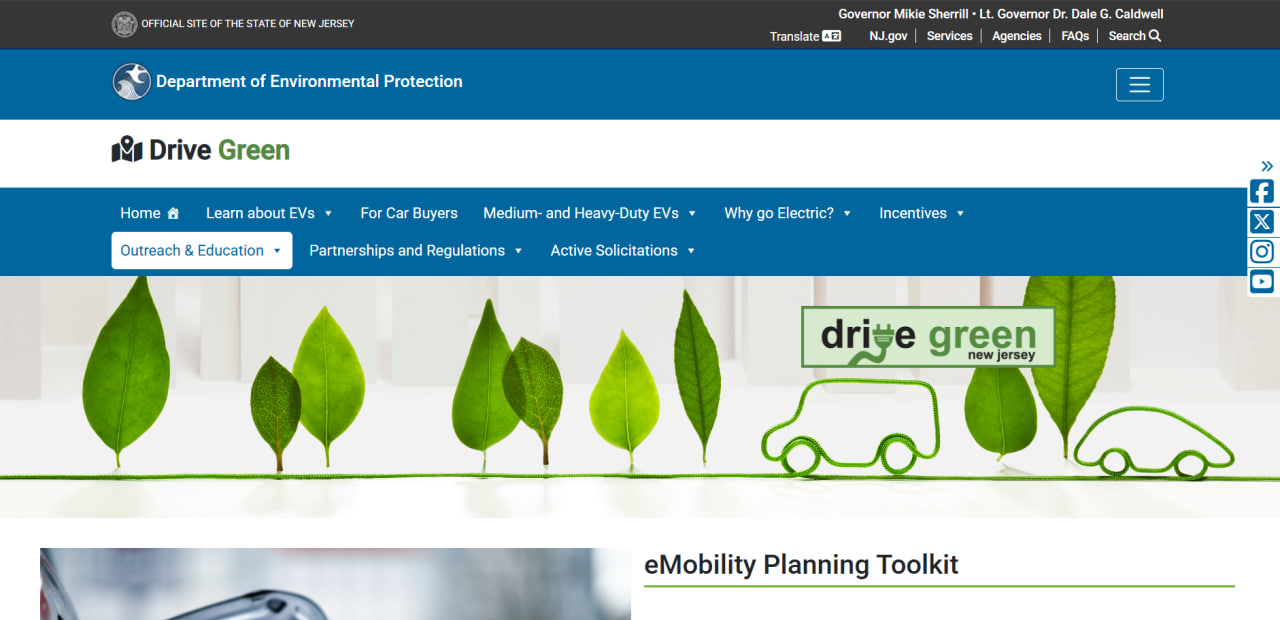
The eMobility Planning Toolkit is a step-by-step guide created by the New Jersey Department of Environmental Protection (NJDEP). It is a public planning resource designed for municipal leaders, transportation planners, government staff, and community advocates.
The toolkit guides users through a Community Transportation Needs Assessment (CTNA) process using data analysis, public engagement, and transportation solution planning to support equitable and sustainable mobility programs.
Features
- Community Transportation Needs Assessment (CTNA): Structured framework for transportation planning.
- Data and mapping tools: Access federal and state transportation and demographic datasets.
- Engagement templates: Use surveys and outreach materials for community participation.
- Solution modeling: Evaluate transportation options like e-bikes, shuttles, and microtransit.
- Funding and grant support: Identify state and federal transportation funding programs.
- Equity indicators: Analyze underserved and vulnerable communities.
Screenshots
eMobility Planner Pricing
The eMobility Planning Toolkit is completely free to access and use.
- Free Access: Publicly available PDF and online planning resources.
- No Subscription Fees: No licensing or recurring software costs.
- Implementation Costs: Actual mobility projects require separate funding and infrastructure budgets.
Integrations
The toolkit connects users with transportation, GIS, and environmental planning resources.
- GIS and Mapping: EPA Smart Location Database and National Walkability Index.
- Regional Planning Data: New Jersey Metropolitan Planning Organization resources.
- Policy Programs: NJ Low Emission Vehicle Program and Drive Green NJ resources.
- Environmental Planning: Healthy Community Planning NJ reports and datasets.
How to Set Up eMobility Planner
- Download the toolkit from the NJDEP Drive Green website.
- Review available transportation and GIS resources.
- Assemble a project team and define planning goals.
- Identify target neighborhoods and transportation challenges.
- Follow the toolkit’s three-phase planning process.
- Prepare outreach plans and community engagement activities.
How to Use eMobility Planner
Transportation planners and community organizations use the toolkit to collect local mobility data, analyze underserved areas, and identify transportation gaps using GIS and demographic resources.
The framework also supports surveys, workshops, and public engagement activities to gather resident feedback before creating transportation action plans and grant applications.
What You Can Manage with eMobility Planner
- Transportation Needs Assessments: Analyze local mobility challenges.
- Equity and Vulnerability Profiles: Identify underserved communities.
- Public Engagement Campaigns: Organize outreach and surveys.
- Mobility Roadmaps: Plan e-bike, EV shuttle, and shared mobility programs.
- Grant Preparation: Build documentation for transportation funding opportunities.
FAQs
What does eMobility Planner do?
eMobility Planner helps municipalities and community organizations evaluate transportation needs and develop equitable electric mobility programs.
Who is eMobility Planner best for?
It is designed for city planners, local governments, transportation agencies, and community organizations focused on sustainable transportation projects.
Is eMobility Planner free?
Yes, it is a free public planning toolkit provided by the New Jersey Department of Environmental Protection.
What are the main limitations of eMobility Planner?
The toolkit requires manual planning work and community outreach, and it focuses on planning guidance rather than direct operational management.
What are the best alternatives to eMobility Planner?
Alternatives include the SACE Electric Transportation Toolkit, EV Hybrid Noire E-Mobility Toolkit, and broader GIS-based transportation planning platforms.