AutoGrid EV Planning
Pros
- Handles large-scale distributed energy networks.
- Advanced AI forecasting and automation.
- Supports modern V2G energy management.
- Broad compatibility with EV chargers and vehicles.
- Comprehensive platform for utilities and fleets.
- Backed by Schneider Electric for enterprise support.
Cons
- No transparent public pricing.
- Complex implementation for smaller organizations.
- Requires reliable third-party charger and vehicle data.
- Setup may require coordination between IT and grid operations teams.
As more people switch to electric vehicles, power grids and fleet operators are dealing with a surge in electricity demand and the need for smarter distribution. Keeping these high-load assets in balance requires sharp forecasting and real-time control to keep infrastructure from getting overwhelmed.
AutoGrid EV Planning tackles this by offering a full suite of AI tools built to treat EVs as flexible assets. By using data-driven insights, users can move beyond just watching the grid to actively managing it—turning electric vehicles into a distributed resource that supports both grid stability and green energy goals.
What Is AutoGrid EV Planning?
AutoGrid EV Planning is a specialized software tool found within the AutoGrid Flex platform, a top-tier Virtual Power Plant (VPP) and Distributed Energy Resource Management System (DERMS). It’s mainly built for utilities, energy retailers, fleet owners, and energy-as-a-service providers who need to plan for and manage how EVs impact the power grid.
The platform works as an end-to-end SaaS solution, pulling data from a massive network of car manufacturers, charging hardware, and telematics. It uses AI to predict charging demand, optimize charging schedules, and support vehicle-to-grid (V2G) energy flows.
Features
- Demand forecasting: Predict future charging demand using machine learning and historical data.
- Managed charging (V1G): Shift EV charging away from peak hours to reduce grid stress.
- Vehicle-to-Grid (V2G): Enable two-way energy transfer between EVs and the grid.
- Customer engagement portal: Allow users to join programs, track rewards, and monitor charging activity.
- Feeder and transformer visualization: Identify grid areas that may require infrastructure upgrades.
- Multi-channel recruitment tools: Automate EV program sign-ups and customer outreach.
- Real-time optimization: Coordinate charging across millions of connected devices.
AutoGrid EV Planning Pricing
AutoGrid EV Planning does not publish pricing publicly. Businesses typically need to request a demo and receive a custom enterprise quote.
Pricing depends on factors such as the number of connected EVs, charging stations, enabled modules, and integration requirements.
Integrations
The platform integrates with major EV charging systems, utilities, and energy technologies.
- Charging Hardware: ChargePoint, Wallbox, SWTCH Energy, FLO/AddEnergie.
- Automotive OEMs: Direct integrations with connected vehicle telematics.
- Grid Management: SCADA and ADMS utility systems.
- DER Integrations: Solar systems, batteries, and smart home devices.
- APIs and Webhooks: Custom integrations for billing and analytics platforms.
How to Set Up AutoGrid EV Planning
- Request a demo and discuss project requirements with AutoGrid.
- Assess your grid, fleet, and charging infrastructure.
- Select a custom enterprise subscription plan.
- Connect utility systems and charging hardware using APIs.
- Configure customer onboarding and program management tools.
- Run pilot testing before full deployment.
How to Use AutoGrid EV Planning
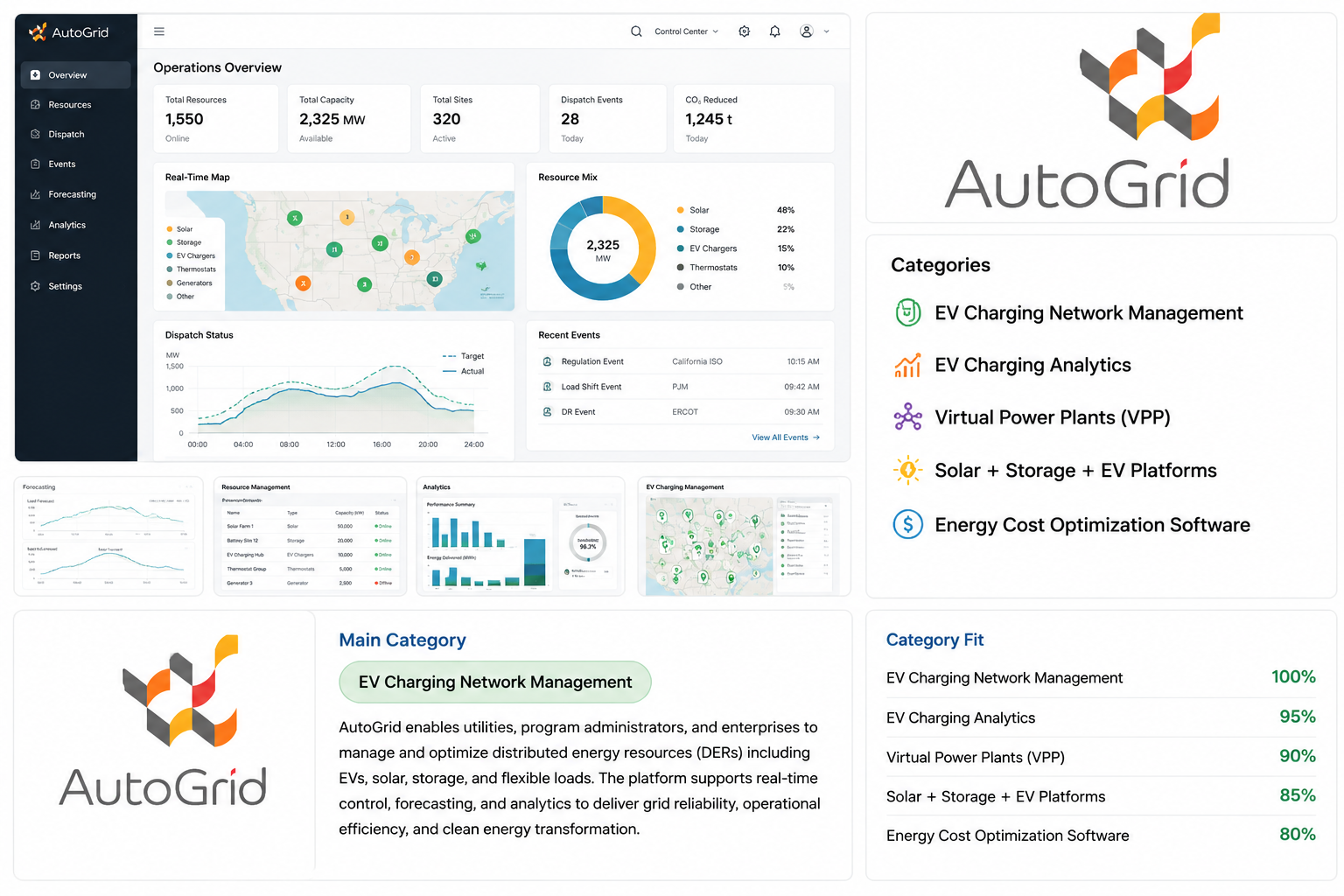
Operators use the platform dashboard to monitor real-time charging loads, forecast demand spikes, and automate charging adjustments during peak periods.
The system continuously manages charging events while ensuring EV owners maintain sufficient battery levels. Reporting tools help utilities measure load shifting, customer incentives, and grid performance improvements.
What You Can Manage with AutoGrid EV Planning
- Virtual Power Plants (VPPs): Aggregate EVs into controllable grid resources.
- Demand Response Programs: Incentivize customers to reduce peak electricity usage.
- Charging Infrastructure: Monitor charger status and network health.
- V2G Operations: Manage bidirectional energy flows.
- Customer Incentives: Track and distribute program rewards.
- Grid Impact Analytics: Analyze EV charging effects on local infrastructure.
FAQs
What does AutoGrid EV Planning do?
It helps utilities and fleet operators forecast, optimize, and manage EV charging using AI-driven energy management tools.
Who is AutoGrid EV Planning best for?
It is designed for utilities, energy retailers, and organizations managing large EV charging networks or commercial fleets.
Is AutoGrid EV Planning free?
No, it is an enterprise SaaS platform with custom pricing and no public free plan.
What are the main limitations of AutoGrid EV Planning?
Main limitations include implementation complexity, reliance on accurate third-party data, and enterprise-focused pricing.
What are the best alternatives to AutoGrid EV Planning?
Alternatives include Schneider Electric EcoStruxure, Siemens MindSphere, Virtual Peaker, and WeaveGrid.