Apollo Energy Analytics
Pros
- One dashboard for solar, wind, and battery storage.
- Deep energy loss analysis.
- Flexible cloud and on-site setup options.
- Predictive maintenance can reduce downtime.
- Useful for asset managers and O&M teams.
Cons
- Pricing is not public.
- There may be a learning curve for new users.
- Standard plans may limit concurrent users.
- The interface and help guides are currently only in English.
- Results depend on the quality of on-site data.
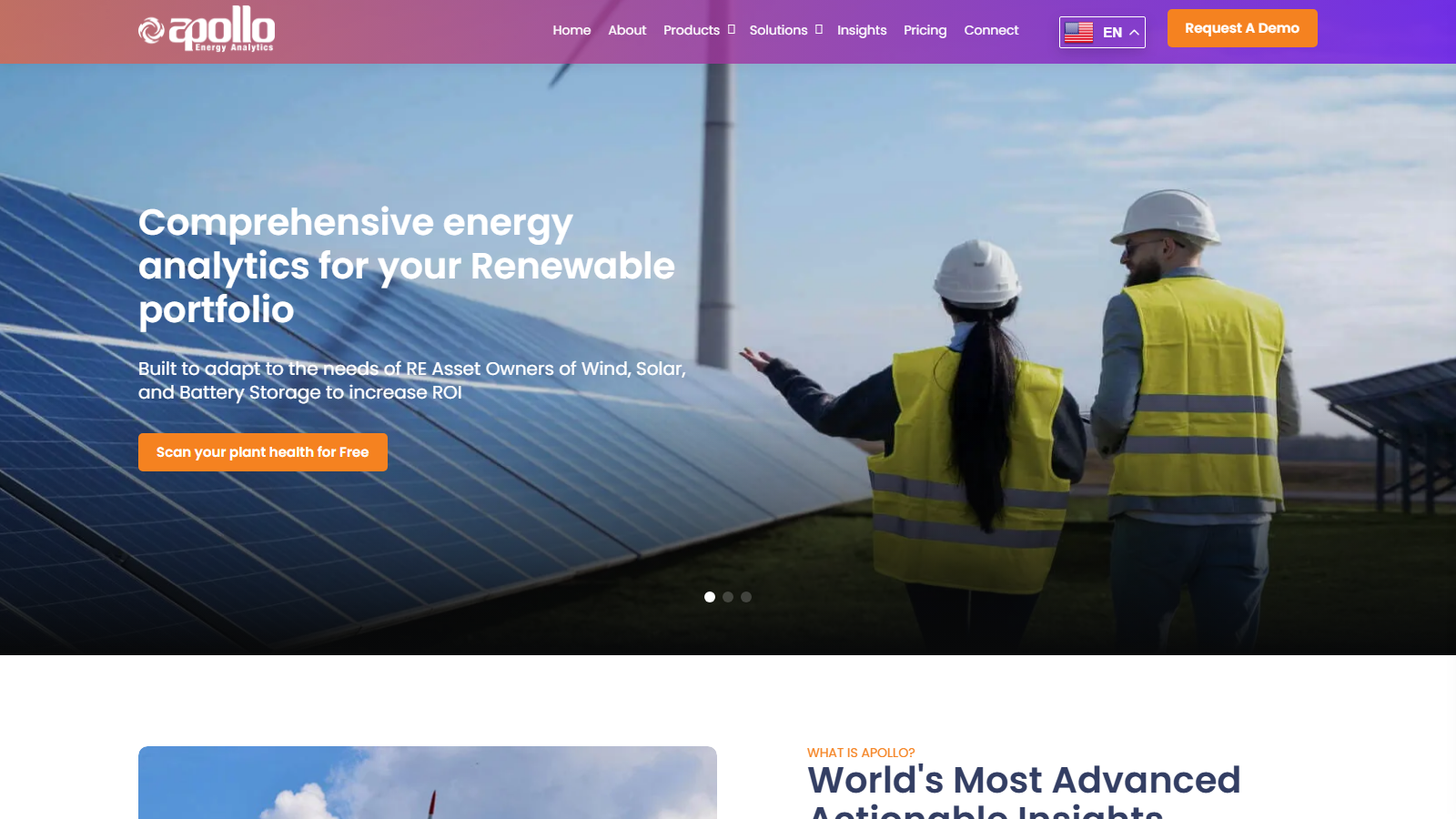
Managing large solar, wind, and battery storage portfolios often means juggling scattered data from a dozen different sources. This clutter makes it easy to miss equipment failures or overlook ways to boost energy yield. Apollo Energy Analytics solves this by bringing all your asset data into one place, using AI to spot potential breakdowns early and keep your operations running smoothly.
The platform is built specifically for independent power producers, asset managers, and O&M teams. By shifting from reactive fixes to predictive care, companies can cut down on downtime and keep their revenue steady. This review looks at how Apollo works, its standout features, and how it’s actually used in the field.
What Is Apollo Energy Analytics?
Apollo Energy Analytics is a professional SaaS platform designed for Asset Performance Management and solar monitoring. Its main job is to keep a close eye on the technical and financial health of renewable assets like solar panels, wind turbines, and battery storage. It works by pulling data directly from on-site hardware—like SCADA systems and inverters—into a secure, cloud-based dashboard.
The software is designed for everyone from field technicians to executives. The magic happens through “Digital Twins”—mathematical models that simulate exactly how a plant should be performing based on the current weather.
Features
- Patented Digital Twin technology: Builds a precise digital replica of your solar or wind site.
- Predictive failure detection: Uses algorithms trained on field data to catch warning signs early.
- Energy loss bucketing: Sorts power losses into categories like dirt buildup, shading, or grid issues.
- Integrated CMMS: Turns anomalies into prioritized work orders.
- Multi-site benchmarking: Compares performance across locations and technologies.
- Automated reporting: Creates scheduled performance and financial reports.
- Mobile application: Helps field teams manage alerts and work orders on the go.
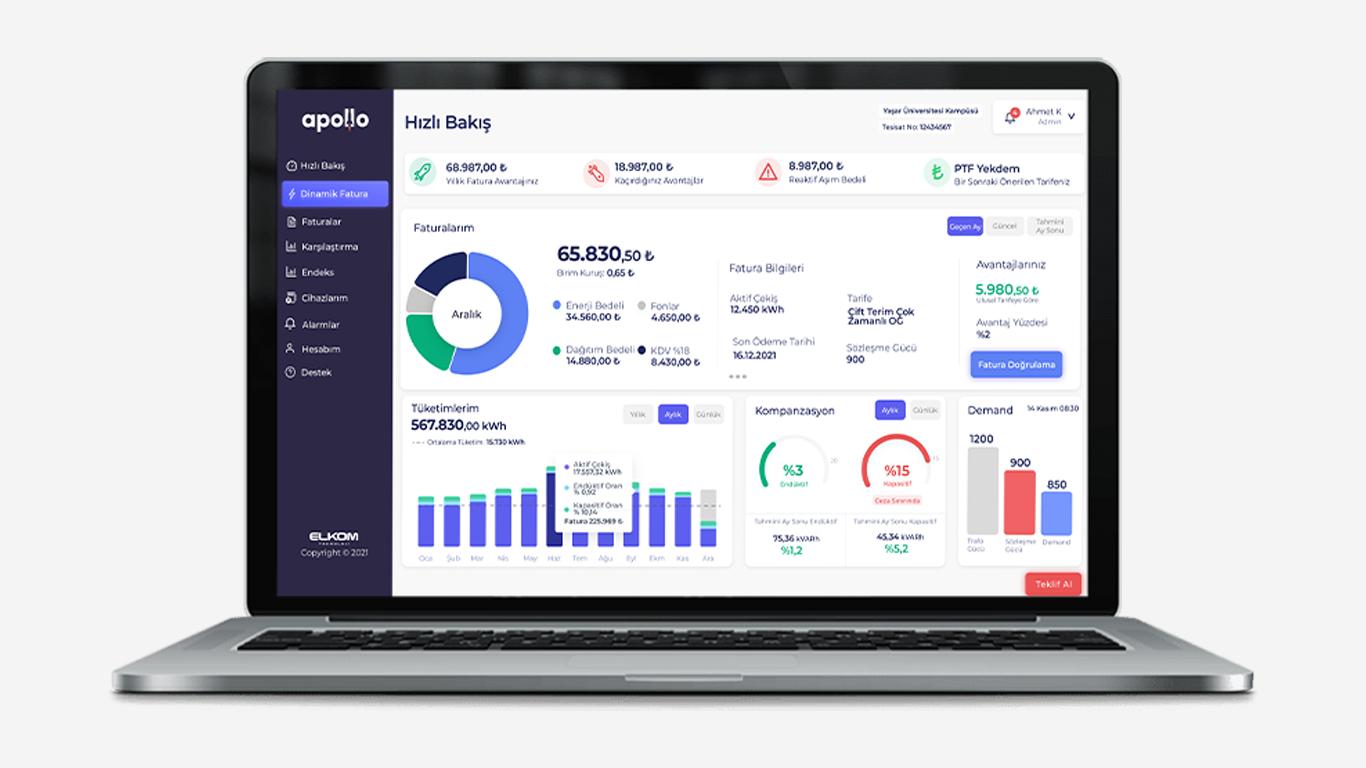
Screenshots
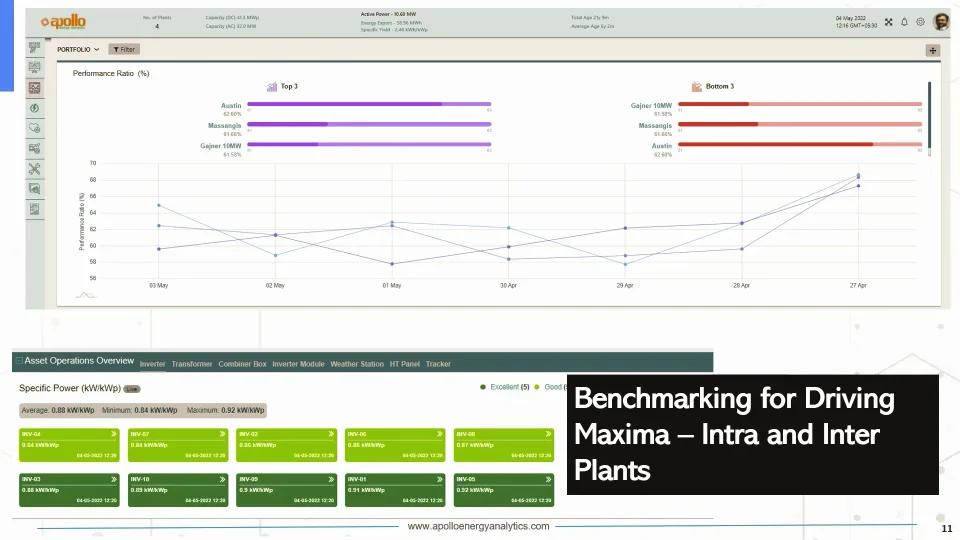
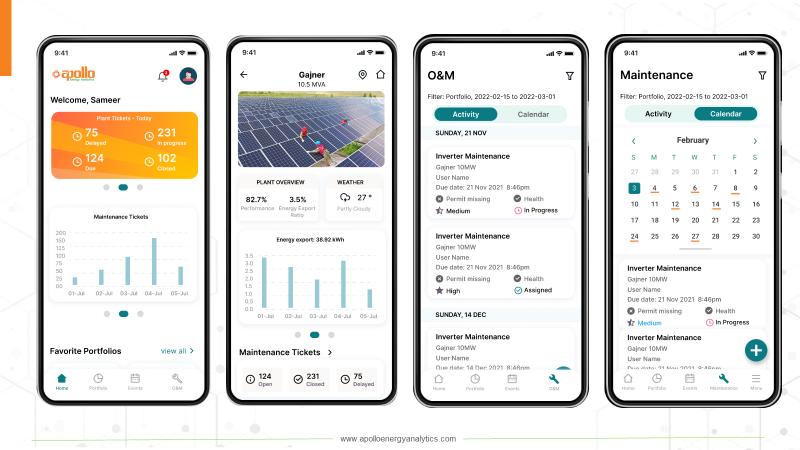
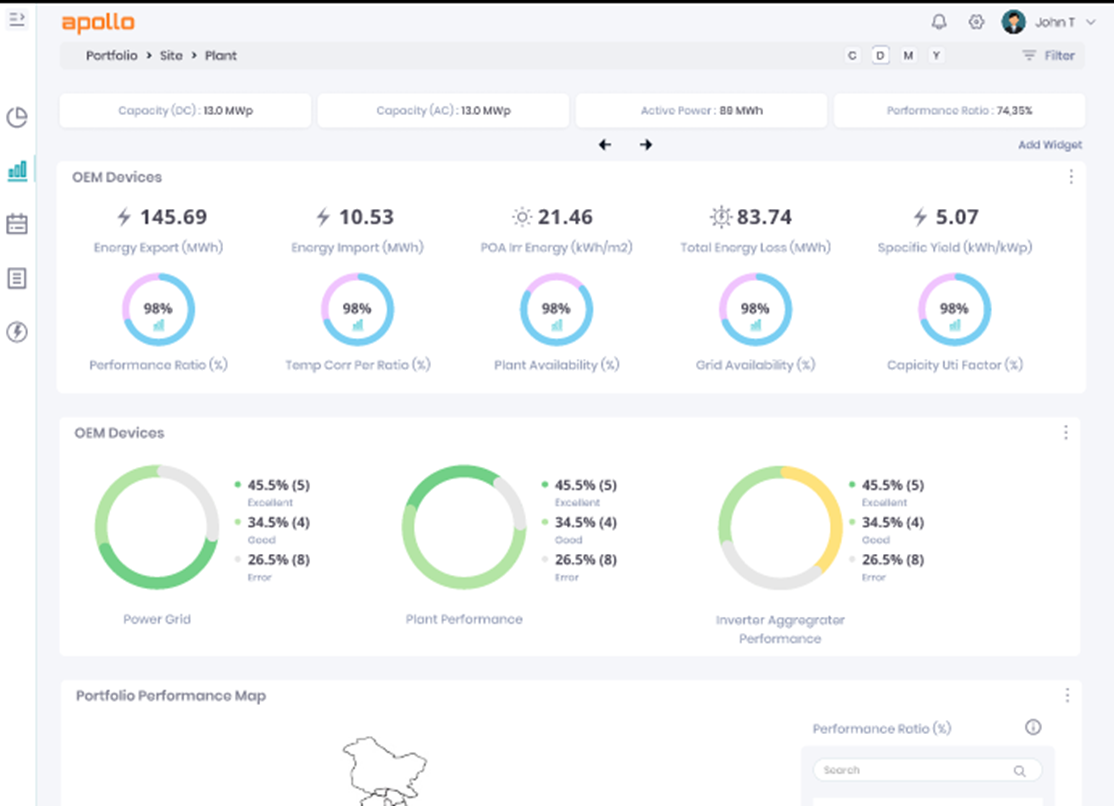
Apollo Energy Analytics Pricing
You won’t find a price list on the Apollo website. They use a custom enterprise model where the cost depends on how many sites you have, the size of your portfolio, and which specific tools you need.
If you’re interested, the best move is to request a demo or a custom quote. They offer both quarterly and yearly billing.
Integrations
Apollo is built to be hardware-agnostic, meaning it can pull data from almost any industrial source:
- Industrial Data Platforms: AVEVA PI System and CONNECT data services.
- Communication Protocols: Modbus, OPC UA, OPC DA, FTP, and MQTT.
- Software and API Integrations: Manufacturer SCADA systems and APIs for inverters and turbines.
- Enterprise ERP Tools: Salesforce, ServiceNow, SAP, IBM Maximo, and Odoo.
- Cloud Providers: AWS, Azure, and Google Cloud.
How to Set Up Apollo Energy Analytics
- Consultation and Audit: Review your portfolio and data sources.
- Onboarding and Data Connection: Connect assets to the Apollo cloud.
- Digital Twin Configuration: Set up digital models for your equipment and site layouts.
- User Role Definition: Create accounts and access levels.
- Threshold Setting: Configure alerts and performance targets.
- System Validation: Check data flow and reporting accuracy.
How to Use Apollo Energy Analytics
On a typical day, a performance analyst logs in to see the health scores for the whole portfolio. They look for sites flagged in red and compare actual output against the digital twin. Using loss bucketing, they can quickly understand whether the problem is dirt, weather, grid issues, or a technical failure.
Maintenance managers use the platform to manage field crews. If the system spots a failing inverter, it can create a work order and assign it to a technician through the mobile app.
What You Can Manage with Apollo Energy Analytics
- Asset Performance: Track real-time energy yield.
- Maintenance Workflows: Follow repairs from detection to completion.
- Inventory and Spares: Manage key parts like sensors and inverters.
- Energy Loss Data: See where and why power is being lost.
- Financial KPIs: Track revenue, PPA rules, and budgets.
- Carbon Metrics: Manage emissions and ESG reporting.
FAQs
What does Apollo Energy Analytics do?
It’s a cloud platform that monitors and analyzes renewable energy sites. It uses AI and digital models to predict failures and explain performance losses.
Who is Apollo Energy Analytics best for?
It’s best for power producers, asset owners, asset managers, and maintenance teams managing renewable energy portfolios.
Is Apollo Energy Analytics free?
No, there isn’t a free version. You usually need to request a demo or custom quote.
What are the main limitations of Apollo Energy Analytics?
The main limitations are lack of public pricing, possible user limits, English-only interface, and dependence on reliable on-site data.
What are the best alternatives to Apollo Energy Analytics?
Popular alternatives include Bazefield, Power Factors, SparkCognition, and monitoring tools from inverter manufacturers like SMA or SolarEdge.