PONTON Enerchain
Pros
- Reduces transaction costs by removing intermediaries.
- Improves settlement efficiency and reconciliation speed.
- Provides transparent and tamper-resistant transaction records.
- Supports local renewable energy communities and microgrids.
- No centralized server reduces single-point-of-failure risks.
- Helps smaller market participants access decentralized energy markets.
Cons
- Requires technical expertise to manage blockchain infrastructure.
- Platform adoption depends on broader network participation.
- Integration with legacy utility systems can be complex.
- Regulatory frameworks for decentralized trading vary by country.
- Microgrid deployments require significant upfront planning.
Traditional wholesale energy trading often depends on centralized brokers, exchanges, and clearinghouses to connect buyers and sellers. While this structure has supported energy markets for decades, it also introduces high transaction costs, slower reconciliation processes, and operational inefficiencies. As renewable energy and distributed generation expand, many utilities and local energy communities are searching for more flexible and transparent alternatives.
PONTON Enerchain addresses this challenge with a blockchain-based peer-to-peer energy trading platform. By removing intermediaries and enabling direct decentralized transactions, the platform helps utilities, energy traders, and microgrids improve efficiency, reduce costs, and automate settlement workflows.
What Is PONTON Enerchain?
PONTON Enerchain is a blockchain-based software platform designed for decentralized peer-to-peer energy trading and energy market coordination.
Developed by PONTON GmbH in Germany, the platform allows participants to run distributed blockchain nodes that securely exchange trade offers, synchronize transactions, and automate settlement processes without relying on centralized market operators.
Features
- Bilateral Peer-to-Peer Trading: Execute direct energy trades between participants without brokers.
- Real-Time Data Synchronization: Keep transaction records synchronized instantly across blockchain nodes.
- Enerchain Local Marketplace: Support local renewable energy trading within energy communities and microgrids.
- Automated Clearing and Settlement: Simplify reconciliation and post-trade operations using blockchain records.
- Anonymous Order Books: Allow participants to submit and accept offers privately.
- Intelligent Trading Agents: Automate high-frequency microgrid energy transactions.
- Decentralized Infrastructure: Operate without a central server or single point of failure.
Screenshots
PONTON Enerchain Pricing
PONTON Enerchain uses custom enterprise pricing tailored to the size and complexity of each deployment.
- Custom Project Quotes: Pricing depends on node count, transaction volume, and integration requirements.
- Enterprise Licensing: Utility-scale and consortium deployments use negotiated contracts.
- Demo Availability: Organizations can contact PONTON for consultations and demonstrations.
- No Public Pricing: Subscription and implementation costs are not published online.
Integrations
PONTON Enerchain integrates with energy market systems, IoT infrastructure, and utility software.
- Energy Market Data: Supports wholesale electricity and gas trading workflows.
- Industrial Protocol Support: Compatible with AS4 and established utility communication standards.
- Microgrid and IoT Devices: Integrates with smart meters, batteries, and solar systems.
- API and Webhooks: Connect internal ETRM systems and external applications.
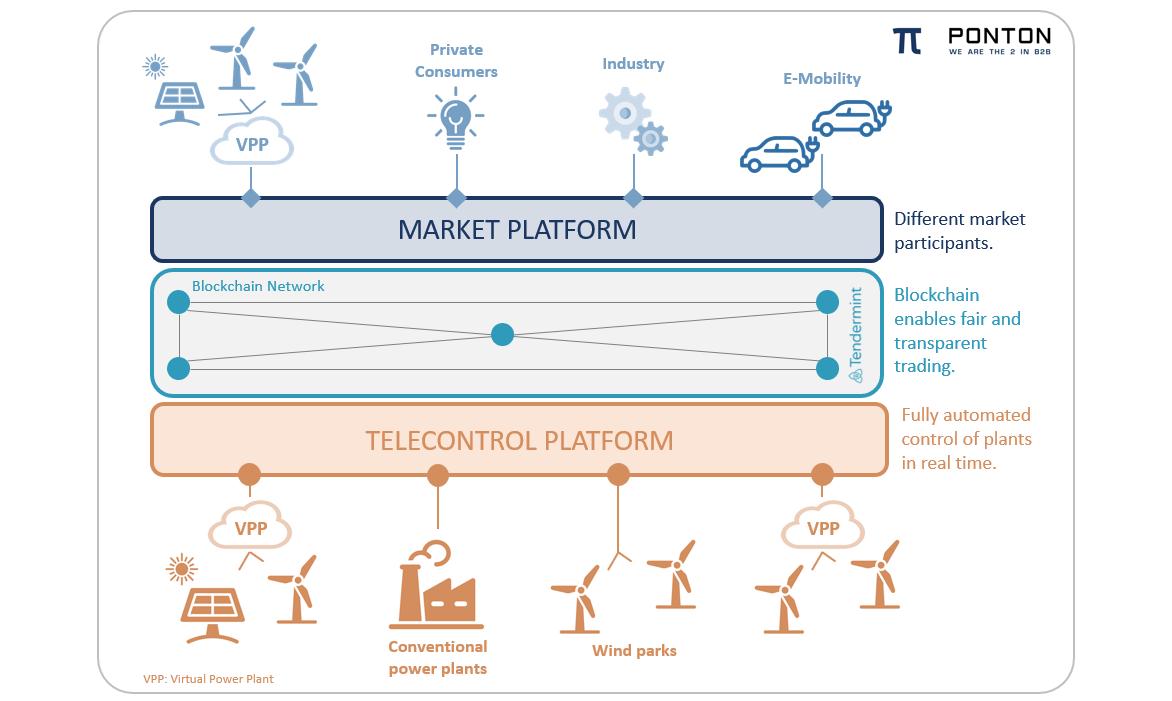
- Blockchain Node Architecture: Each participant operates its own secure network node.
How to Set Up PONTON Enerchain
- Consult with PONTON to define wholesale or local trading objectives.
- Join or establish a decentralized trading network.
- Install and configure Enerchain blockchain node software.
- Integrate APIs with internal trading or operational systems.
- Test synchronization and transaction workflows with other participants.
- Launch decentralized trading operations.
How to Use PONTON Enerchain
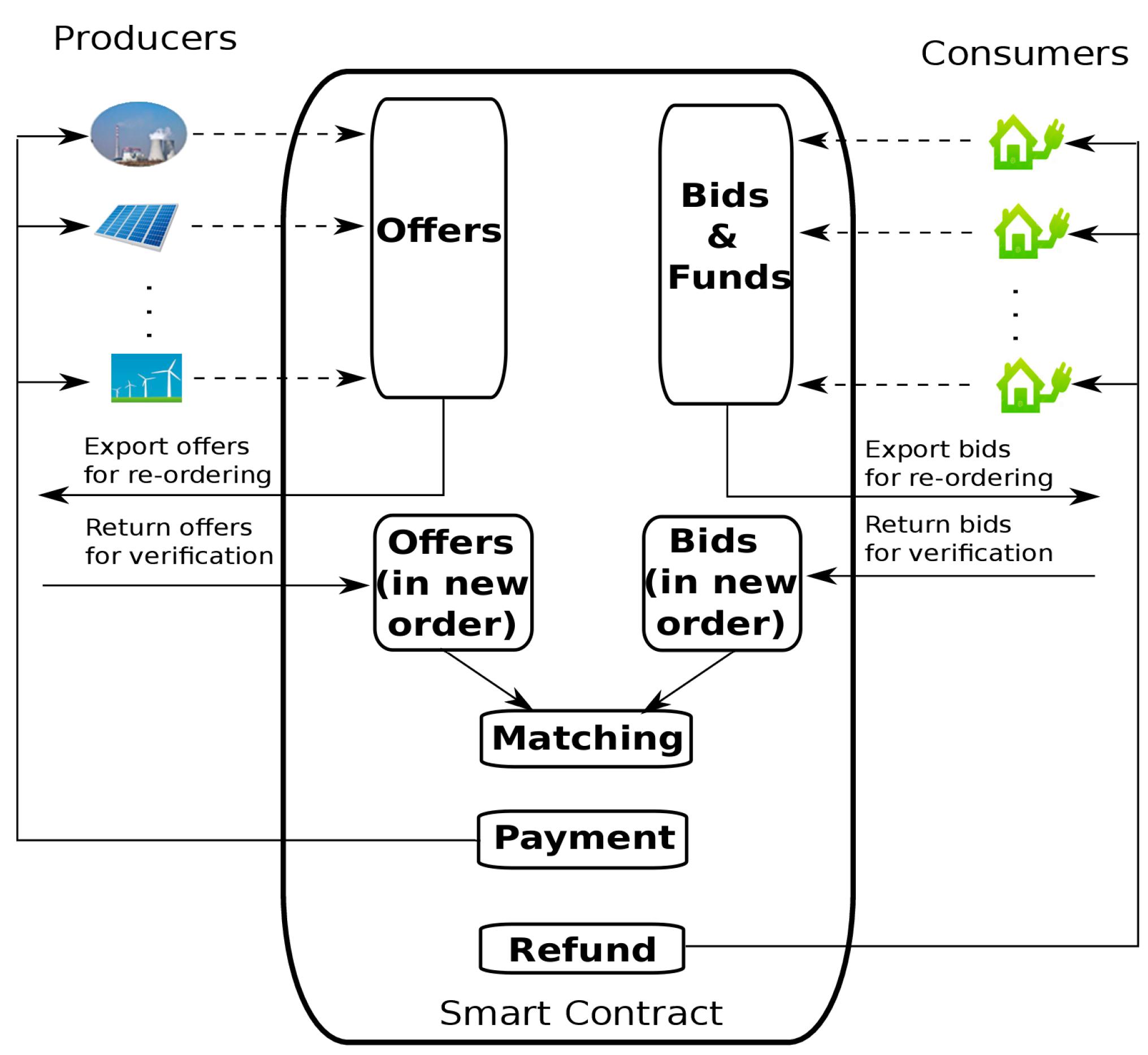
Wholesale traders typically use the decentralized order book to submit or accept trade offers directly with counterparties. Once a trade is executed, blockchain nodes synchronize transaction records automatically across the network.
In local energy markets, smart trading agents automatically negotiate electricity prices and quantities between producers and consumers based on real-time supply and demand conditions. Users can monitor transactions, energy flows, and savings through community dashboards while settlement processes run automatically in the background.
What You Can Manage with PONTON Enerchain
- Wholesale Energy Trades: Execute decentralized electricity and gas transactions.
- Local Energy Communities: Coordinate peer-to-peer renewable energy sharing.
- Trade Settlement: Automate reconciliation and financial workflows.
- Distributed Energy Resources: Integrate batteries, solar systems, and flexible loads.
- Transaction Records: Maintain auditable blockchain trading histories.
- Microgrid Optimization: Balance local energy production and consumption dynamically.
FAQs
What does PONTON Enerchain do?
PONTON Enerchain is a blockchain-based platform that enables utilities, traders, and local energy communities to trade energy directly without centralized intermediaries.
Who is PONTON Enerchain best for?
It is designed for energy traders, utilities, municipal grids, microgrid operators, and organizations exploring decentralized energy markets.
Is PONTON Enerchain free?
No, PONTON Enerchain is a commercial enterprise platform that requires custom licensing and implementation agreements.
What are the main limitations of PONTON Enerchain?
Main limitations include technical infrastructure requirements, dependency on broader network participation, and regulatory complexity for decentralized energy trading.
What are the best alternatives to PONTON Enerchain?
Popular alternatives include Powerledger, Enmacc, Energy Web Foundation infrastructure, and other decentralized peer-to-peer energy trading platforms.