Grid Singularity Exchange

Pros
- Fully open-source and highly transparent platform.
- Supports local renewable energy communities and prosumers.
- Scalable from small buildings to city-scale energy markets.
- Advanced simulation tools reduce investment risk before deployment.
- Grid-aware architecture helps prevent infrastructure overloads.
- Users can customize sustainability and pricing preferences.
Cons
- Steep learning curve for non-technical users.
- Commercial pricing is not publicly transparent.
- Live deployments require compatible smart meter infrastructure.
- Energy trading regulations vary significantly by country.
- Blockchain and decentralized energy concepts may be difficult for beginners.
As renewable energy adoption grows, traditional utility-centered electricity systems are becoming less flexible for local energy communities and prosumers. Small-scale producers with rooftop solar panels, batteries, and smart appliances often have limited ways to trade excess electricity directly with nearby consumers. This creates inefficiencies and reduces the value of decentralized renewable generation.
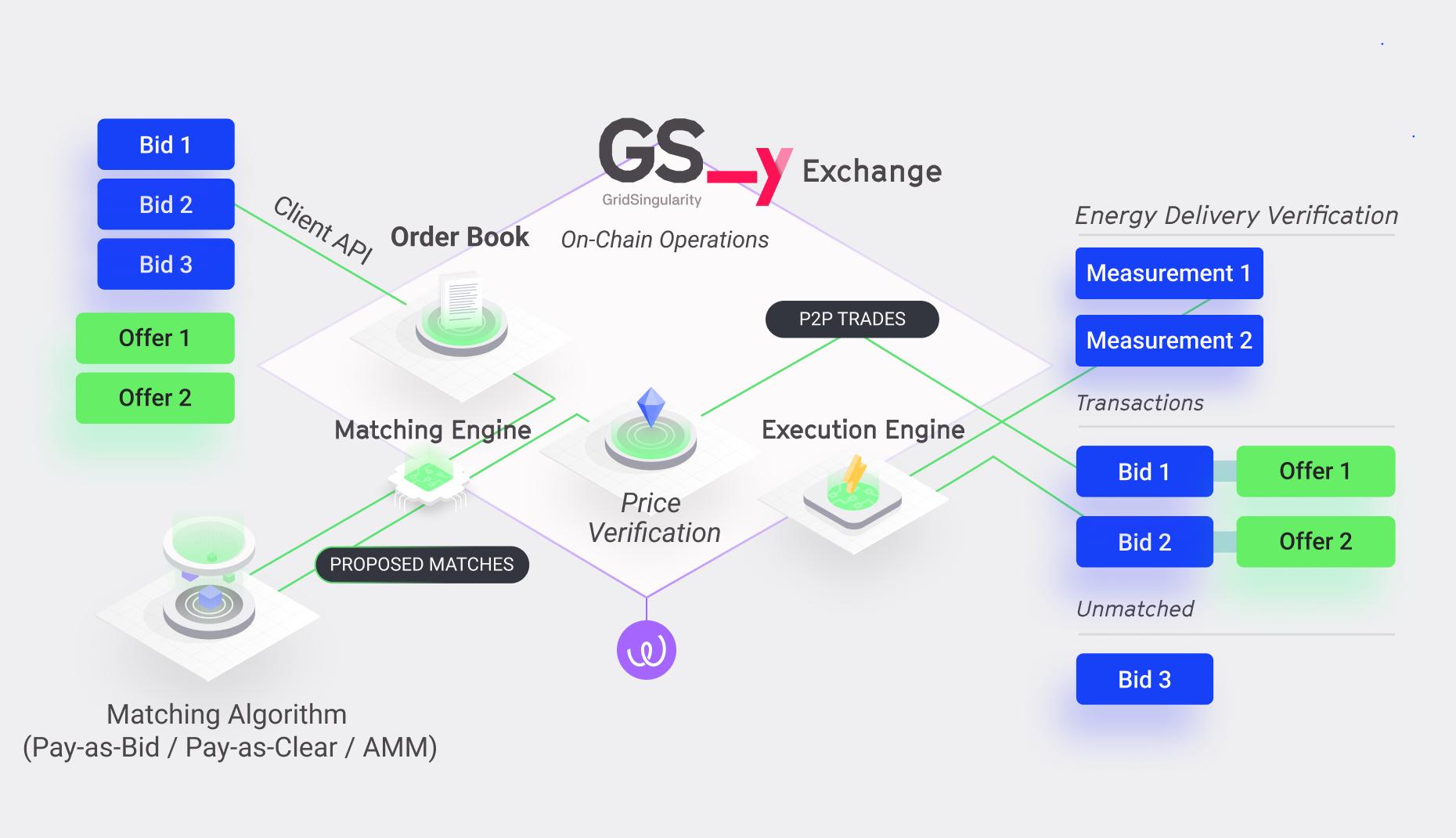
Grid Singularity Exchange addresses this challenge with an open-source peer-to-peer energy trading platform that enables communities, grid operators, and aggregators to create decentralized local energy markets. By combining real-time trading, digital twins, and grid-aware simulations, the platform helps organizations test and operate flexible energy ecosystems while maintaining grid stability.
What Is Grid Singularity Exchange?
Grid Singularity Exchange is an open-source decentralized energy marketplace engine designed for peer-to-peer energy trading, distributed energy management, and local energy market simulations.
The platform uses autonomous software agents to represent physical assets such as solar panels, batteries, EVs, and heat pumps, enabling these resources to buy and sell electricity dynamically through real-time energy auctions.
Features
- Grid-Aware Marketplace Simulation: Model energy trading while protecting local grid infrastructure from congestion.
- Autonomous Trading Agents: AI-driven agents automatically buy and sell energy based on user-defined goals.
- Double-Sided Auctions: Enable dynamic matching between buyers and sellers in local energy markets.
- Digital Twin Modeling: Simulate neighborhoods and energy communities using historical consumption data.
- Social Community Manager: Monitor community participation and local market activity.
- Customizable Grid Fees: Configure dynamic tariffs to reduce peak demand and congestion.
- Open-Source Architecture: Fully transparent GPL v3 codebase for customization and research.
Screenshots
Grid Singularity Exchange Pricing
Grid Singularity Exchange offers both free simulation access and enterprise deployment services.
- Free Simulation Tool: Available through d3a.io for research and community modeling.
- Commercial Deployments: Custom pricing for live energy market implementations.
- Canary Test Network Access: Enterprise and pilot program pricing available upon request.
- Subscription Models: Annual SaaS pricing may apply for commercial operators.
- Transaction Fee Models: Some deployments use revenue-sharing based on trading activity.
Integrations
Grid Singularity Exchange integrates with smart energy infrastructure, APIs, and blockchain ecosystems.
- Asset APIs: Connect smart meters, batteries, EVs, and distributed assets.
- Grid Operator APIs: Support congestion management and dynamic fee configuration.
- IoT Devices: Integrate flexible energy devices such as heat pumps and storage systems.
- Energy Web Foundation: Blockchain integration for digital identity and transaction verification.
- Webhook and REST APIs: Support custom automation and external software integration.
How to Set Up Grid Singularity Exchange
- Create a free simulation account through d3a.io.
- Define your energy community and grid layout.
- Add energy assets such as solar panels, batteries, or EV chargers.
- Configure trading preferences and automation rules.
- Run simulations using historical or live energy data.
- Contact Grid Singularity for Canary Test Network or commercial deployment access.
How to Use Grid Singularity Exchange
Users typically start by creating a digital twin of a building, neighborhood, or community using historical consumption and generation data. Autonomous agents then simulate or execute real-time trades based on energy prices and user-defined priorities.
Community managers monitor participation, local market performance, and sustainability metrics through dashboards, while grid operators can dynamically adjust tariffs and congestion controls through APIs.
What You Can Manage with Grid Singularity Exchange
- Local Energy Markets: Operate peer-to-peer renewable electricity trading communities.
- Distributed Energy Assets: Control batteries, solar systems, and flexible appliances.
- Grid Congestion: Optimize local energy flows using dynamic pricing.
- Community Energy Billing: Track participant costs, earnings, and transactions.
- Sustainability Goals: Measure renewable self-sufficiency and environmental impact.
- Market Simulations: Test different trading strategies and tariff models.
FAQs
What does Grid Singularity Exchange do?
Grid Singularity Exchange provides software for simulating and operating decentralized peer-to-peer energy markets while maintaining local grid stability.
Who is Grid Singularity Exchange best for?
It is ideal for energy communities, utilities, grid operators, aggregators, researchers, and organizations exploring decentralized renewable energy markets.
Is Grid Singularity Exchange free?
Yes, the d3a.io simulation platform is free for research and testing, while commercial deployments and advanced services require paid agreements.
What are the main limitations of Grid Singularity Exchange?
Main limitations include technical complexity, dependency on compatible hardware and regulations, and the learning curve associated with decentralized energy systems.
What are the best alternatives to Grid Singularity Exchange?
Popular alternatives include Powerledger, LO3 Energy, Siemens decentralized grid solutions, and Schneider Electric energy marketplace platforms.