Equigy
Pros
- Enables distributed assets to participate in balancing markets.
- Reduces reliance on fossil-fuel peaker plants.
- Provides secure and transparent blockchain-based validation.
- Standardizes access to multiple European grid markets.
- Supported by major European transmission operators.
- Improves utilization of existing renewable infrastructure.
Cons
- Currently limited to selected European regions.
- Requires technical integration with hardware and APIs.
- Depends on national energy regulations and compliance.
- Technical onboarding may be complex for smaller participants.
As we shift toward renewable energy, our power grids are dealing with more volatility from weather-dependent sources like wind and solar. In the past, grid stability depended on massive fossil fuel plants that could quickly increase or decrease electricity generation. Today, a cleaner approach is to manage demand using distributed energy resources (DERs) like electric vehicles, heat pumps, and home batteries.
Equigy solves this challenge by providing a blockchain-based platform that allows these small-scale assets to participate in electricity balancing markets. By connecting Transmission System Operators (TSOs) with aggregators, the platform helps stabilize the grid while creating new revenue opportunities for consumers and businesses.
What Is Equigy?
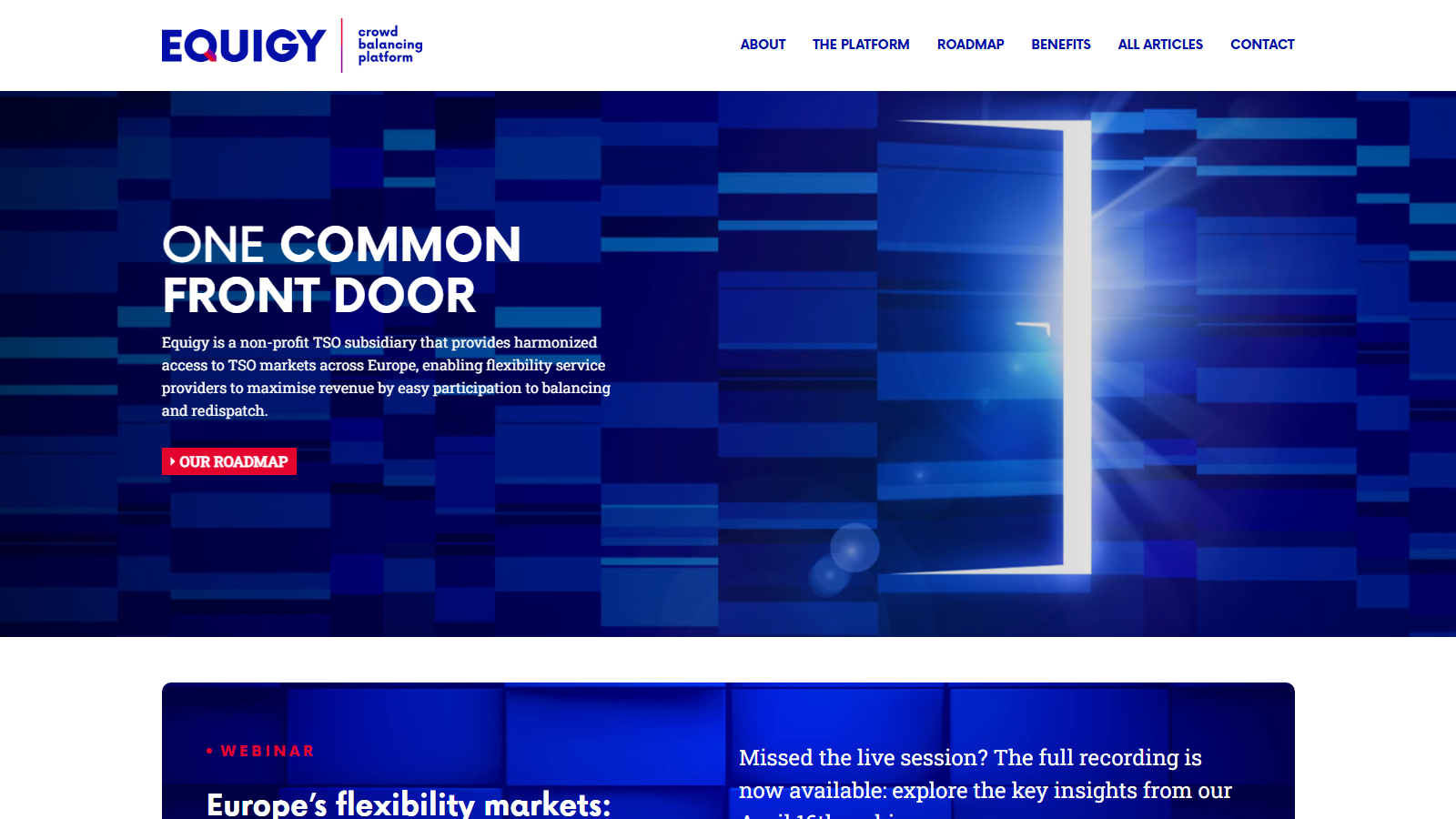
Equigy is a pan-European non-profit joint venture created by major Transmission System Operators including TenneT, Swissgrid, Terna, Austrian Power Grid, and TransnetBW.
The platform acts as a Crowd Balancing Platform (CBP) that enables aggregators to combine thousands of distributed energy devices into virtual energy pools that can support grid balancing services.
Features
- Unified Market Access: Single entry point for aggregators across multiple European balancing markets.
- Blockchain Validation: Secure verification of distributed energy transactions using blockchain infrastructure.
- Canonical Data Model: Standardized data structure for interoperability between operators and participants.
- Real-Time Grid Coordination: Monitor and coordinate distributed energy assets dynamically.
- Multi-Market Participation: Support for balancing services like aFRR and mFRR.
- Vehicle-to-Grid (V2G) Support: Enable EV batteries to provide electricity back to the grid.
Equigy Pricing
Equigy operates as a non-profit platform and generally does not charge subscription fees for participation.
- Free Platform Access: No direct subscription cost for using the platform.
- Integration Costs: Participants handle API, hardware, and compliance setup expenses.
- Operational Costs: Aggregators manage their own infrastructure and market participation costs.
Integrations
Equigy integrates with energy operators, aggregators, and IoT infrastructure.
- TSO and DSO Systems: Integration with European grid operator infrastructure.
- Aggregator Platforms: REST API connectivity for distributed energy management systems.
- IoT and OEM Systems: Smart meter and device-level energy monitoring integrations.
- Blockchain Infrastructure: Hyperledger Fabric technology supported by IBM.
How to Set Up Equigy
- Contact Equigy for regional and technical consultation.
- Verify distributed assets meet local grid requirements.
- Integrate management systems using Equigy APIs.
- Map local operational data to the Equigy data model.
- Run onboarding and testing procedures.
- Launch participation in balancing and flexibility markets.
How to Use Equigy
Aggregators use Equigy to submit flexibility offers into electricity balancing markets while monitoring distributed asset performance in real time.
The platform validates energy delivery using smart meter and device-level data, then automates settlement and reporting processes for all market participants.
What You Can Manage with Equigy
- Grid Flexibility Services: Participate in balancing and reserve markets.
- Distributed Energy Assets: Monitor batteries, EVs, and DER availability.
- Blockchain Transaction Records: Maintain auditable energy exchange logs.
- Grid Constraint Coordination: Share data for local congestion management.
- Compliance Reporting: Generate reports aligned with European market standards.
FAQs
What does Equigy do?
Equigy connects distributed energy assets like EVs and batteries to electricity balancing markets, allowing them to support grid stability through blockchain-based coordination.
Who is Equigy best for?
It is designed for Transmission System Operators, Distribution System Operators, aggregators, and smart energy technology providers.
Is Equigy free?
Yes, Equigy is operated as a non-profit platform and generally provides free software access to participants.
What are the main limitations of Equigy?
Main limitations include geographic availability, technical integration complexity, and dependence on national energy market regulations.
What are the best alternatives to Equigy?
Alternatives include Powerledger, Schneider Electric EcoStruxure, Siemens grid management platforms, and regional decentralized energy trading systems.