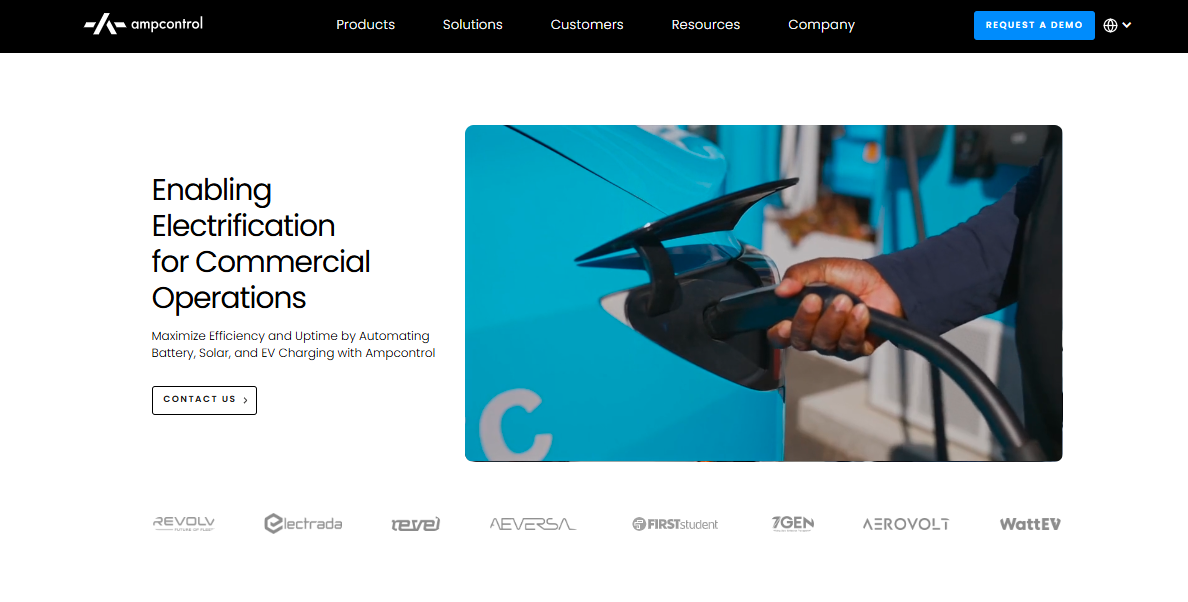
 1 / 6
Ampcontrol
by Ampcontrol · est. 2019
Cloud EV charging management software for fleets, depots and commercial sites that balances loads and shifts charging to cheaper periods.
- Starting price
- On request
- Free trial
- No
- Best for
- EV fleet and depot operators
Pros and Cons
Pros
- Smart EV charging and load balancing features
- Real-time monitoring of chargers and vehicles
- Strong support for large-scale EV fleets
- Reduces peak demand and energy costs
- 24/7 support from a well-trained team
- Works with many OCPP-compatible chargers
- High system reliability and uptime
Cons
- Not ideal for small or home users
- Pricing is not publicly listed
- Requires technical setup and onboarding
- Depends on a stable internet connection
- Some features may require training
Large-scale EV charging ports often deal with a sudden surge in demand. This causes power unavailability or higher charging costs. Besides, when power comes from various sources, you may use an expensive supply when cheaper options are available. Ampcontrol solves the problem by balancing loads, determining costs, and automating management.
This software platform also supports EV fleet management and determines the best times to charge. It also integrates hardware, vehicle telematics, and real-time utility data for forecasting and power management.
What is Ampcontrol?
Ampcontrol is a cloud-based EV charging management platform that also offers energy optimization. The software assists businesses that run electric vehicle fleets and charging stations. It works with energy-heavy sites such as depots, logistics hubs, and commercial parking areas.
It connects energy sources with vehicles and EV chargers into a single control dashboard. Operators can then monitor charging activity, reduce electricity costs, and manage power distribution through smart automation.
Ampcontrol optimizes grid-connected and solar-integrated EV charging systems. It uses real-time data and predictive algorithms to balance charging demand.
Features
The software focuses on energy visibility, control, and optimization. Here are the main features.
Smart Charging Optimization
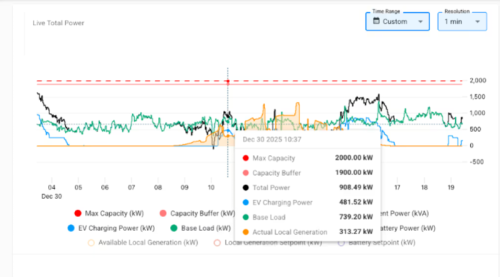
The platform adjusts charging automatically depending on grid limits, fleet schedules, and electricity demand. It delivers power where it sees the highest consumption. This prevents overloads while ensuring power availability across outputs.
Load Management System
Ampcontrol distributes power across multiple charging units. This keeps the business within the power limits and eliminates consumption spikes.
Real-time Monitoring
The management team can view live charging sessions and determine the charger status. So, issues like failed sessions and downtime can be detected as soon as possible. You can track live charging activity, energy use, and charger status from the dashboard. The system also generates reports from consumption analytics for planning.
Fleet Integration
Ampcontrol connects with fleet systems and telematics tools. This allows operators to link vehicle data with charging behavior and improve scheduling. It also defines priorities for vehicles, time schedules, and energy limits. This ensures power is always available.
Reporting and Analytics
You can generate detailed reports like energy usage, cost savings, charger performance, and CO2 impact. Use these insights to forecast demand and plan accordingly.
Ampcontrol Pricing
Ampcontrol does not publish fixed pricing. Instead, it uses a custom pricing model based on business requirements.
Pricing depends on:
- Number of chargers connected
- Size of the EV fleet or site
- Required features and integrations
- Level of support and service
Ampcontrol is an enterprise solution rather than a consumer tool. So, the final costs vary as business needs change. Most clients use subscription-based contracts where the cost is recovered through energy savings and operational efficiency.
Integrations
Ampcontrol supports integration with multiple energy and mobility systems. Common integrations include:
- Fleet management systems (telematics): It tracks vehicle location and battery status to sync charging with activity.
- Utility management systems: Manage different power sources to meet demand and achieve balance.
- Payment and billing solutions: Automate customer billing and invoicing based on energy use.
- Energy meters and solar systems: Monitor real-time energy production and consumption, especially for solar systems
- API-based custom enterprise tools: The platform connects chargers with external systems like utilities and fleet software for easy management.
How to Set Up Ampcontrol
Follow these steps to use smart energy management on the Ampcontrol platform.
1. Create an account
Click the ‘request a demo’ tab to see how the software works. The support team evaluates your needs and demonstrates Ampcontrol capabilities. They then create an account for you.
2. Configure infrastructure
Add chargers, vehicles, and site power data into the system.
3. Set energy strategy
Define how energy should be distributed across chargers.
4. Integrate systems
Connect fleet software, billing systems, or energy platforms if needed.
5. Test the system
Run initial charging sessions to validate configuration and performance.
6. Go live
Activate full operations and monitor through the dashboard.
FAQs
What is Ampcontrol used for?
You use the software to manage EV charging networks for fleets and commercial sites.
Is Ampcontrol suitable for home charging?
No. It is designed for business and industrial-scale charging operations. Its price point and feature set are beyond the needs of home users.
Does Ampcontrol work with all chargers?
It supports most OCPP-compliant chargers. However, compatibility depends on hardware.
Can Ampcontrol reduce energy costs?
Yes. It shifts charging to cheaper periods and prevents peak demand spikes.
Ampcontrol alternatives
PV F-CHART
Solar Simulation Software
Photovoltaic system analysis software that estimates monthly performance and economics using utilizability methods developed at the University of Wisconsin.
PlantPredict
Solar Simulation Software
Cloud-based energy simulation software for utility-scale PV plants, originally created by First Solar and now part of Terabase Energy.
HOMER Grid
Solar Simulation Software
Desktop simulation software for behind-the-meter solar and storage systems that models hourly energy flows and payback for commercial and industrial sites.