Enerflo
Pros
- Built specifically for solar workflows
- Centralizes leads, proposals, and contracts
- Reduces manual follow-ups
- Improves visibility across team pipelines
- Scales effectively as deal volume increases
Cons
- Pricing is not publicly fixed
- Requires setup and onboarding before full use
- May feel complex for smaller teams with low deal volume
- Effectiveness depends on proper configuration
- Integrations may require initial setup effort
As solar teams scale, basic CRMs and spreadsheets start creating gaps. Leads come from different sources, updates depend on individual reps, and tracking progress across deals takes more effort than it should. At that stage, the issue is not lead generation or closing ability—it is coordination. Enerflo is built to handle that shift by bringing lead tracking, proposals, and contracts into one system for smooth operation.
What is Enerflo?
Enerflo is a CRM platform developed for solar sales operations. It manages the full pipeline, from lead intake through proposal and contract stages, within a single workspace.
Instead of splitting work across different systems, Enerflo keeps sales data, documents, and deal progress connected. This allows teams to track activity and status without rebuilding context at each stage.
Features
Once you start using Enerflo, the structure becomes clear—it’s built to keep your sales process from slipping through the cracks.
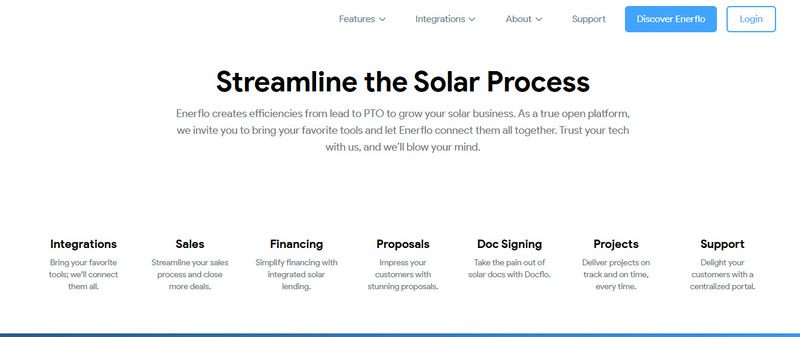
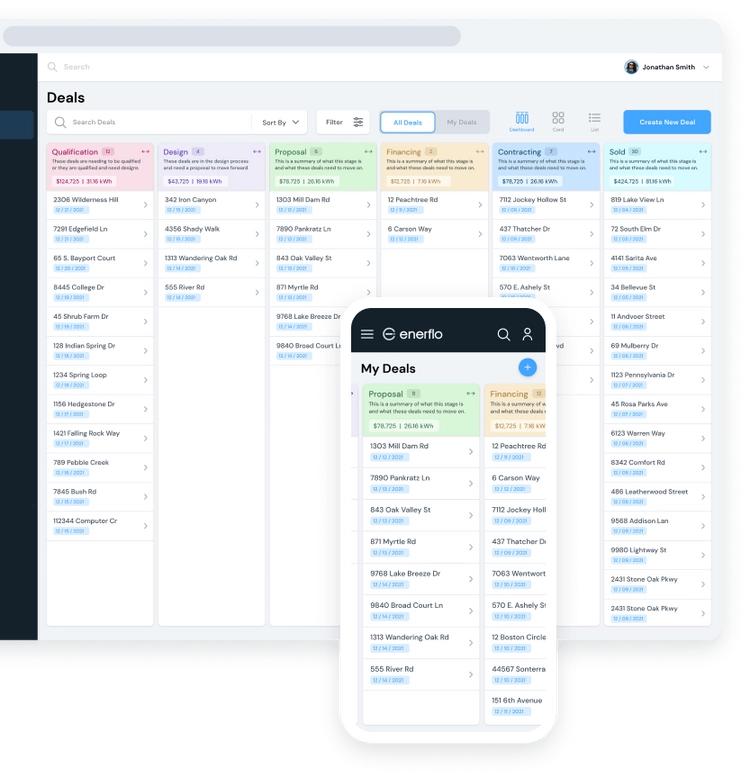
- Lead management: Leads are organized into a structured pipeline. Each record shows its current stage, assigned owner, and recent activity, making it possible to review deal status across the team.
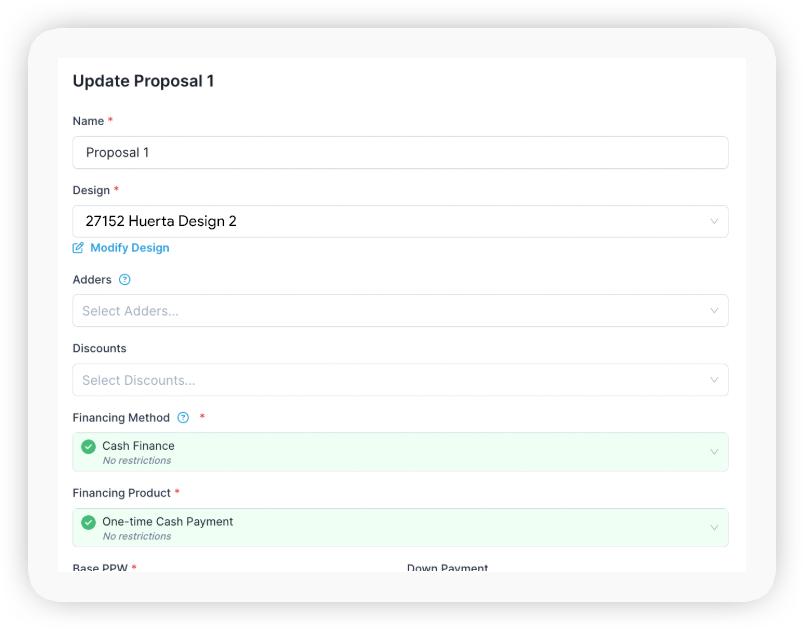
- Built-in proposals: Proposals are created within the platform using stored customer and pricing information. This keeps proposal data aligned with the pipeline and reduces the need to move between tools during the sales process.
- Automation: Enerflo supports automation for follow-ups, task creation, and stage progression. Routine actions can run without manual input, which helps maintain consistency across multiple deals.
- E-signatures: Contracts can be sent and signed directly within the system. This removes the need for external document handling and shortens the time between proposal and close.
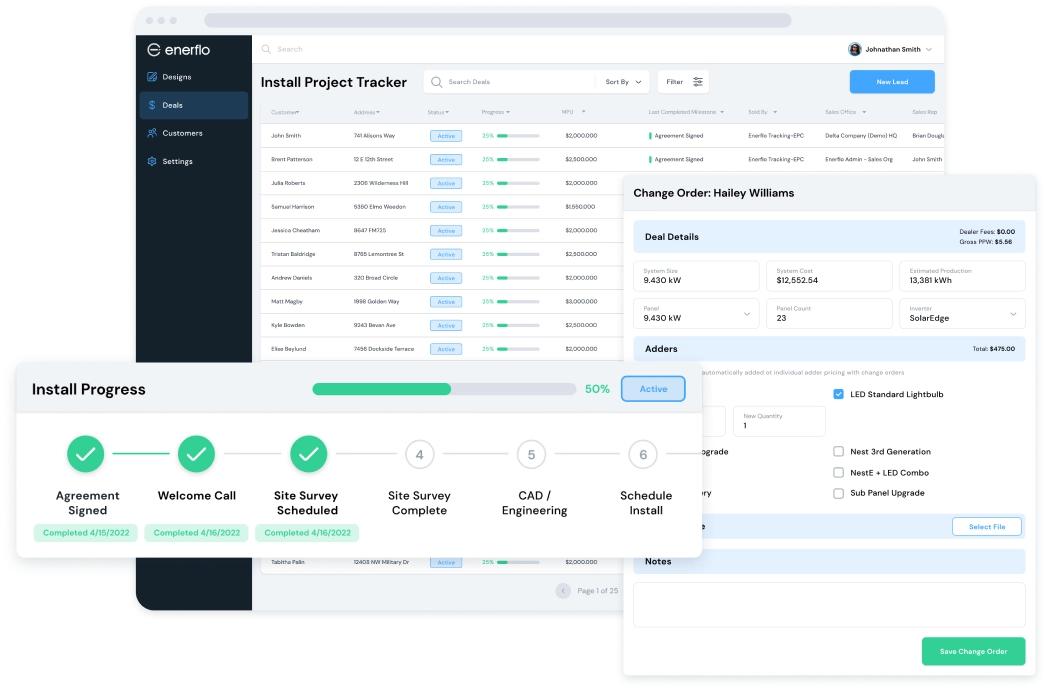
- Post-sale project tracking: After a deal is closed, the same record continues to track project status. Installation progress and updates remain linked to the original sale, providing continuity across teams.
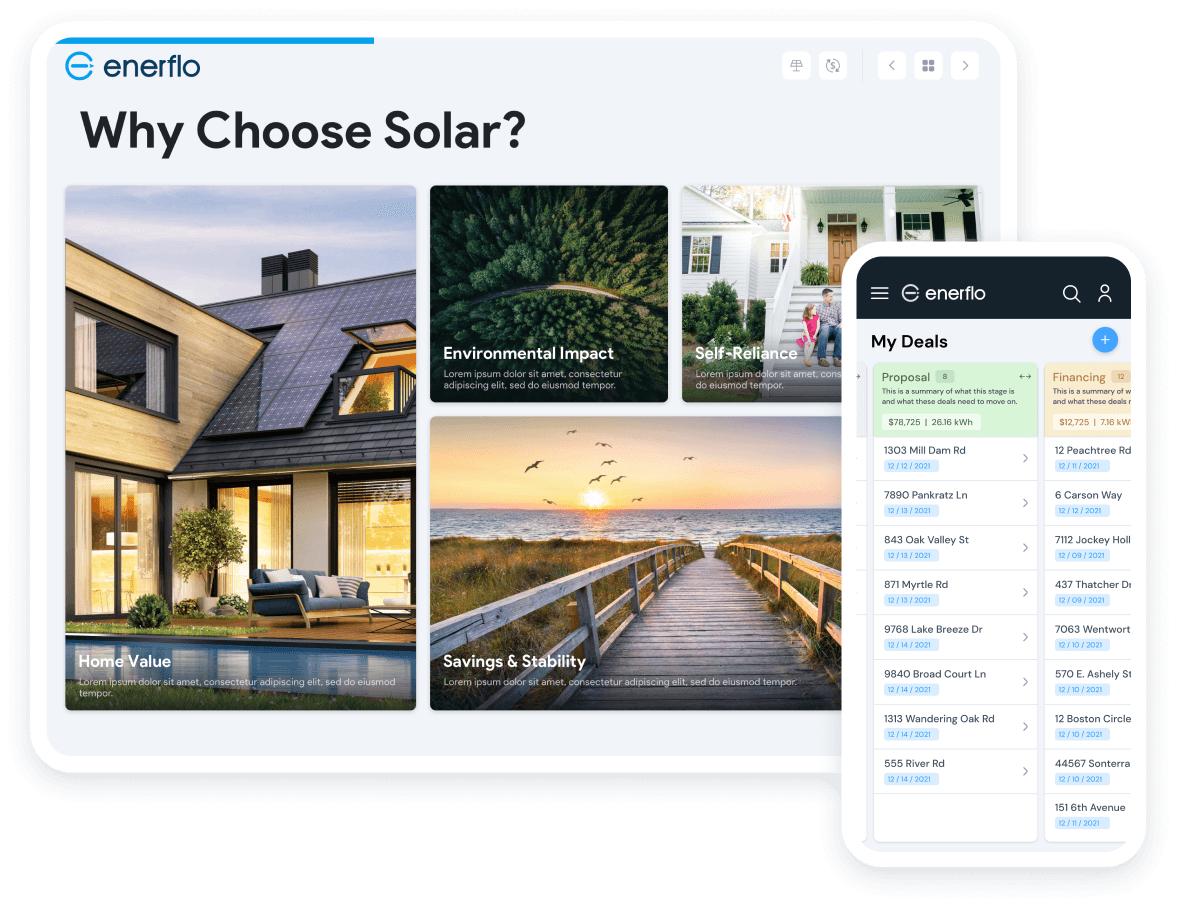
- Mobile access: Reps don’t need to wait until they’re back at a desk. Updates can happen in real time.
Screenshots
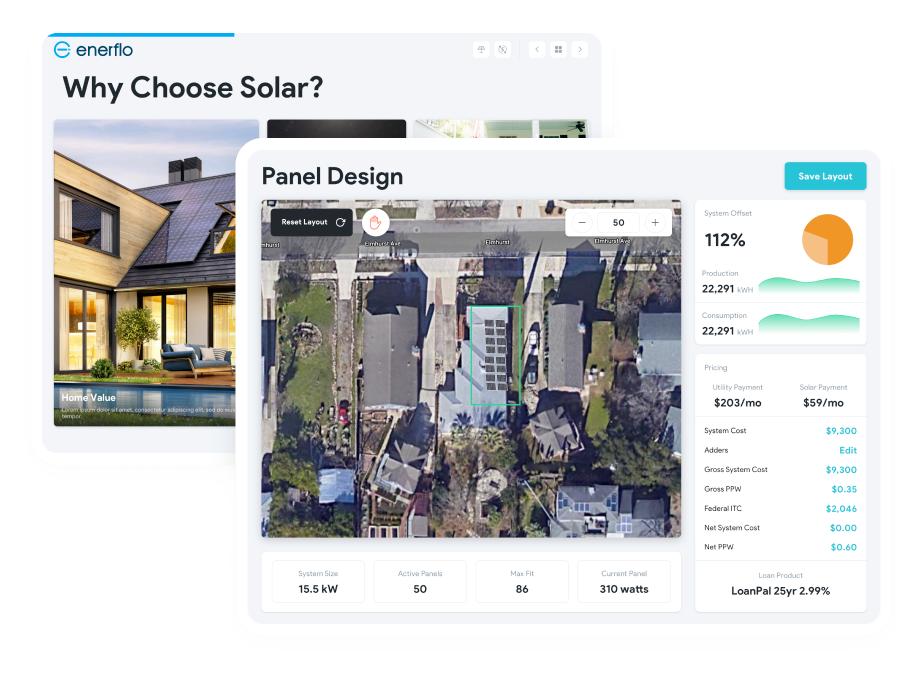
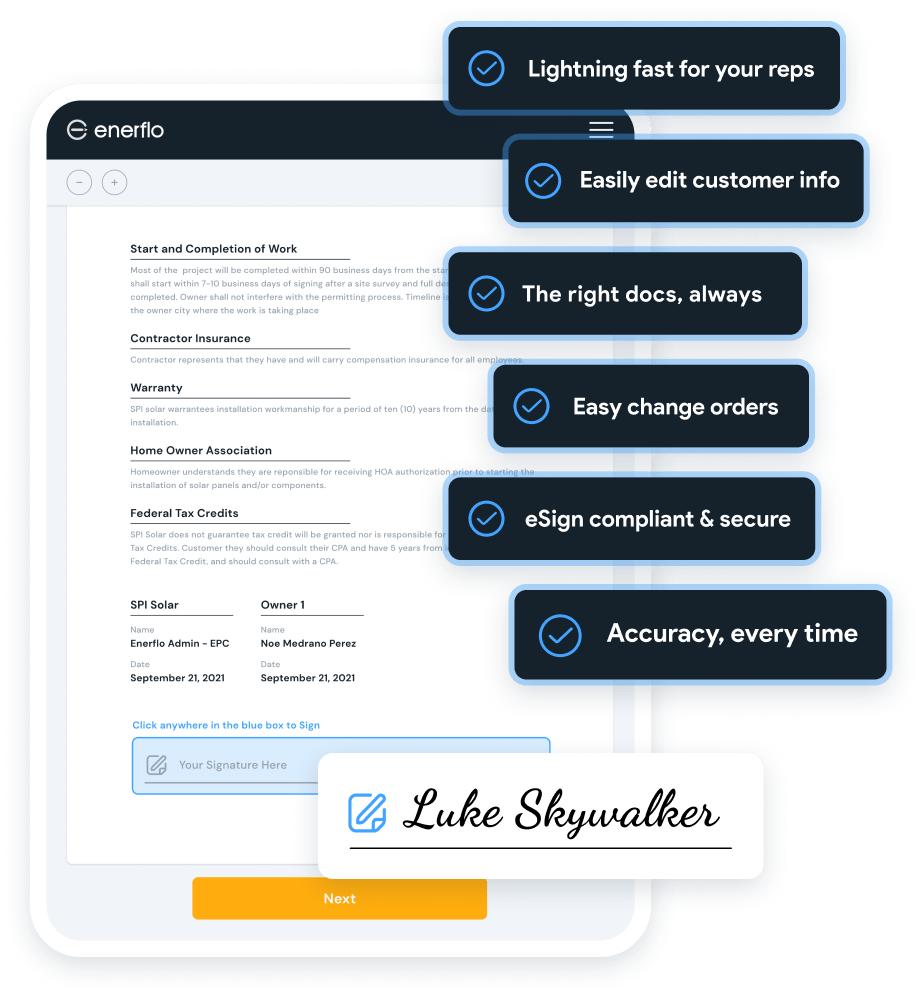

Enerflo Pricing
Enerflo doesn’t publicly list detailed pricing, but it uses a flat-rate monthly subscription model based on your company’s average monthly volume. The pricing is typically structured based on:
- Number of users
- Feature access (basic vs advanced workflows)
- Business size and sales volume
In simple terms, Enerflo pricing is tailored to user-specific needs. It does not charge per seat, user, proposal, or project as other competitors do. A minimum contract period of 12-months is required, and additional fees may apply for custom API, advanced features, or optional integration services.
Integrations
Enerflo doesn’t try to replace everything, but it fits in. You can connect it with:
- Design tools
- Lead generation platforms
- Financing systems
- Communication tools
Nothing complicated here. The goal is to keep Enerflo as the center and let everything else plug into it.
How to Use Enerflo
Most people overthink this part. You don’t need a perfect setup from day one. Start simple.
Add your team
Set up users and define roles. Keep it basic.
Map your sales stages
Don’t copy someone else’s pipeline. Build it around how you actually sell.
Bring in your leads
Import what you already have or connect your sources.
Create a basic proposal template
It doesn’t need to be perfect. Just usable.
Turn on a few automations
Start with follow-ups or status updates. You can refine later.
Start using it daily
This is where things click. Real usage shows what needs adjusting.
Improve as you go
Tweak workflows based on what actually happens—not what you planned.
FAQs s
Is Enerflo difficult to learn?
No. It is easy to explore the short adjustment period, but most teams get comfortable once they start working with real deals instead of test data.
Does Enerflo replace proposal tools completely?
For many teams, yes. It has built-in proposal functionality, though some still integrate external tools depending on preference.
Is it only for large companies?
No. Smaller teams can use it too, but it becomes more valuable as your workload increases.
Does it help with missed follow-ups?
Yes, and that’s usually one of the first improvements teams notice.
Can reps use it while in the field?
They can. That’s part of what makes it practical. Enerflo works well on mobile devices, where reps can update status and check information while away from the office.
What makes it different from a regular CRM?
It’s built around solar sales workflows, so you’re not adapting everything yourself. Enerflo is structured around workflows, contracts, and post-sale tracking, which reduces the amount of customization needed.
Does Enerflo support team collaboration?
Yes. The platform allows multiple users to access and update the same pipeline, which helps avoid duplication and reduces the need for separate follow-ups.