Solargis pvPlanner
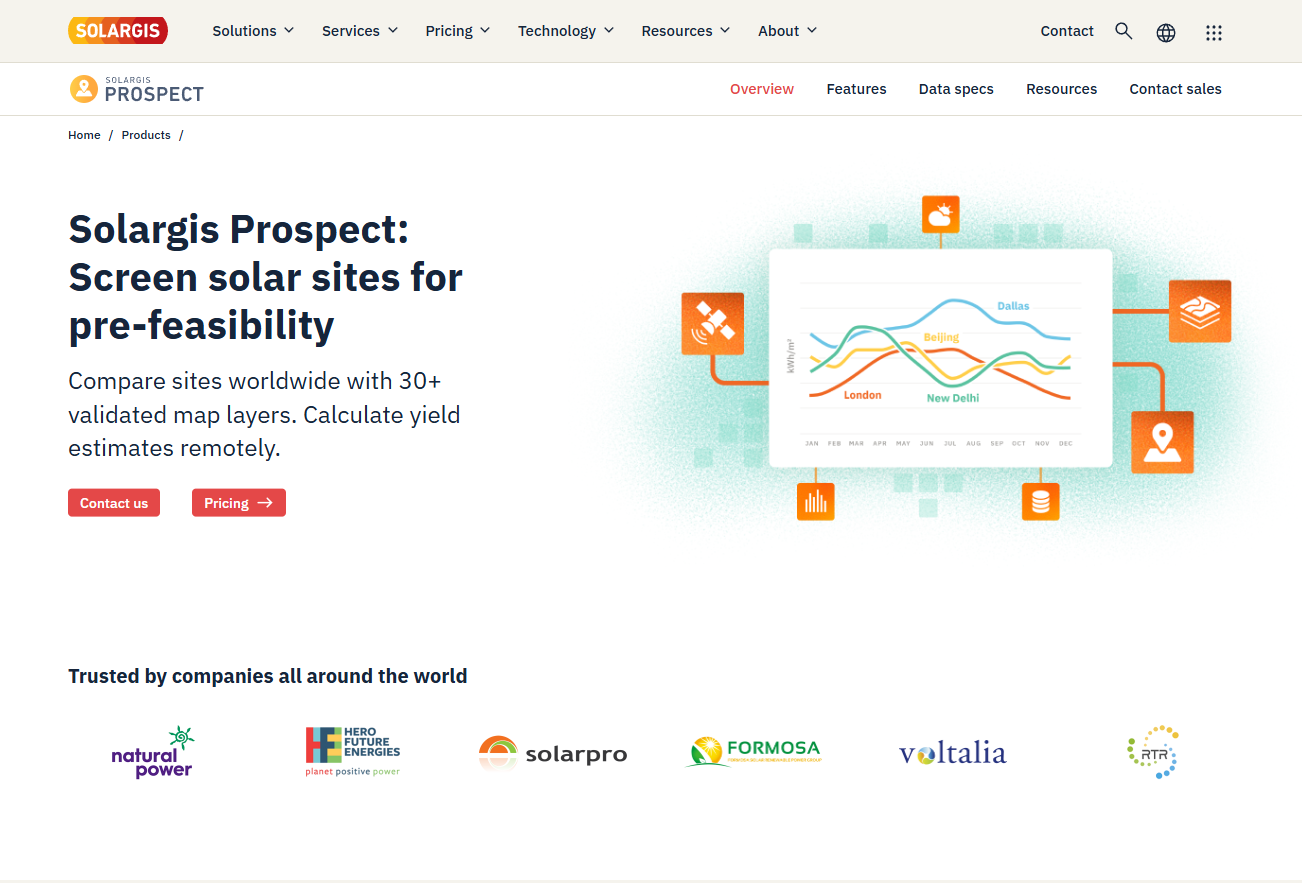
Avantages
- High-quality solar resource data validated through extensive scientific research.
- Global coverage with detailed historical weather information.
- Fast simulation workflows suitable for evaluating multiple project sites.
- Bankable reporting capabilities accepted by investors and lenders.
- User-friendly interface that requires minimal training.
- Supports early-stage technical and financial decision-making.
- Comprehensive climate and environmental datasets.
Inconvénients
- Subscription pricing may be challenging for smaller organizations.
- Advanced functionality often requires higher-tier plans.
- Not intended to replace detailed electrical engineering software.
- Some project workflows may require additional Solargis products.
- Detailed component-level design capabilities are limited compared to dedicated engineering platforms.
Accurately forecasting solar energy production is essential for evaluating project viability, optimizing system design, and securing investment. Small errors in solar resource assessment or system modeling can significantly impact financial projections and project performance. Solargis pvPlanner addresses these challenges by combining high-resolution solar resource data with photovoltaic performance simulation tools in a cloud-based environment.
Designed for solar developers, EPC contractors, consultants, and investors, Solargis pvPlanner helps users estimate energy production, compare design options, and generate reliable yield assessments during the early planning stages of solar projects. The platform transforms complex meteorological data into actionable insights that support informed development decisions.
What Is Solargis pvPlanner?
Solargis pvPlanner is a photovoltaic performance simulation and solar resource assessment platform developed by Solargis.
The software allows users to evaluate potential project locations, configure photovoltaic systems, and estimate expected energy production using satellite-derived solar resource data. It is widely used during site selection, pre-feasibility analysis, and preliminary project development workflows.
Features
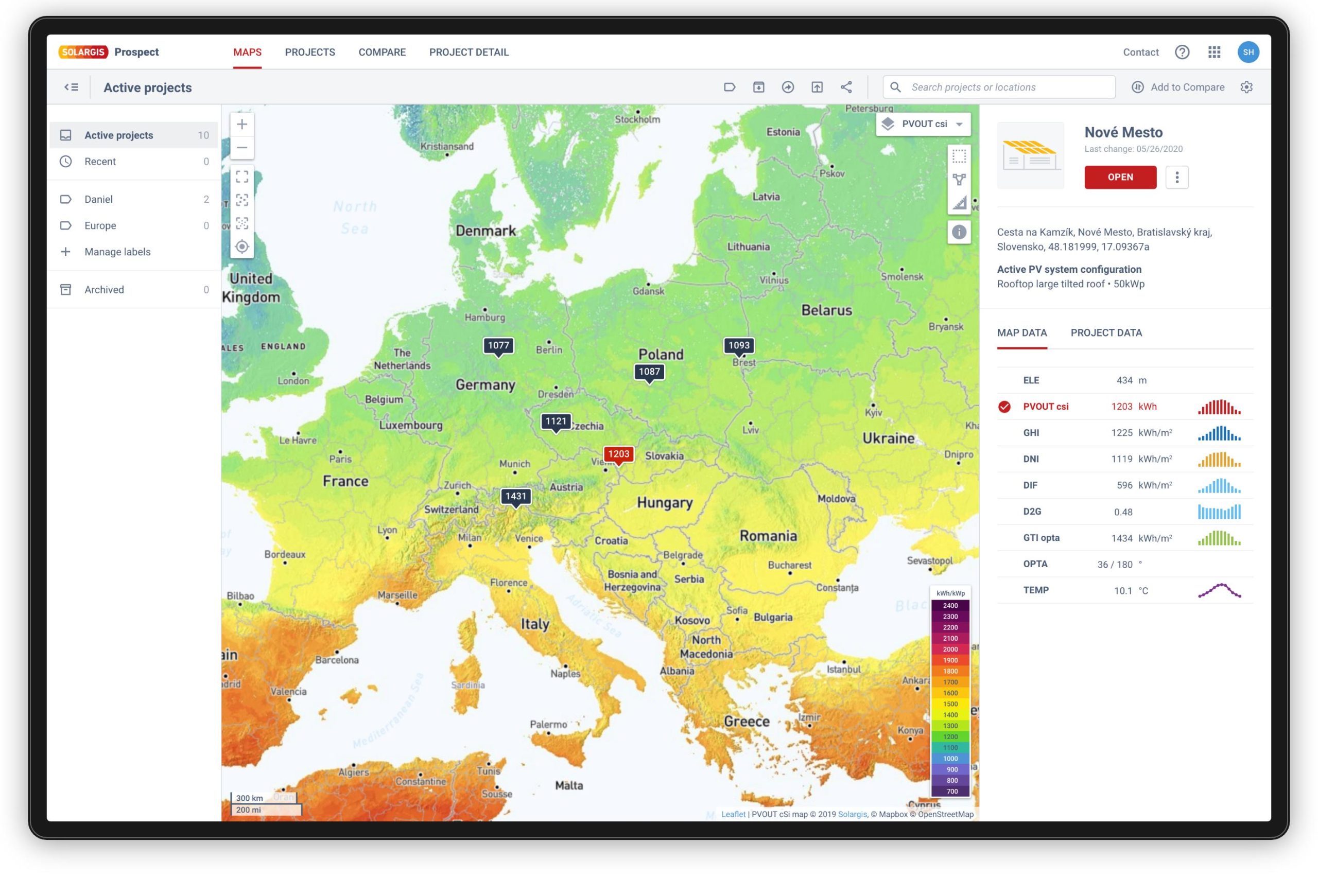
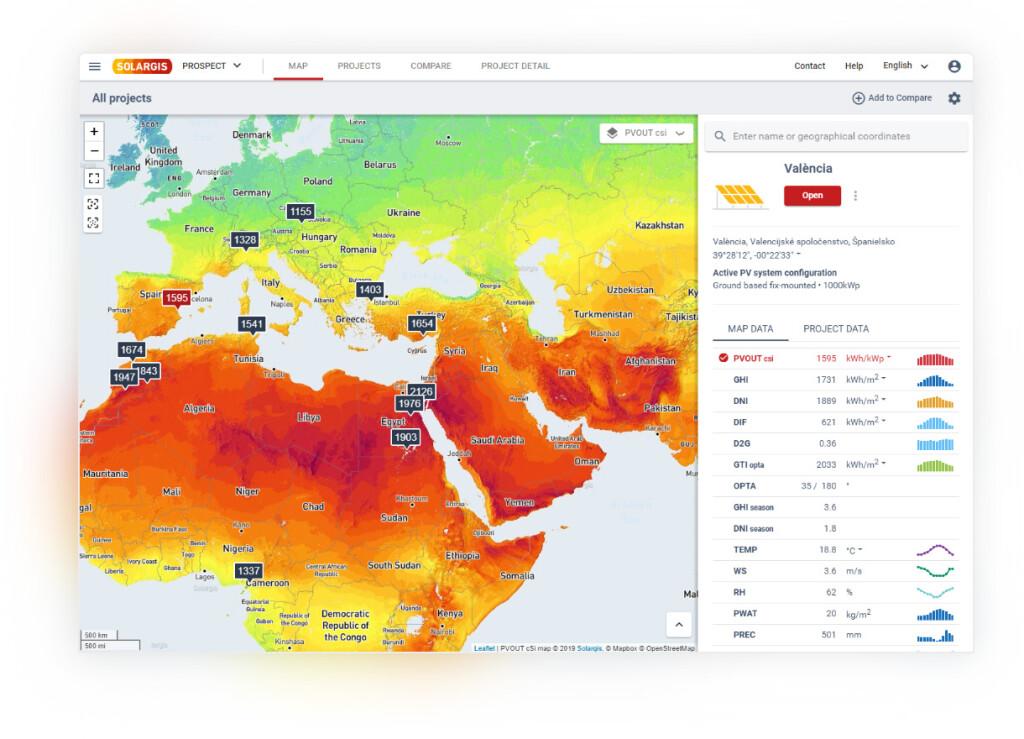
- Solar Resource Database Access: Utilize high-resolution GHI, DNI, and DIF datasets for accurate solar assessments.
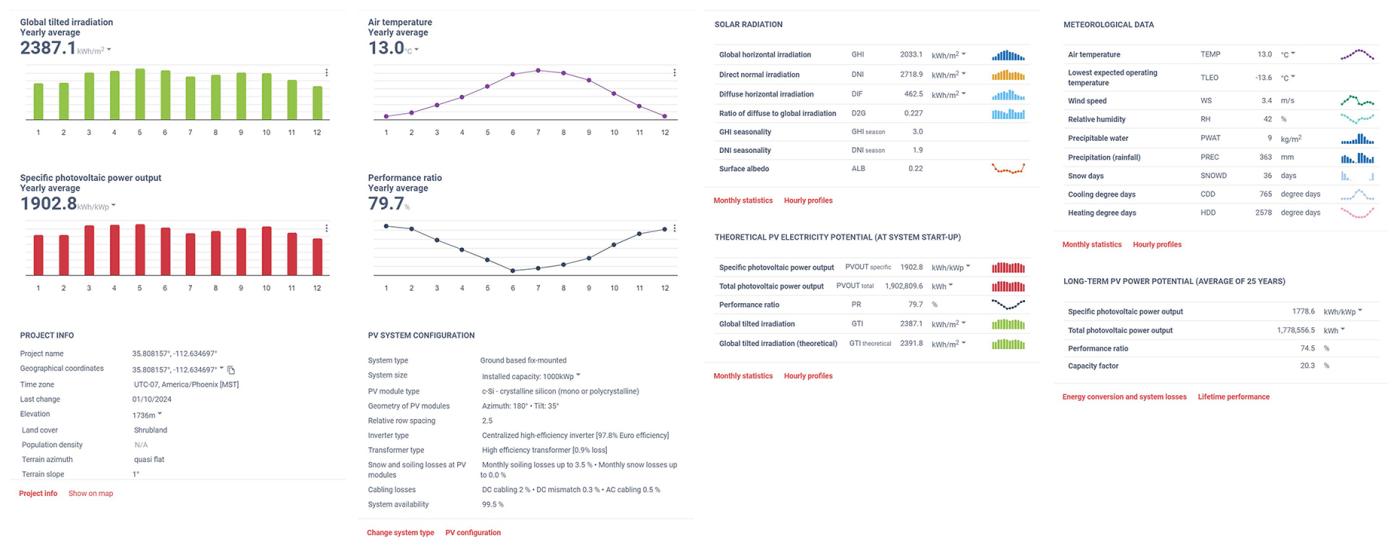
- PV Energy Calculator: Simulate expected electricity generation based on site conditions and system specifications.
- System Configuration Tools: Compare fixed-tilt and tracking systems while optimizing orientation and tilt angles.
- Economic Evaluation: Perform preliminary financial analysis including basic return and payback assessments.
- Horizon and Shading Analysis: Evaluate terrain and horizon impacts on photovoltaic performance.
- Multilingual Reporting: Generate professional reports in multiple languages for international stakeholders.
- Data Export Capabilities: Export simulation results for further engineering and financial analysis.
Screenshots
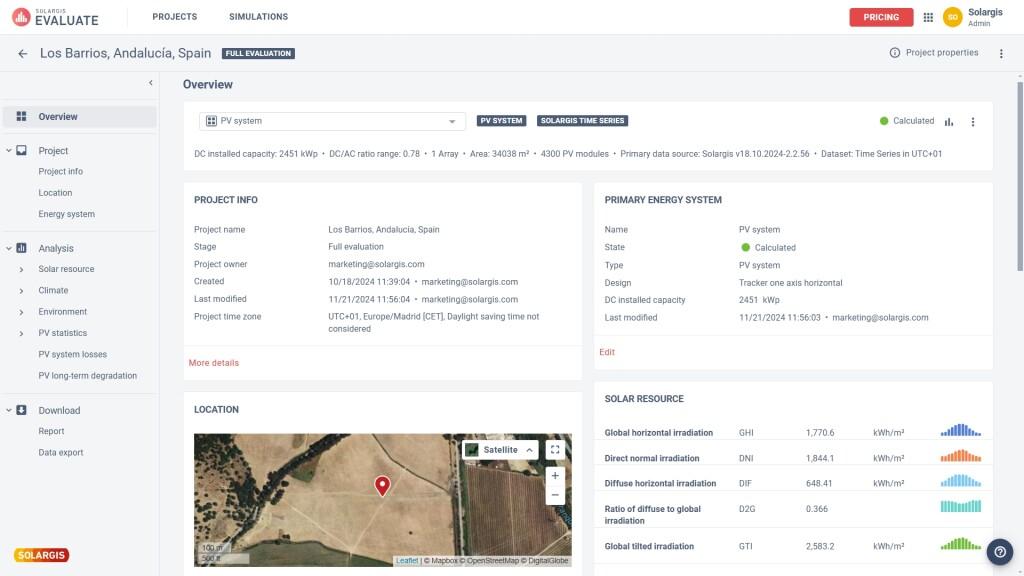
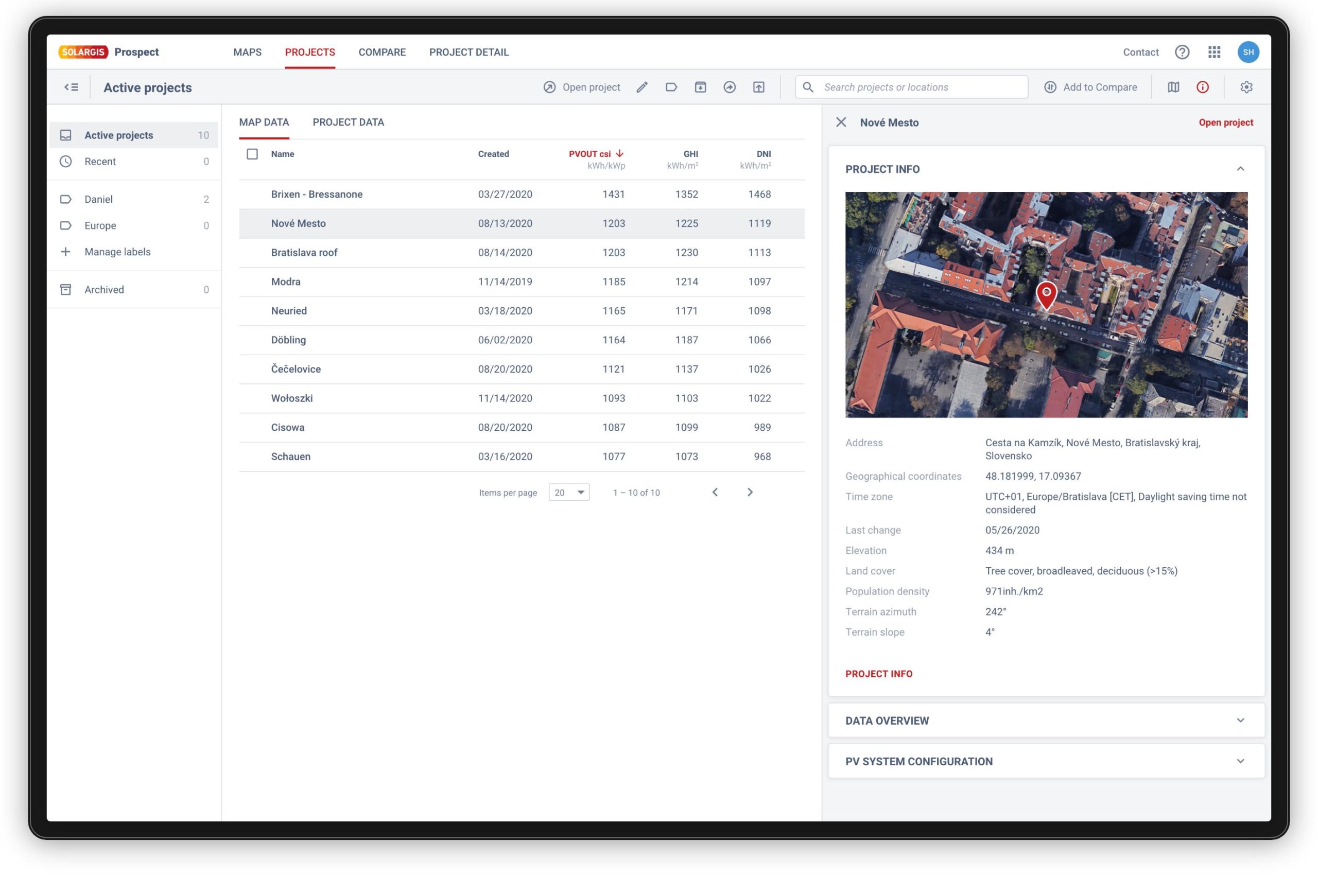
Solargis pvPlanner Pricing
Many pvPlanner capabilities are now integrated into the broader Solargis platform, particularly within Solargis Prospect and Solargis Evaluate.
- Demo Access: Trial versions and demonstrations may be available through Solargis.
- Basic Subscription: Approximately €2,400 annually for entry-level project development workflows.
- Professional Subscription: Approximately €4,800 annually for larger teams and expanded project portfolios.
- Enterprise Licensing: Custom pricing for organizations requiring advanced collaboration and support.
- Data Purchases: Specialized datasets such as TMY and time-series files may be available separately.
- Custom Services: Additional consulting and analytical services can be provided by Solargis.
Integrations
Solargis pvPlanner supports integration with industry-standard solar engineering and assessment tools.
- PVsyst: Export weather and simulation data for advanced photovoltaic modeling.
- AutoCAD: Support engineering workflows and project planning activities.
- RETScreen: Utilize resource data within energy project evaluation frameworks.
- Solargis API: Access solar resource data programmatically.
- FTP and SFTP: Transfer datasets for enterprise-scale processing.
- Excel and CSV Exports: Integrate simulation results with financial and technical analysis tools.
How to Set Up Solargis pvPlanner
- Create a Solargis account or request access to the platform.
- Select the appropriate subscription or data package.
- Configure user preferences and regional settings.
- Choose a project location using coordinates or interactive mapping tools.
- Enter photovoltaic system specifications and project assumptions.
- Run simulations and generate energy production estimates.
How to Use Solargis pvPlanner
Users begin by selecting a project location and reviewing available solar resource information. The platform provides access to irradiance, temperature, and other environmental datasets that influence photovoltaic performance.
After defining system parameters such as installed capacity, mounting configuration, and equipment assumptions, users can run simulations to estimate energy production. Results can be analyzed, compared across different scenarios, and exported into reports for project stakeholders, investors, or engineering teams.
What You Can Produce with Solargis pvPlanner
- Energy Yield Reports: Generate monthly and annual production forecasts.
- Solar Resource Assessments: Analyze irradiance conditions for specific project locations.
- System Optimization Studies: Compare orientation, tilt, and mounting options.
- Preliminary Financial Analysis: Support feasibility and investment evaluations.
- Horizon Profiles: Visualize terrain-related shading impacts.
- Engineering Data Exports: Transfer project information into downstream design software.
FAQs
What does Solargis pvPlanner do?
Solargis pvPlanner estimates photovoltaic system performance using satellite-derived solar resource data and simulation models, helping users evaluate project feasibility and expected energy production.
Who is Solargis pvPlanner best for?
It is designed for solar developers, EPC contractors, consultants, engineers, investors, and analysts involved in project planning and pre-feasibility assessment.
Is Solargis pvPlanner free?
No, it is a professional software platform, although demonstration and trial options may be available through Solargis.
How much does Solargis pvPlanner cost?
Pricing varies depending on the selected Solargis platform and subscription level, with entry-level plans generally starting around €2,400 per year.
What are the main limitations of Solargis pvPlanner?
The platform focuses on resource assessment and energy yield estimation rather than detailed electrical engineering, construction design, or advanced CAD workflows.
What are the best alternatives to Solargis pvPlanner?
Popular alternatives include PVsyst, HelioScope, Aurora Solar, PVGIS, SolarFarmer, and other photovoltaic simulation and solar resource assessment platforms.